By Han Jong-woo | April 2026
SummitSelect.org | Health & Aging | Wellness After 60 | 2026 Health Trends
The Bottom Line — Read This First
My father lived to 89.
The last four years were not good years. Not in any way he would have chosen. He was physically present but increasingly absent from his own life — managing pain, managing confusion, managing the indignity of depending on others for things he’d done independently for eight decades. He was alive. He was not, by any honest accounting, living well.
I think about him every time I encounter a headline about longevity research or life extension technology. Because I’ve watched up close what it looks like to have more years without more quality — and I’ve never been able to romanticize it.
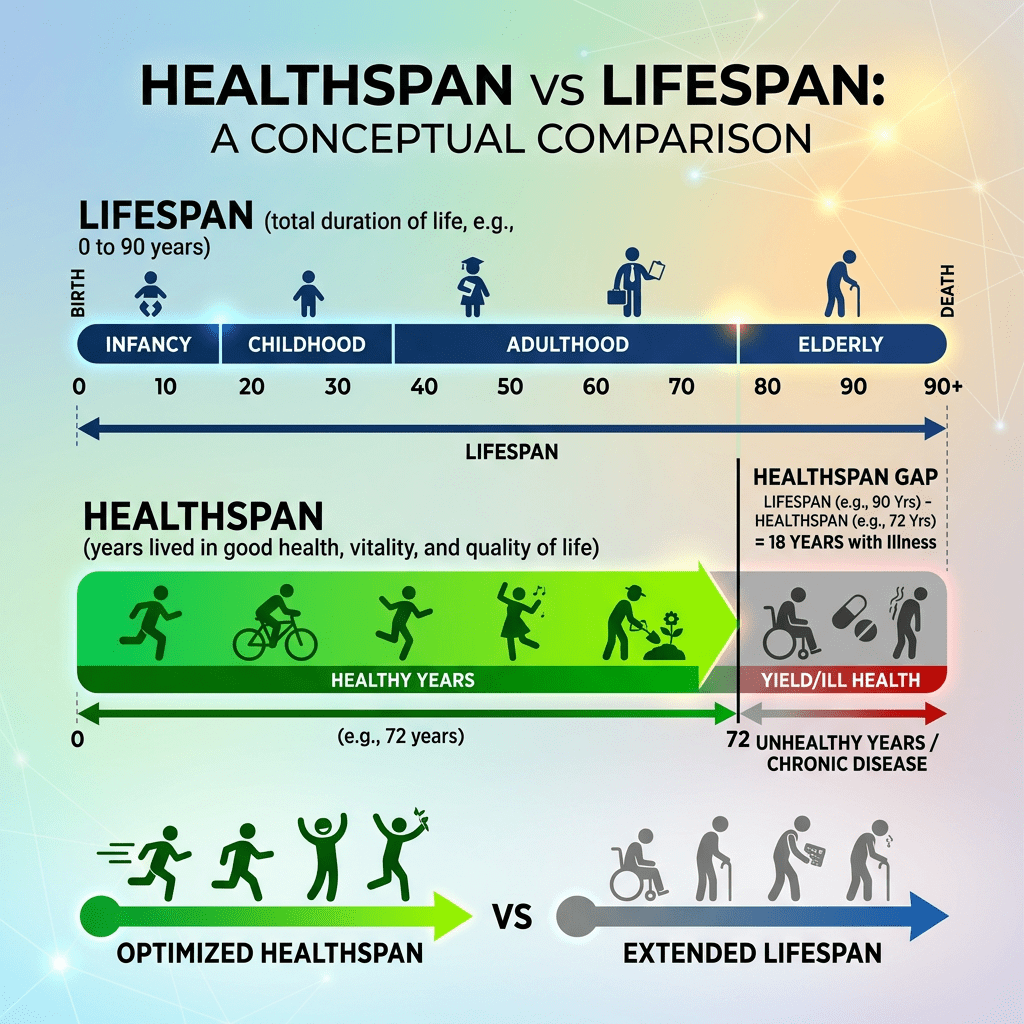
The most important shift in health thinking that I’ve observed in 2026 is not about adding years. It’s about defending the quality of the years you have — staying sharp, mobile, engaged, and genuinely present in your own life for as long as possible, rather than simply keeping the body functioning after everything else has faded.
This shift has a name in research circles: healthspan versus lifespan. And the practical implications of taking it seriously are dramatically different from what most people do in the name of “staying healthy.”
This article is what I’ve learned about those implications — from the research, from watching people I love navigate aging, and from my own daily life at 71.
Introduction: The Question That Changed How I Think About Health
About three years ago, I asked myself a question I’d never quite asked directly before.
Not “how long do I want to live?” That question had always felt abstract and slightly morbid. But: “What do I most want to still be able to do at 80? At 85?”
I made a list. It was more specific than I expected.
I wanted to be able to walk for an hour without pain. I wanted to be able to read — both for information and for pleasure — without my concentration failing me. I wanted to remember things. I wanted to be genuinely present in conversations with my family. I wanted to be able to travel, modestly. I wanted to be capable of learning new things.
None of those things, I realized, were guaranteed by simply avoiding the diseases that kill people early. A person can survive cancer, avoid heart disease, and never smoke or drink — and still lose their mobility to sarcopenia, lose their cognition to untreated sleep apnea, lose their social connection to isolation, and lose their quality of life to depression that nobody treated because nobody thought to look for it.
Avoiding death is not the same as preserving life quality. And the health practices that actually preserve life quality — the ones that defend your ability to do the things that make being alive feel worthwhile — are often different from the ones that dominate conventional health advice.
That’s what the 2026 health trend landscape is beginning to reflect. And I want to walk through what I find most significant about it.

Trend One: The Shift From Disease Prevention to Function Preservation
Traditional medicine has been organized primarily around disease. Diagnose it, treat it, prevent its recurrence. This model has produced remarkable results for many conditions. It has also produced a blind spot.
Function — the ability to do the things that make daily life worth living — can decline dramatically in the absence of any diagnosable disease. And conventional medicine, organized around diagnosing conditions rather than measuring capabilities, often misses this decline until it has become significant.
The 2026 health movement that I find most promising is the growing emphasis on functional assessment as a primary health metric.
What can you do? How well can you do it? How has that changed from last year?
Grip strength, which sounds trivial, has emerged as one of the most reliable predictors of health outcomes in older adults. Not because grip matters intrinsically, but because it’s a proxy for overall muscle integrity — which predicts fall risk, recovery from illness, metabolic health, and cognitive function.
Gait speed — how fast you walk — is another surprisingly powerful indicator. Studies consistently show that walking speed predicts mortality and functional decline more reliably than many conventional diagnostic markers.
Balance. Cardiovascular recovery rate after exertion. The ability to rise from a seated position without using your hands. These are functional measures that tell a different and often more relevant story than cholesterol numbers alone.
What This Means Practically
Ask your doctor for a functional assessment, not just a disease screening. If they don’t routinely do one, ask specifically about grip strength testing, balance assessment, and gait evaluation.
More importantly, measure your own function regularly. Can you walk briskly for 20 minutes without stopping? Can you carry groceries without difficulty? Can you get up from the floor? These informal self-assessments track what matters and give you early warning when something is changing — before it becomes a clinical problem.
Trend Two: Muscle as the New Medicine
This is, I believe, the single most important health insight that has moved from research into mainstream awareness in 2026. And it’s one that most people over 60 have still not fully absorbed.
Muscle is not just for athletes. It is not primarily about appearance. Muscle is metabolic infrastructure — the tissue that governs how your body processes glucose, how it recovers from illness and injury, how it maintains the physical capability for independent living, and how it resists the functional decline that makes aging feel like deterioration rather than simply getting older.
The loss of muscle mass with age — sarcopenia — begins in the mid-30s and accelerates significantly after 60. It is not inevitable in any dramatic sense. It can be slowed dramatically, and partially reversed, through specific training. But most people don’t do the specific training that addresses it.
The research here is clear enough that major health organizations have begun recommending resistance training — lifting weights, using resistance bands, doing bodyweight exercises that challenge the muscles — as a primary preventive intervention for older adults. Not cardio. Resistance training specifically.
I started taking this seriously about two years ago. I’m not going to pretend I transformed overnight. At 71, the process of building the habit of regular resistance training involved false starts, sore muscles I wasn’t expecting, and considerable humility about starting far below what I thought I was capable of.
What I’ve observed since is not dramatic. But it is real. I’m stronger than I was two years ago. I carry things more easily. I recover from physical exertion faster. And my doctor’s most recent metabolic panel was the best it’s been in a decade.
What to Actually Do
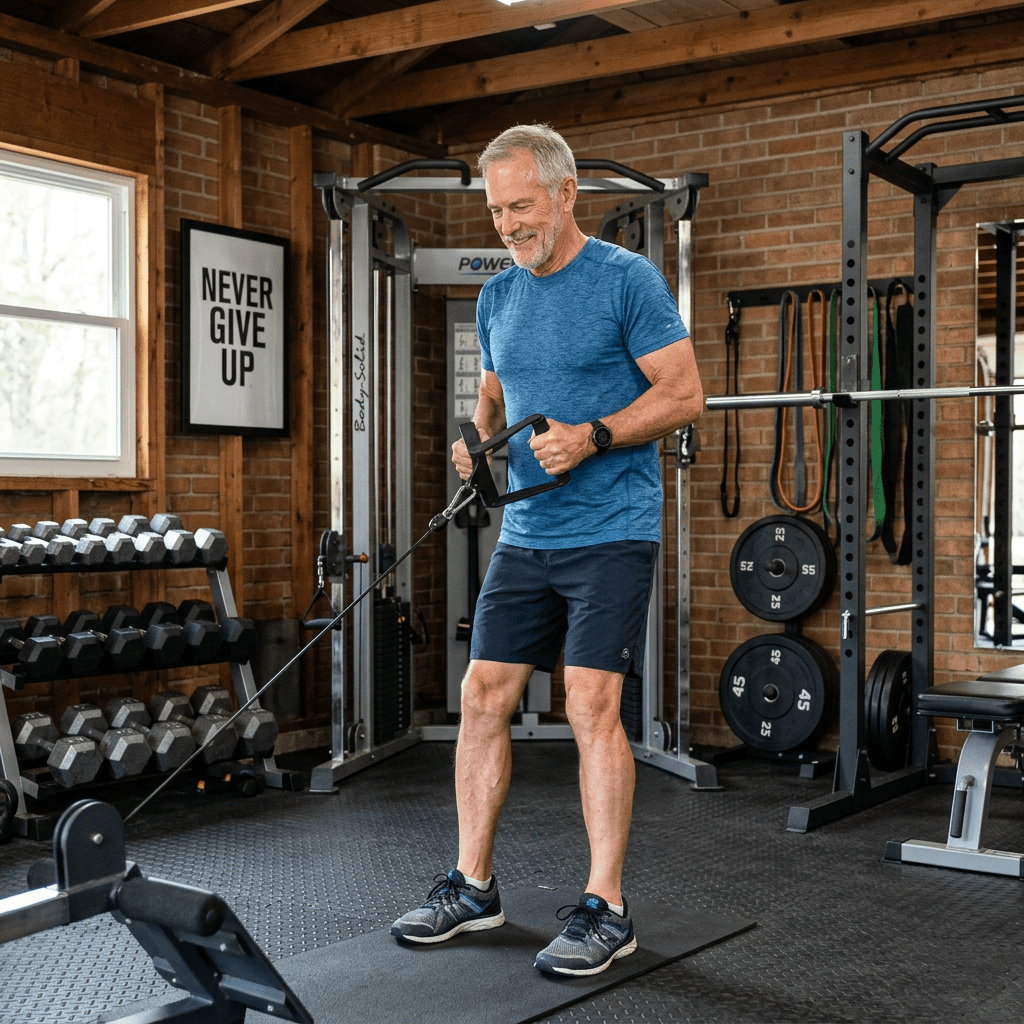
Two to three sessions per week of resistance exercise. Not marathon sessions — 30 to 45 minutes is sufficient if the intensity is appropriate. Focus on the major muscle groups: legs, back, chest, shoulders. Work with a trainer initially if you haven’t done this before — the correct form matters and the investment in getting it right early saves significant problems later.
If gym equipment feels inaccessible, resistance bands and bodyweight exercises done consistently are meaningfully effective. The minimum effective dose is lower than most people assume. The key is consistency over years, not intensity in any single session.
Trend Three: Sleep as Non-Negotiable Infrastructure
I’ve written about sleep and aging before, and I keep returning to it because the research keeps reinforcing what I’ve observed in my own life: the single most underinvested health intervention available to most people over 60 is taking sleep seriously.
Not sleeping more hours — though that matters. Sleeping better. Understanding what’s actually happening in the brain during sleep, why sleep quality changes with age, and what specific interventions address those changes most effectively.
The 2026 health trend I’m tracking here is the growing recognition of sleep not as a passive recovery state but as an active biological process with consequences that ripple through every other dimension of health.
During deep sleep, the brain’s glymphatic system — a waste clearance network that has no equivalent during wakefulness — removes metabolic byproducts including proteins associated with Alzheimer’s disease. Consistently poor sleep does not just make you tired. It impairs this clearance process in ways that have long-term cognitive consequences.
Additionally, sleep is when muscle repair happens. When emotional processing occurs. When the immune system does some of its most important work. Shortchanging sleep doesn’t just affect how you feel tomorrow. It affects how your body and brain function over years.
The Specific Changes That Matter
Consistent sleep and wake times — every day, not just weekdays. Morning light exposure within an hour of waking. Minimizing bright light in the two hours before bed. A bedroom temperature between 65 and 68 degrees Fahrenheit.
And for the significant percentage of older adults with undiagnosed sleep apnea — which fragments sleep and prevents deep sleep without the person necessarily knowing it — getting evaluated and treated. This single intervention, in people with moderate to severe apnea, often produces improvements in energy, cognition, and metabolic health that patients describe as transformative.
Trend Four: The Cognitive Health Revolution
Dementia prevention is moving from theoretical possibility to practical protocol.
This is one of the most significant shifts in the 2026 health landscape, and I want to describe it carefully because the claims in this area are easy to overstate.
We do not have a cure for Alzheimer’s disease. What we do have is a growing body of research identifying modifiable risk factors — things within an individual’s control — that significantly affect the probability and timing of cognitive decline.
The FINGER study (Finnish Geriatric Intervention Study to Prevent Cognitive Impairment and Disability) and subsequent replications have demonstrated that a multi-domain lifestyle intervention — combining regular physical activity, nutritional guidance, cognitive training, and cardiovascular risk management — produces measurable cognitive benefits in older adults at risk of decline.
The intervention isn’t one magic thing. It’s several things done consistently together.
The Components That Research Supports
Physical exercise — particularly aerobic exercise that raises your heart rate — increases BDNF (brain-derived neurotrophic factor), a protein that supports the growth and maintenance of neurons. This is one of the clearest mechanisms by which physical activity protects cognitive function.
Social engagement — genuine social interaction with real stakes, not just casual contact — maintains the cognitive demands of reading people, managing conversations, and navigating social complexity that exercise the brain in ways solitary activities don’t.
Cognitive challenge — learning something genuinely new, as opposed to doing familiar mental activities more of — produces different and additional benefits from social engagement.
Managing cardiovascular risk factors — blood pressure, blood sugar, cholesterol — with the specific goal of protecting brain circulation, not just heart health.
None of these is new. What’s new is the clarity about how much they matter and the beginning of clinical protocols that address them together rather than separately.

Trend Five: The Nutrition Shift — Less Restriction, More Precision
The 2026 nutrition landscape is, in my observation, moving away from broad dietary restriction frameworks and toward something more targeted and individual.
This is a significant shift. The previous decade of nutrition advice was organized primarily around what to eliminate: carbohydrates, fat, certain food groups, processed foods generally. These frameworks produced some genuine benefits. They also produced a relationship with food that many people found difficult to sustain and that sometimes created new problems — nutritional deficiencies, disordered eating patterns, or simply the psychological weight of constant restriction.
What’s replacing it — or at least supplementing it — is a more precise approach centered on a few questions that matter for older adults specifically.
The Questions That Actually Matter After 60
Are you getting enough protein? This is the most consistently underappreciated nutritional issue in older adults. Protein needs actually increase with age, while appetite often decreases. The result is a widespread protein insufficiency that contributes directly to muscle loss. The research-supported recommendation for older adults is substantially higher than the general population recommendations — roughly 1.2 to 1.6 grams per kilogram of body weight per day, compared to the 0.8 grams that has been the standard recommendation.
Is your gut microbiome getting adequate fiber diversity? The research on the gut microbiome’s role in inflammation, immune function, and even cognitive health has expanded dramatically. The practical implication is less about avoiding certain foods and more about actively including a wide variety of plant-based fiber sources. Diversity matters here more than quantity.
Are you eating enough around physical activity? Older adults who train regularly often undereat in the hours around exercise — which limits adaptation and recovery. Timing protein intake to coincide with resistance training sessions produces better muscle-building outcomes.
Are you adequately hydrated? The thirst mechanism becomes less reliable with age. Many older adults are chronically mildly dehydrated without awareness — which affects cognitive function, physical performance, and kidney health.
These four questions, addressed honestly, produce more practical benefit for most people over 60 than adherence to any specific restrictive dietary framework.
Trend Six: Emotional and Psychological Health as Physical Health
This is the trend I feel most strongly about including because it is the most systematically underattended by conventional health advice — and the most consequential for quality of life.
The connection between psychological wellbeing and physical health outcomes in older adults is not a soft, feel-good concept. It is a documented, measurable relationship with specific mechanisms.
Depression in older adults suppresses immune function, increases inflammatory markers, disrupts sleep, reduces motivation to maintain the physical activity and social engagement that protect against further decline, and increases mortality risk across multiple disease categories. It affects approximately 15 to 20 percent of adults over 65 — and is dramatically undertreated, partly because its presentations in older adults often differ from classic textbook descriptions and go unrecognized.
Chronic loneliness has cardiovascular effects that have been compared in magnitude to smoking. It’s not just unpleasant. It’s physiologically damaging.
The 2026 trend I’m observing is a beginning integration of psychological and physical health assessment — treating emotional wellbeing as a health metric with the same clinical urgency as blood pressure or blood sugar, rather than as a soft concern addressed only when it becomes acute.
What This Means for You
If you’re not sleeping well, if your motivation has dropped, if activities that used to interest you no longer do, if your relationship with food has changed significantly — tell your doctor. Not as an aside after the physical concerns. As a primary concern.
And if you’ve been telling yourself that the sadness or flatness you’ve been feeling is just part of getting older and there’s nothing to be done about it — that belief is wrong. Late-life depression is highly treatable. Allowing it to go untreated because of stigma or the mistaken belief that it’s inevitable has consequences that affect every other dimension of health.
What I’m Actually Doing Differently in 2026
I want to close with something personal, because I think abstractions about health trends are less useful than honest accounts of what specific people are actually doing.
Here is my honest current practice, in case it’s useful.
I do resistance training three times per week. I hate the first five minutes of every session and feel genuinely better for an hour afterward. I’ve made my peace with this math.
I get outside within thirty minutes of waking, almost every day, for twenty minutes. This has been the most impactful single change I’ve made for sleep quality.
I eat approximately 120 grams of protein per day, which requires some intentionality given my appetite. I track it loosely — not obsessively.
I’ve started telling my doctor more of the truth. About my energy. About my mood. About the things I notice changing. This felt more vulnerable than I expected. It’s produced better care.
I have a standing dinner with two friends, twice a month. Not because I scheduled it as a health intervention — because I like them and it matters to me. But I’m now aware that it’s also doing something important for my brain and my immune system and my likelihood of still being genuinely alive at 85 rather than just technically present.
None of these things are dramatic. Together, they are how I’m trying to stay genuinely in my own life rather than just in it chronologically.
That’s what the 2026 health movement, at its best, is actually about.
Summary and Key Takeaways
The most significant health shift of 2026 is the move from lifespan to healthspan — from simply adding years to defending the quality of the years you have. This requires a different set of priorities than conventional health advice has emphasized, and a more honest accounting of what actually matters for genuine life quality in the decades after 60.
The trends that matter most: functional preservation over disease prevention alone; resistance training as essential medicine for older adults; sleep quality as non-negotiable cognitive and physical infrastructure; cognitive health as a multi-domain project addressable through specific lifestyle interventions; nutritional precision focused on protein adequacy and diversity; and psychological wellbeing treated with the same seriousness as physical health.
None of these require extraordinary resources or extraordinary willpower. They require consistent, ordinary choices made with clarity about what you’re actually trying to protect.
10 Key Health Tips for 2026 and Beyond
1. Ask yourself what you want to still be able to do at 80 — and work backward from that. Longevity without function is not the goal. Be specific about what you’re actually trying to preserve.
2. Start resistance training if you haven’t. Two to three sessions per week, 30 to 45 minutes. This is the single highest-impact physical intervention for older adults and the most consistently underutilized.
3. Get a functional assessment, not just a disease screening. Grip strength, gait speed, balance — these tell a different and often more relevant story than standard markers alone.
4. Take sleep seriously as a health priority, not a lifestyle preference. Address the specific age-related changes that affect sleep quality. Get evaluated for sleep apnea if you snore or wake unrefreshed.
5. Treat protein intake as a nutritional priority. Aim for 1.2 to 1.6 grams per kilogram of body weight daily. This is higher than you probably think you need and likely higher than you’re currently getting.
6. Invest in genuine social engagement — not just contact, but real interaction with intellectual and emotional content. This is brain health, not merely a nicety.
7. Tell your doctor the truth about your psychological state. Late-life depression is common, underdiagnosed, and highly treatable. Don’t allow stigma or resignation to prevent you from getting effective care.
8. Prioritize morning light exposure as a circadian anchor. Twenty minutes outside, within an hour of waking, every day. The evidence for this as a sleep quality intervention is consistent and strong.
9. Monitor your own function regularly. Can you walk briskly for 20 minutes? Get up from the floor? Carry groceries without difficulty? These informal self-assessments catch changes early — before they become clinical problems.
10. Understand that the goal is quality, not just quantity. Every health decision you make should be evaluated against a simple question: does this help me stay genuinely present and capable in my own life, or does it merely extend the technical duration of it?
Han Jong-woo is a 71-year-old author and founder of SummitSelect.org, where he writes about health, AI, and life after 60. His books — including AI and Your Health After 60 — are available on Amazon.
This article is for informational purposes only. Consult a qualified healthcare provider before making significant changes to your health practices.
Tags: Health Trends 2026 | Healthspan vs Lifespan | Health After 60 | Aging Well | Resistance Training Seniors | Sleep and Aging | Cognitive Health Older Adults | Wellness After 60
© 2026 SummitSelect.org — All Rights Reserved
It’s never too late to learn, grow, and discover new possibilities.
Explore the books of Han Jong-Woo, where artificial intelligence, lifelong learning, personal growth, and meaningful living come together to inspire your next chapter.
Whether you’re curious about AI, seeking purpose, or simply looking for fresh inspiration, you’ll find books designed to encourage, empower, and enrich your life.
▶ Visit JongWoo Han’s Amazon Author Page and discover all of his books today.


Leave a Reply