
Here’s the conclusion upfront:
If you want real estate income without tenants, repairs, surprise expenses, or managing a property, REITs (Real Estate Investment Trusts) are the simplest, most beginner-friendly alternative.
You can invest with $5–$100, receive regular dividends, and own a slice of major commercial properties—just like big investors.
This guide breaks down how REITs work, why they’re easier than rental properties, and how beginners can get started today.
What Are REITs, and Why Are They a Smarter Alternative to Rental Properties?
✔ REITs = Real estate companies that pay out rental income as dividends
A REIT owns income-producing properties such as:
- Office buildings
- Shopping centers
- Apartments
- Data centers
- Cell towers
- Warehouses
- Hospitals & senior living facilities
By law, REITs must distribute 90% of their taxable income back to investors.
So instead of collecting rent from tenants, you simply receive dividends.
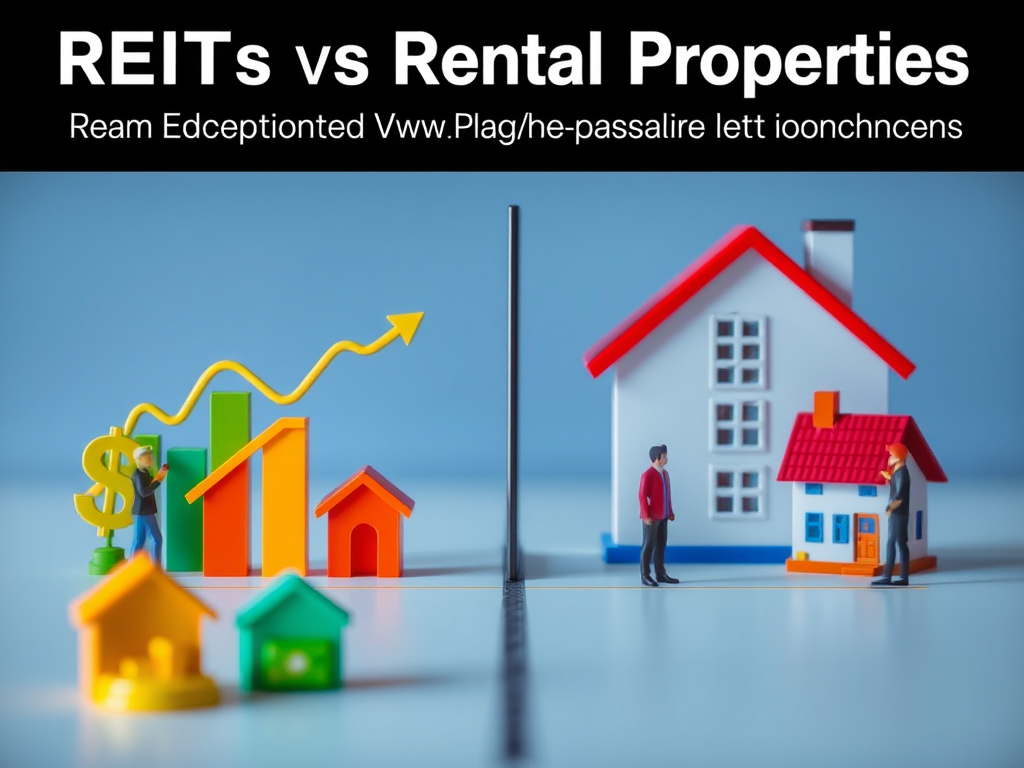
✔ Why people prefer REITs over owning rental properties
Because REITs solve every headache landlords complain about:
- No property taxes
- No midnight repair calls
- No tenant drama
- No maintenance
- No vacant months
- No large down payment
- No mortgage risk
You get all the income potential with none of the landlord responsibilities.
Stream Your Favorites Faster & Better! 📺
Why wait? Upgrade to Amazon Fire TV and enjoy lightning-fast streaming and thousands of apps at your fingertips. It’s time to level up your TV game! 🚀
✨ [Check Price on Amazon.com (USA)]
✨ [Check Price on Amazon.ca (Canada)]
REITs vs Traditional Rentals: Side-by-Side Comparison
| Feature | Rental Property | REITs |
|---|---|---|
| Initial investment | $30,000–$150,000 | $5–$100 |
| Management | High (DIY or pay 8–12%) | None |
| Liquidity | Very low | High (sell anytime) |
| Risk | Property-specific | Diversified across many properties |
| Income type | Rent minus expenses | Dividends with no stress |
| Taxes | Property tax, capital gains | Simple: dividend tax |
| Volatility | Low | Moderate (stock market) |
For most everyday investors, REITs are the faster, safer, more flexible path to real estate income.
Beginner’s Guide to REITs: Passive Income Simplified
Types of REITs You Can Invest In
1. Equity REITs (Most common)
They own physical buildings and collect rent.
Examples:
- Retail REITs
- Residential REITs
- Office REITs
- Industrial/Warehouse REITs
2. Mortgage REITs (mREITs)
They invest in mortgages and earn from interest rates.
▶ Higher dividend yield
▶ Higher risk
3. Specialty REITs
Fast-growing modern categories:
- Data center REITs (host cloud services)
- Tower REITs (cell phone towers)
- Logistics REITs (Amazon warehouses)
- Healthcare REITs
These align well with technological and demographic trends.
Stream Your Favorites Faster & Better! 📺
Why wait? Upgrade to Amazon Fire TV and enjoy lightning-fast streaming and thousands of apps at your fingertips. It’s time to level up your TV game! 🚀
👇 Shop now through the link below:
Why REITs Are Perfect for Beginner Investors
✔ You can start small
Invest with pocket money—not a six-figure mortgage.
✔ Easy to diversify
Instead of betting everything on one house, your investment is spread across hundreds of properties.
✔ Monthly or quarterly dividends
Most REITs pay steady passive income, similar to collecting rent.
✔ No landlord responsibilities
You never fix a roof. Ever.
✔ Liquidity
Want to cash out? Sell instantly—just like any stock.
How to Start Investing in REITs (Step-by-Step)
1. Choose Your Platform
Most U.S. investors use:
- Vanguard
- Fidelity
- Charles Schwab
- Robinhood
- E*TRADE
International investors can use:
- eToro
- Interactive Brokers
2. Decide between individual REITs or REIT ETFs
Beginner-friendly choice:
👉 VNQ (Vanguard Real Estate ETF)
This gives exposure to the entire U.S. real estate market.
3. Start small and build steadily
$20–$100 at a time is enough to begin.
4. Reinvest your dividends
This accelerates long-term growth through compounding.
 The 3 Financial Principles Every Couple Must Agree On
Are REITs Safe During Market Volatility?
REITs are considered one of the most stable income assets because:
- Rent continues even when markets fluctuate
- Essential properties (healthcare, housing) remain in demand
- Many REITs have long-term leases locked in
During inflation:
Landlords raise rent → REIT dividends often rise.
During recessions:
People still need storage, housing, data centers, hospitals → REIT stability remains.
📌 Final Summary
REITs offer the easiest way to earn passive income from real estate—without owning any property.
They allow investors to:
- Start with very little money
- Receive steady dividends
- Avoid landlord responsibilities
- Stay diversified across major industries
- Enjoy high liquidity and low stress
If rental properties feel overwhelming, REITs are your best alternative.
💡 Key Takeaways & Quick Tips
✔ Start with REIT ETFs like VNQ for safety
✔ Invest consistently every month
✔ Reinvest dividends for long-term growth
✔ Choose sectors aligned with trends (data centers, healthcare, logistics)
✔ Avoid high-risk mortgage REITs if you’re a beginner
Title: How to Watch Korean TV in Canada Without Monthly Fees (Surrey, BC Life)
Living in Surrey, BC, there are many times when I truly miss watching Korean dramas and news. However, the monthly cable TV bills are often more burdensome than expected.
I used to worry a lot about the high costs from major providers like Rogers or Bell. Then, I happened to discover this [Amazon TV Kit Link] on Amazon, and since then, I’ve been enjoying Korean broadcasts to my heart’s content without any worries about monthly fees.
What I love most about this product are:
- Simple Installation: It is so easy to set up that even seniors can use it without any trouble.
- No Recurring Costs: Once you purchase it, there are absolutely no monthly subscription fees.
- Clear Picture Quality: The high-definition quality makes the viewing experience very satisfying.
I sincerely recommend this to anyone who wants to brighten up their life in Canada with Korean broadcasts, just like I do.
👉 [https://amhttps://amzn.to/46196Euzn.to/46196Eu]
 Summit Select
Leave a comment