
The Uncomfortable Truth of Social Polarization
Conclusion First: We Are Not Divided by Ignorance — We Are Divided by Systems
We do not misunderstand each other because people are stupid or evil.
We misunderstand each other because modern society rewards division.
Economic inequality, algorithm-driven media, and psychological shortcuts quietly reshape how we see the world.
They turn neighbors into strangers.
Disagreement into hostility.
Difference into threat.
Social polarization is not a moral failure.
It is a structural one.
Understanding this is the first step toward repairing trust, dialogue, and empathy.
“What’s Wrong With Them?” — The Question That Defines Our Age
“Why can’t they see what’s obvious?”
This question appears everywhere.
- In political debates
- In comment sections
- At family dinners
- In group chats
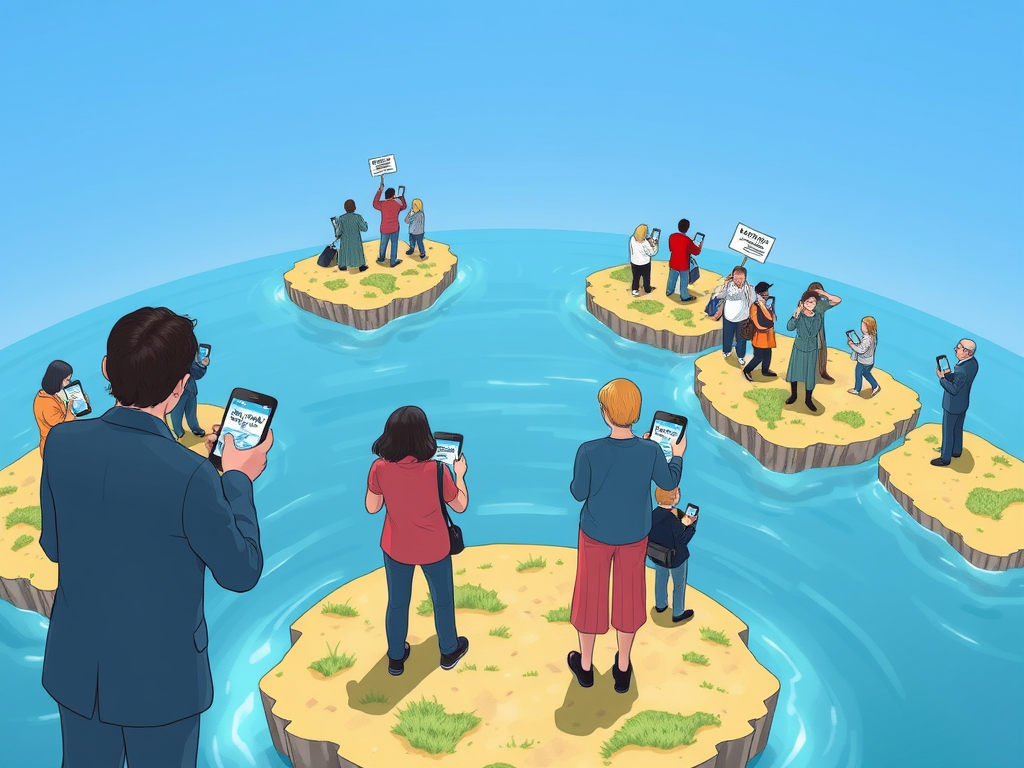
It feels as if we are living on separate islands of reality.
Each side believes the other is blind, manipulated, or malicious.
But polarization does not begin with hatred.
It begins with distance.
Distance in experience.
Distance in opportunity.
Distance in information.
Upgrade Your Home Cinema Experience! 🍿
Get ready to dive into a world of endless entertainment with the Amazon Fire TV. From the latest movies to your favorite TV shows, everything is just a click away. Experience stunning picture quality and seamless streaming like never before. ✨ Check it out here:https://amzn.to/4jNdKeV
A divided society illustration showing people standing on separate islands, each looking at their phones with different news headlines.
The Silent Thief of Happiness: Economic Inequality
Why More Money Doesn’t Mean More Happiness
Many people assume that higher income equals greater happiness.
Research shows something different.
When economic inequality increases, overall happiness declines, even if average income rises.
Why?
Because humans are comparative beings.
We measure our lives not in isolation, but relative to others.
This creates a powerful psychological force.
Relative Deprivation: The Invisible Wound
Relative deprivation is the feeling that:
“No matter how hard I try, others are always moving ahead.”
This feeling breeds:
- Frustration
- Resentment
- Loss of dignity
And eventually, distrust.
People stop believing the system is fair.
They begin to search for someone to blame.
Often, that blame is directed sideways — not upward.
A visual metaphor showing two people climbing ladders of unequal height, symbolizing unequal opportunity.

Stream Your Favorites Faster & Better! 📺
Why wait? Upgrade to Amazon Fire TV and enjoy lightning-fast streaming and thousands of apps at your fingertips. It’s time to level up your TV game! 🚀
✨ [Check Price on Amazon.com (USA)]
✨ [Check Price on Amazon.ca (Canada)]
Inequality Doesn’t Just Divide Wealth — It Divides Opportunity
The Opportunity Gap
Economic inequality reshapes access to:
- Education
- Healthcare
- Stable employment
- Safe neighborhoods
When opportunity becomes uneven, social mobility collapses.
People no longer believe effort leads to reward.
This belief is fatal to social trust.
How Class Becomes Identity
Over time, economic position hardens into identity.
- “People like us”
- “People like them”
Once class becomes identity, dialogue turns into defense.
Every disagreement feels personal.
Polarization deepens.
The Disintegration of Truth: Confirmation Bias and Fake News
Why Our Brains Betray Us
Humans are not rational machines.
We rely on shortcuts to survive complexity.
One of the strongest shortcuts is confirmation bias.
We prefer information that confirms what we already believe.
It feels safe.
It feels efficient.
It feels right.
But it is dangerous.
Fake News as a Weapon, Not a Mistake
Fake news is not random misinformation.
It is often designed to:
- Trigger fear
- Amplify anger
- Create “us vs. them” narratives
It exploits confirmation bias perfectly.
Once emotional investment is triggered, facts lose power.
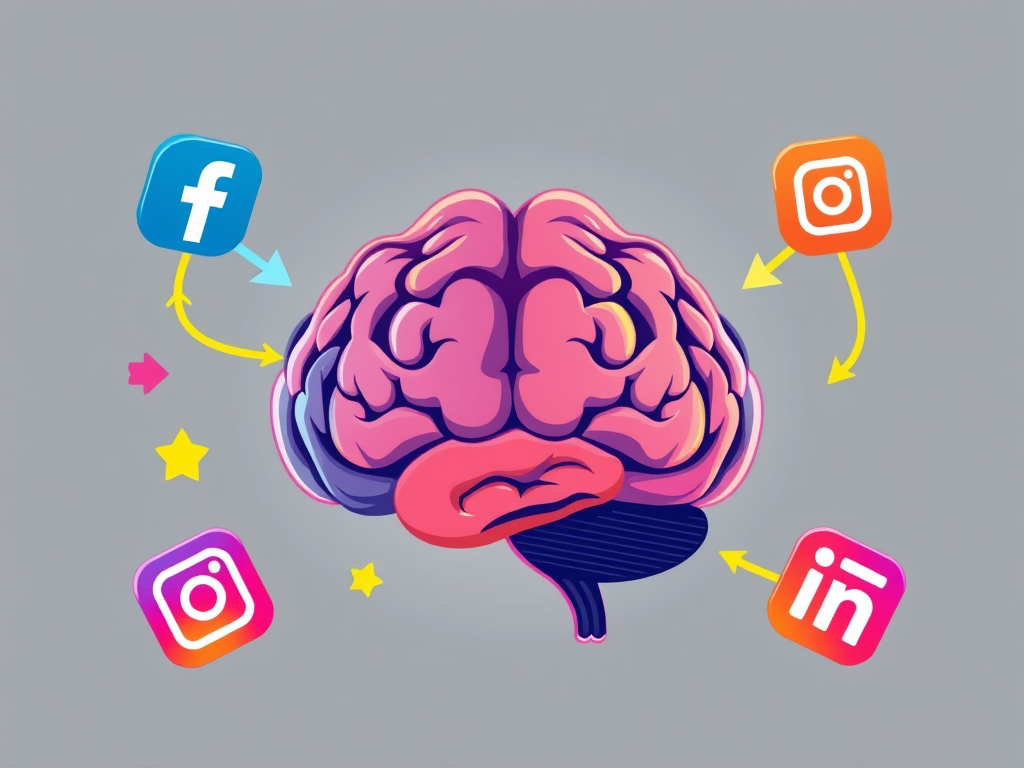
An illustration of a brain surrounded by social media icons, with arrows looping back to reinforce the same ideas.
The Algorithmic Trap: Living Inside Echo Chambers
How Algorithms Shape Belief
Social media platforms optimize for engagement.
Engagement thrives on emotion.
Emotion thrives on conflict.
So algorithms feed us:
- Content we agree with
- Content that outrages us
Rarely content that challenges us gently.
The Result: Parallel Realities
Two people can live in the same city and consume entirely different realities.
Different facts.
Different fears.
Different villains.
Dialogue becomes impossible because there is no shared ground.
Polarization Is Profitable — And That’s the Problem
Conflict drives:
- Clicks
- Shares
- Advertising revenue
- Political mobilization
Calm nuance does not go viral.
Outrage does.
This creates a system where division is rewarded, not resolved.
A Path Out of the Swamp: Rebuilding Dialogue and Empathy
Step 1: Escape the Echo Chamber
You do not need to agree with opposing views.
You only need to expose yourself to them.
- Read unfamiliar sources
- Follow thoughtful critics
- Slow down reactive consumption
This weakens polarization at its root.
Step 2: Replace Judgment With Curiosity
Instead of asking:
“How can they believe that?”
Ask:
“What experiences led them here?”
This single shift disarms hostility.
Understanding is not endorsement.
It is connection.
Step 3: Train the Empathy Muscle
Empathy is not weakness.
It is a skill.
It grows with practice.
- Listen without planning a rebuttal
- Acknowledge pain before debating facts
- Recognize shared human fears
Two people from different backgrounds sitting across a table, talking calmly with warm lighting.

Addressing the Structural Roots
Individual empathy matters.
But systems matter more.
Polarization will persist unless societies address:
- Economic inequality
- Educational access
- Healthcare stability
- Digital platform accountability
Social trust cannot survive permanent insecurity.
Why This Matters More Than Ever
Polarization does not just damage politics.
It damages:
- Mental health
- Families
- Communities
- Democracies
When people stop seeing each other as human,
violence — verbal or physical — becomes easier.
History is clear on this.
Final Summary
Social polarization is not a mystery.
It is the predictable outcome of:
- Rising inequality
- Algorithm-driven media
- Cognitive bias
- Erosion of shared truth
We are not broken.
The environment is.
Key Takeaways & Practical Tips
✔ What You Can Do Today
- Diversify your information sources
- Pause before reacting emotionally
- Ask “why” instead of assigning blame
- Support policies that reduce inequality
- Practice empathy as a daily habit
✔ What to Remember
- Disagreement is not the enemy
- Dehumanization is
- Understanding precedes healing
Final Thought
We do not need to think alike to live together.
We only need to remember that behind every belief is a human story.
Polarization thrives on distance.
Understanding begins with proximity.
And empathy — quietly, stubbornly — remains our strongest bridge.
Stream Your Favorites Faster & Better! 📺
Why wait? Upgrade to Amazon Fire TV and enjoy lightning-fast streaming and thousands of apps at your fingertips. It’s time to level up your TV game! 🚀
 Summit Select
Leave a comment