
1. The City’s Dawn and Each Person’s Day
Autumn in Mir City is more vibrant and bustling than ever. Dawn breaks quietly, but soon the streets come alive with an array of smells and sounds from countless cultures coexisting side by side. In this mosaic of communities, misunderstandings and conflicts often arise—but so do moments of empathy and genuine connection. This story follows four young people—Ji-eun from Korea, Amara from Nigeria, Carlos on a business assignment from Brazil, and Arab from India—whose paths cross as they prepare for the city’s annual “Culture Day” festival, and whose journey from tension to harmony reveals the true strength of diversity.
- Ji-eun begins her morning in the old market district, inhaling the scent of freshly made mung bean pancakes. After graduating college, she returned home and has spent the last three years running a retro-styled café called “Moonlight Melody.” Today she’ll be busy until late, juggling ingredient deliveries, menu revisions, and brainstorming sessions with her staff.
- Amara boards the city bus to her university campus. As a music major from Nigeria, she struggles with loneliness in this faraway land. A senior invited her to join the “Culture Day” dance troupe, but she feels more anxious than excited about performing in front of strangers.
- Carlos is setting up his laptop in a hotel lobby meeting room. Sent as a corporate envoy from Brazil, he has to coordinate the launch of his company’s new product line here in Mir City. Amid the pressure, he finds comfort in music—especially samba and bossa nova.
- Arab is interning at a design studio. Though tired from juggling work and school, he’s fascinated by researching traditional patterns from around the world and feels a deep passion for cultural heritage.
They don’t know each other yet; they just share the same city, breathe the same air, and today, they’ll all converge on a single public square.
2. First Encounter: Morning at Café “Moonlight Melody”
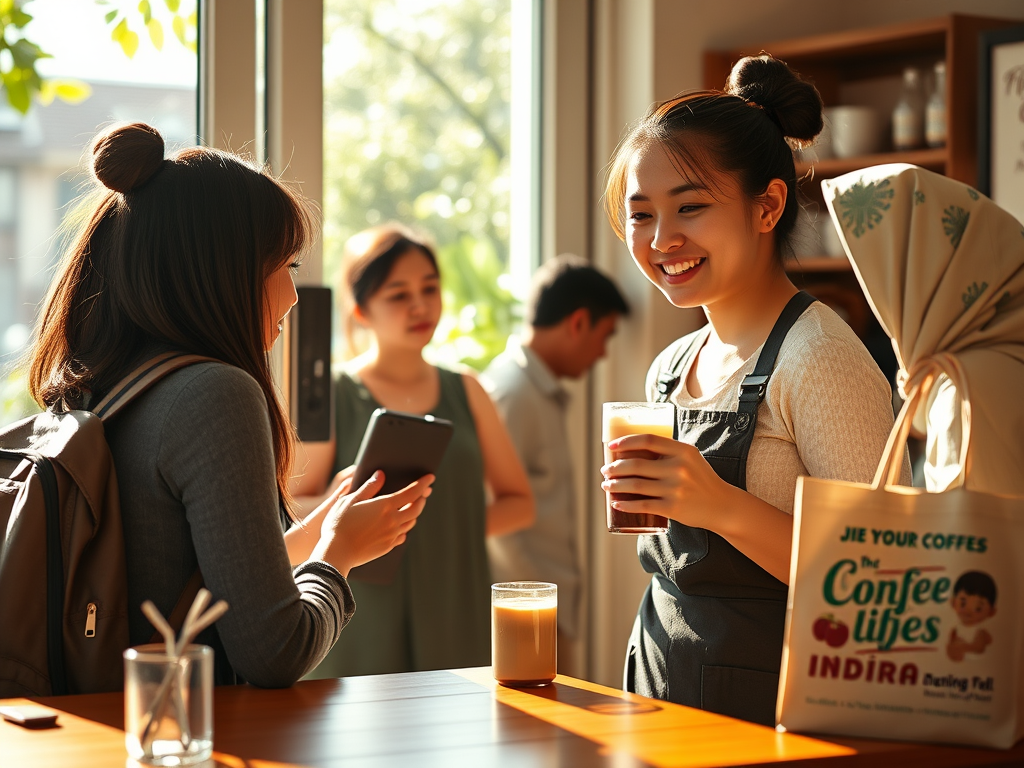
On a sunny morning, Ji-eun unlocks the café doors while her staff cheerfully calls, “Good morning!” At that moment, Amara steps in, her dark hair in a neat bun and a heavy backpack slung over one shoulder.
“An iced café latte, please—with just a little foam.”
“Sure! I’ll measure the foam perfectly with my own hands,” Ji-eun replies in her slightly awkward English, offering a warm smile. Amara shyly scratches her head, then grins gratefully in return.
Just then, Carlos enters carrying his laptop and settles into a corner by the window. He glances at the screen and murmurs to himself, “Não entendo… I don’t understand this part.” Ji-eun notices his frustration and approaches. “Would you like some help translating?” she asks. Startled, Carlos holds up his phone and says, “Maybe I’ll try Google Translate?” Their brief interaction carries a spark of camaraderie.
Moments later, Arab walks in carrying an eco-bag printed with Indian motifs. “I have a meeting at the city hall square today,” he tells Ji-eun as he unfolds his schedule. Smiling, she nods and says, “I hope your event goes well.” Though they haven’t partnered yet, each feels a subtle connection forming.
3. Preparing for “Culture Day”: Clash of Different Approaches
At the team meeting in the city hall square, tension crackles in the crisp autumn air. Ji-eun, assigned the Korean tea-tasting booth, sits beside Amara, leader of the Nigerian dance troupe, Carlos who will lead the Brazilian samba workshop, and Arab responsible for booth design.
- Ji-eun (softly): “When brewing traditional tea, we steep for three minutes so the flavors unfold. It’s meaningful only if visitors can sit quietly and savor the taste.”
- Amara (gesturing energetically): “Dance is all about spontaneity and energy! Louder music excites the audience and makes everyone join in.”
- Carlos (smiling lightly): “True, but samba thrives on freedom within rhythm. Too many rules kill the vibe.”
- Arab (taking notes): “I’ll blend each booth’s theme into a harmonious visual layout. But we need a clear color plan and traffic flow map.”
No one budges. Ji-eun worries that loud performances will drive tea-tasting guests away; Amara retorts that calm rituals won’t attract younger crowds. Carlos doubts the fusion of samba and traditional melodies, while Arab frets over clashing visuals. The meeting ends with everyone walking off, uneasy and frustrated.
4. Deep Rift Forged by Misunderstandings
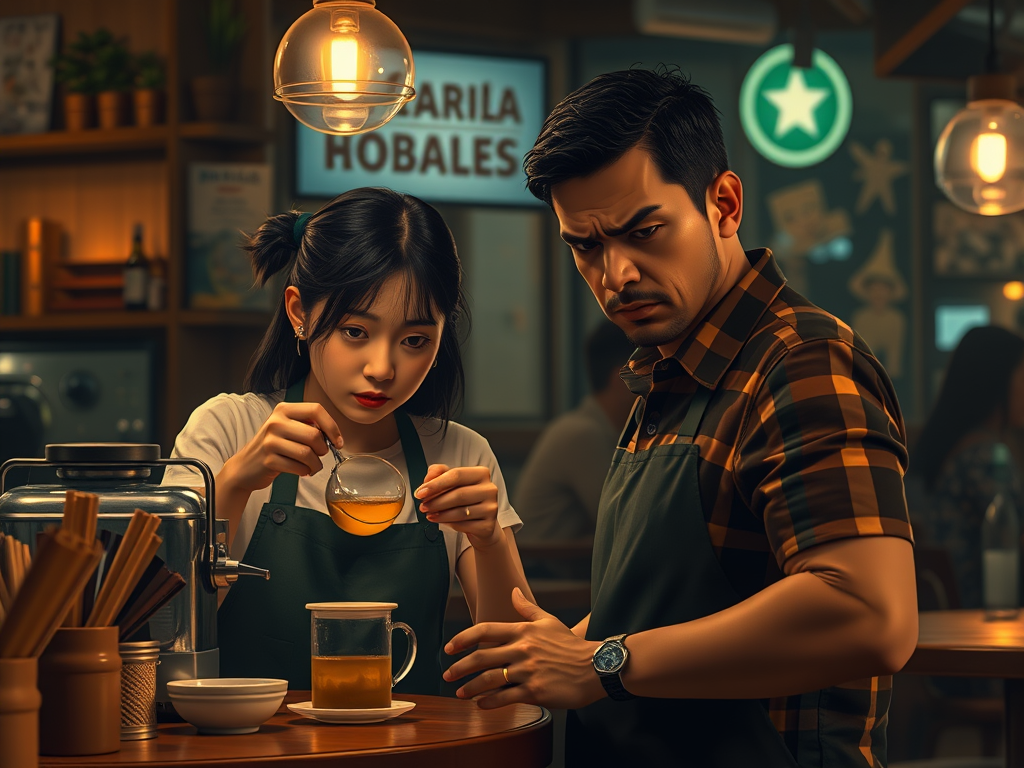
On the eve of the festival, each works late into the night. Ji-eun remains at the café perfecting her signature citron-ginger tea recipe. Suddenly, Carlos storms in and comments bluntly, “I’ve heard Koreans are so calm and reserved… Yet here you are, working around the clock.”
Ji-eun flushes with annoyance. “This is my job. Aren’t you busy preparing your workshop, too?” she snaps.
Carlos bristles: “My work is my responsibility, but this seems excessive.”
Their argument escalates until café patrons glance over in discomfort. Both storm off in opposite directions, wounded by each other’s words.
The next morning, Amara confides in Arab: “Collaborating with Koreans and Brazilians is just too hard.” Arab tries to soothe her: “Isn’t the whole point of this festival to celebrate diversity?” But the rift between the teams has grown wide.
5. A Precarious Start to the Festival
At dawn on “Culture Day,” the square fills with hundreds of eager visitors. Backstage, Amara’s hands tremble as she grasps the microphone. But the speakers crackle—and then fall silent. Panic sets in, and tears brim in her eyes.
At just the right moment, Carlos dashes forward and plugs in his Bluetooth speaker.
“Try this—my setup is more reliable!”
Amara blinks in surprise, then throws her arms around him. “Obrigada!” she exclaims (Portuguese for “Thank you”). The crowd erupts in encouraging applause.
Later, during Carlos’s samba workshop, he notices anxious onlookers hesitant to join. From the side of the stage drifts the gentle melody of a gayageum. Ji-eun has quietly set up and begun playing. The fusion of traditional string instruments and samba rhythm sparks immediate cheers, and even the shyest spectators start dancing along. Carlos rushes over and beams, “This is incredible—music really can bridge cultures!”
6. Harmony Forged by Small Miracles
As afternoon unfolds, each booth thrives:
- Tea Tasting Booth: Ji-eun guides visitors through samples of fragrant citron and warming ginger teas. Crowds sit peacefully, savoring each sip while she shares cultural anecdotes.
- Dance Performance Stage: Amara and her troupe overcome their nerves to deliver a vibrant display of traditional Nigerian dance—feet stomping in unison, voices chanting in celebration.
- Samba Workshop: With Ji-eun’s gayageum accompaniment, Carlos leads an exhilarating free-form samba session. The blend of Korean strings and Brazilian percussion becomes the day’s highlight.
- Exhibit Design Pavilion: Arab’s expansive mural—an interplay of Indian mandalas, Korean hanbok patterns, Brazilian tropical foliage, and West African motifs—wins praise for its seamless integration.
Attendees collect stamps at each booth, clapping and laughing as they go. Children happily mimic samba steps, while elders nod in appreciation at the tea ceremony’s elegance. In every corner of the square, a shared spirit of unity takes hold.
7. A Night of Unity and a New Beginning
As dusk falls, the square glows with lanterns and lantern-shaded booths. The four gather behind the main stage, sharing simple refreshments under string lights. Their faces soften as they reflect on the day:
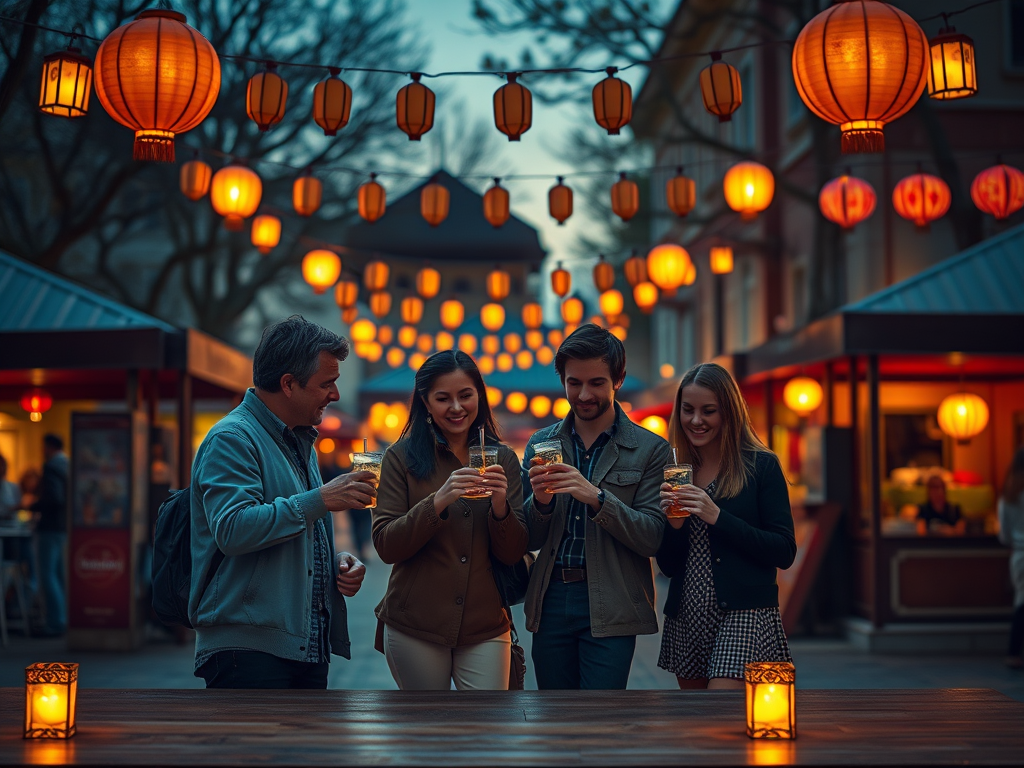
- Ji-eun: “At first, we thought only our way could work. But by embracing each other’s traditions, we created something richer.”
- Amara: “Your tea gave me new inspiration for dance—there’s power in stillness I never knew.”
- Carlos: “Samba is freedom, but today it found new life with gayageum. We all learned from each other.”
- Arab: “Design isn’t just decoration—it’s a bridge between people. Today, we built that bridge together.”
The final lights dim and the last guests drift away, but in the four friends’ hearts, a new bond and shared vision burn bright.
“What should we collaborate on next?” Ji-eun asks.
“How about an Indian chai party?” Amara suggests with a grin.
“And a Brazilian barbecue to go with it,” Carlos adds.
“Plus a traditional instrument showcase!” Arab chimes in enthusiastically.
That autumn night in Mir City, they proved that divergent cultures, when met with openness and respect, can bloom into harmony. From conflict and misunderstanding sprang creativity and friendship—planting seeds of hope for a future where diversity is not just tolerated, but celebrated.
“For effective winter skin care, you need a routine you can stick to. I found that applying [CeraVe Moisturizing Cream] followed by a [COSRX Snail Essence] mask, while watching Korean shows through this [Amazon TV Kit], makes the process so much more enjoyable. I highly recommend trying this relaxing combo!” https://amzn.to/3NP2CSS, https://amzn.to/4t7CuTF, https://amzn.to/4k6m8GQ
Stream Your Favorites Faster & Better! 📺
Why wait? Upgrade to Amazon Fire TV and enjoy lightning-fast streaming and thousands of apps at your fingertips. It’s time to level up your TV game! 🚀
 Summit Select
Leave a comment