Introduction: Where Do We Stand Today?
In 2025, artificial intelligence (AI) has evolved beyond a mere technology trend to become the “engine of innovation” reshaping every industry and the very structure of society. With generative AI, autonomous agents, large language models, and seamless human-AI collaboration becoming part of daily life, we are witnessing rapid changes that are fundamentally impacting the economy, industry, and cybersecurity. This article explores the latest AI trends, innovation, economic outlook, and the future of cybersecurity—key issues that everyone should pay attention to right now.
“Intermittent Fasting: A Gentle Reset for Body and Mind”
1. The Cutting Edge of AI Innovation: Agentic AI and Hyper-Personalization
At the heart of AI innovation in 2025 is “agentic AI.” While traditional AI was limited to automation and data analysis, today’s AI possesses autonomy and decision-making abilities, evolving into a true partner for humans. Agentic AI understands user intentions, designs and executes complex multi-step tasks independently, and learns and makes decisions in real time.
For example, an AI-powered marketing agent doesn’t just analyze data; it autonomously develops strategies to achieve KPIs, executes campaigns, measures performance, and makes adjustments—all without human intervention. This dramatically increases efficiency, accuracy, and the speed of innovation.
AI has also ushered in the era of hyper-personalization. By analyzing individual consumer preferences, behaviors, and contexts in real time, AI delivers tailored recommendations, services, and products. This transformation is redefining customer experience and has become a key driver of competitive advantage for businesses.
2. Economic Outlook: How AI Is Reshaping Industries and Jobs
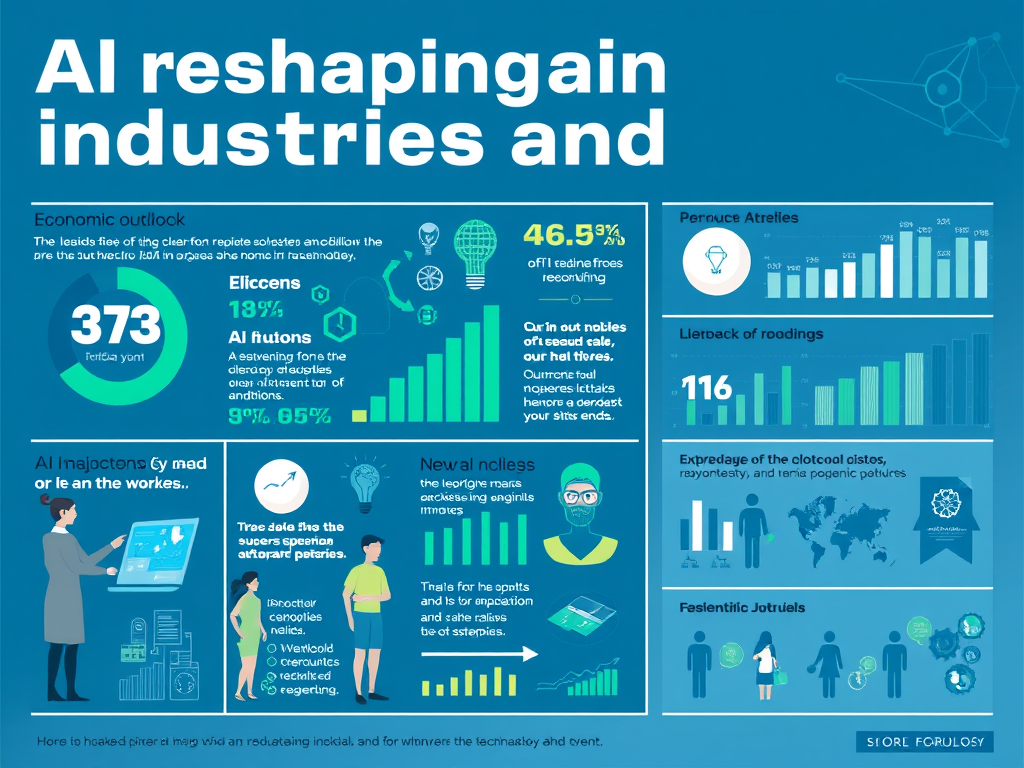
AI is already changing the global economic landscape. Leading research firms like SAS, Deloitte, and McKinsey predict that companies fully leveraging AI will dominate the IT competition in 2025. Routine tasks are being automated by AI, allowing humans to focus on more creative and strategic work.
The commercialization and open-sourcing of large language models (LLMs) have lowered the barriers to entry for AI services. Anyone can now use AI for entrepreneurship, content creation, data analysis, and customer service innovation. This opens up new opportunities for small businesses, startups, and freelancers.
However, as AI adoption spreads rapidly, the job market is also evolving. Repetitive roles are disappearing, and creative and analytical skills for collaborating with AI are more important than ever. Lifelong learning, retraining, and digital transformation have become essential for nations, companies, and individuals alike.
3. Cybersecurity: New Threats and Defenses in the Age of AI
As AI brings innovation to the economy and society, cybersecurity threats are also entering a new phase. In 2025, AI-powered attacks—such as AI phishing, deepfakes, and automated hacking—are becoming commonplace. Poor data quality and bias threaten the reliability and safety of AI systems.
To counter these threats, AI-driven cybersecurity solutions are advancing rapidly. AI now analyzes network traffic in real time, detects anomalies, and automatically blocks threats. Security professionals use AI-generated threat scenarios to simulate and prepare defense strategies in advance. The future will see “AI vs. AI” as the new frontier in cybersecurity.
4. Human-AI Collaboration: A New Normal and Social Change
Another key trend for 2025 is “human-AI collaboration.” Rather than replacing humans, AI is extending and enhancing human capabilities. In fields such as healthcare, education, finance, and manufacturing, AI supports expert decision-making, delivers personalized services, and boosts productivity.
This shift reaffirms the principle that “technology ultimately serves people.” The ability to work alongside AI—problem-solving, creativity, critical thinking, and empathy—will become increasingly vital.
2026 North American Economy 전망: Financial Resilience
5. Preparing for the Future: How to Seize Opportunities for Innovation
- Strengthen AI Skills: Everyone should develop the ability to use AI tools (generative AI, data analytics, automation tools) in practical settings.
- Commit to Lifelong Learning: Keeping up with rapidly changing technology trends and industry structures requires continuous learning and self-improvement.
- Build Trust and Ethics: Addressing AI bias, protecting personal data, and ensuring transparency are crucial for long-term success.
- Enhance Cybersecurity Awareness: Technical skills and awareness are needed to counter AI-driven security threats.
Conclusion: AI and Innovation—A Choice for Everyone’s Future

In 2025, artificial intelligence stands at the center of innovation, fundamentally transforming the economy, society, industries, and our everyday lives. Human-AI collaboration, hyper-personalized services, the fusion of automation and creativity, and advanced cybersecurity—all these changes present new opportunities and challenges for everyone.
Now is the time to prepare for the future amid the wave of AI and innovation, and to lead the change. At the heart of these transformations, your growth and success are more achievable than ever.
“For effective winter skin care, you need a routine you can stick to. I found that applying [CeraVe Moisturizing Cream] followed by a [COSRX Snail Essence] mask, while watching Korean shows through this [Amazon TV Kit], makes the process so much more enjoyable. I highly recommend trying this relaxing combo!”https://amzn.to/3NP2CSS, https://amzn.to/4t7CuTF, https://amzn.to/4k6m8G
<< You Might Also Lkie >>
 Summit Select
Leave a comment