
1. What is Debt Management?
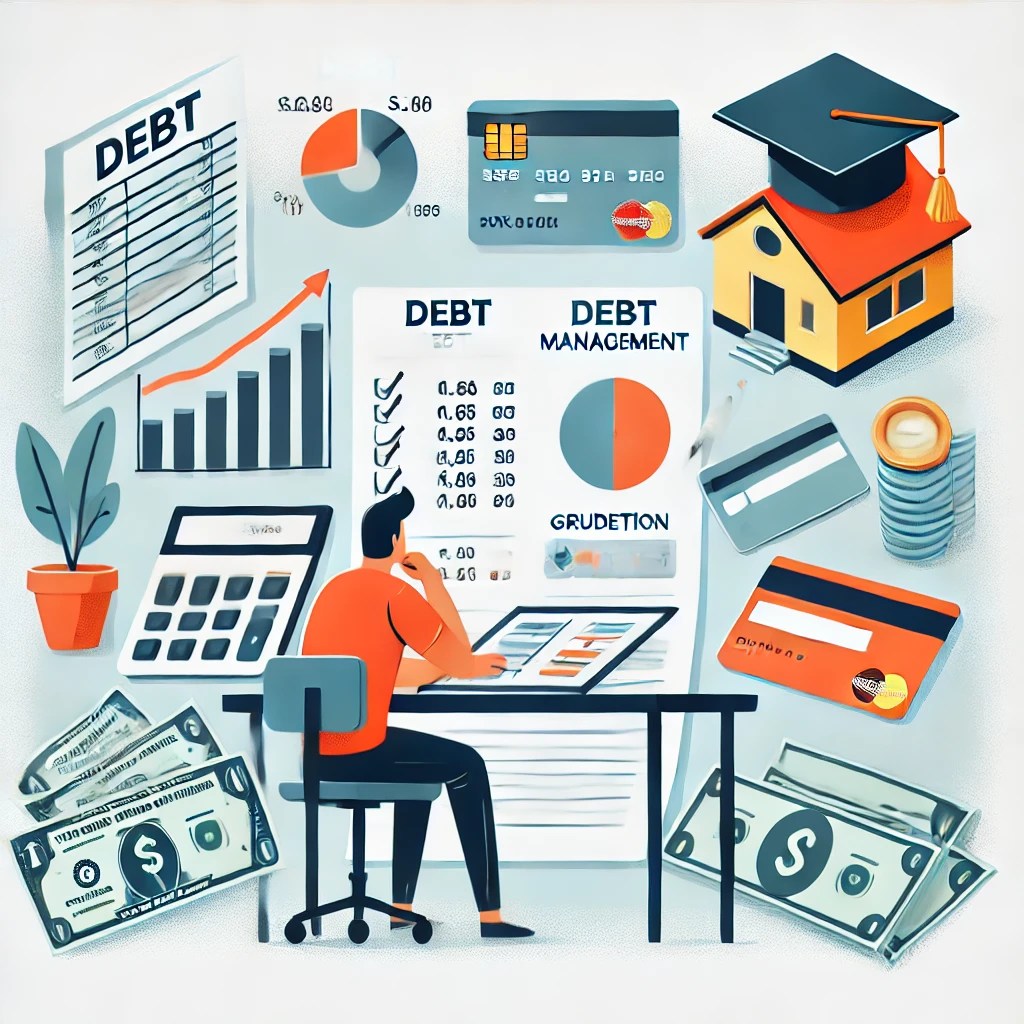
Debt management involves systematically organizing and controlling your financial obligations to maintain financial stability. It’s not just about paying off debt but also achieving long-term financial goals. From mortgages to student loans and credit cards, debt is an integral part of modern life. Effective debt management helps ensure stability and better creditworthiness.
2. The Risks of Neglecting Debt Management
Ignoring debt management can lead to serious financial issues. High-interest rates can make debts balloon, potentially resulting in bankruptcy. Poor credit scores from missed payments can restrict access to future loans or require higher interest rates, creating financial stress that impacts overall quality of life.
Key Risks:
- Escalating interest payments
- Falling credit scores
- Financial instability
- Loan application rejections
3. Benefits of Effective Debt Management
Proper debt management doesn’t just reduce debt—it’s a tool for securing financial health and preparing for the future.
Financial Stability
By organizing repayment schedules and optimizing your budget, you can maintain flexibility even during emergencies.
Improved Credit Scores
Timely payments and reduced debt contribute to a better credit score, enabling lower interest rates and improved loan terms in the future.
4. Key Principles of Effective Debt Management
Success in debt management begins with a solid foundation of best practices.
Listing Your Debts
Create a comprehensive list of all your debts, including balances, interest rates, and due dates. This overview helps you prioritize repayment.
Setting Repayment Priorities
Focusing on high-interest debts first is often the best strategy, as it minimizes long-term interest costs.
5. Practical Strategies to Reduce Debt
Budget Planning
Understand your fixed and variable expenses to create a clear monthly budget. This ensures you allocate funds for debt repayment effectively.
Cutting Unnecessary Expenses
Eliminate unnecessary subscriptions or luxury purchases to free up funds for repayment.
Generating Additional Income
Consider side hustles or freelance work to boost your income and accelerate debt payments.
6. The Role of Debt Consolidation
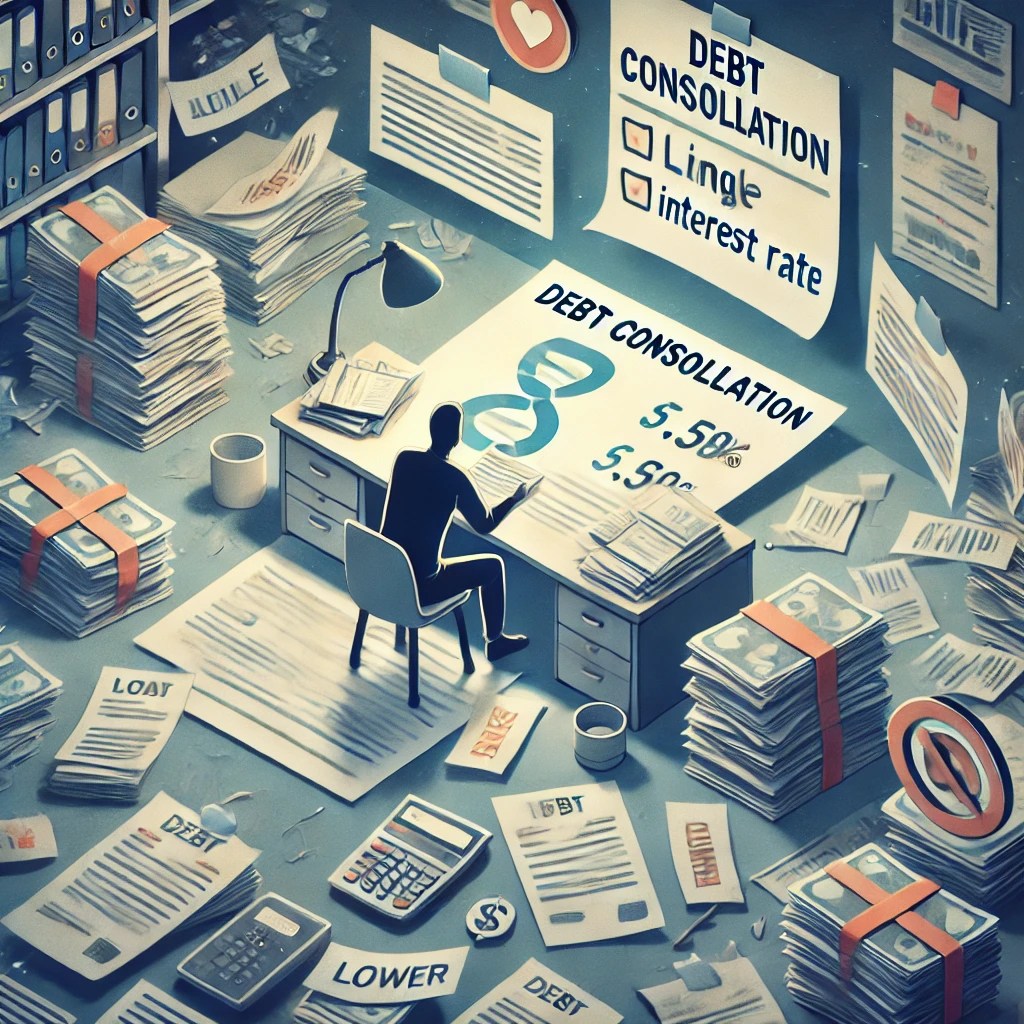
Debt consolidation involves combining multiple debts into one with a lower interest rate. This simplifies your repayment plan and reduces your monthly financial burden. However, it’s not always suitable, so evaluate your circumstances carefully.
7. Debt Management and Credit Cards
Credit cards, while convenient, are often the primary culprits of mounting debt. Managing them responsibly is crucial for effective debt management.
Tips for Managing Credit Cards
- Pay on Time: Avoid late fees by paying off your balance on the due date.
- Limit Usage: Use credit cards only for necessary purchases.
- Choose Low-Interest Cards: Opt for credit cards with lower rates when possible.
- Avoid Bonus Traps: Don’t be tempted by rewards that could encourage overspending.
8. Using Technology for Debt Management
Modern technology offers numerous tools to streamline debt management. Apps and software can help track expenses, organize payments, and provide reminders.
Recommended Apps
- Mint: For budgeting and tracking debts.
- YNAB (You Need A Budget): Helps you create actionable financial plans.
- Debt Payoff Planner: Prioritizes and monitors repayment progress.
9. Seeking Expert Help: Financial Consultants
When managing debt becomes overwhelming, financial consultants can provide invaluable guidance.
What Consultants Offer
- Personalized debt management strategies
- Budgeting advice
- Negotiation support with creditors
- Guidance on debt consolidation and refinancing
Ensure you choose a certified, reputable consultant to maximize the benefits.

10. Building Habits for Sustainable Debt Management
Long-term debt management requires building consistent habits that promote financial health.
Practical Habits
- Record daily expenses to track spending patterns.
- Regularly review and adjust your budget.
- Avoid impulsive purchases and focus on necessities.
- Maintain a financial journal for clarity and accountability.
Small, consistent actions can lead to significant results over time.
11. Teaching Debt Management to the Younger Generation
Educating the younger generation about debt management lays the foundation for better financial decisions.
Key Lessons
- The pros and cons of credit cards.
- Basics of budgeting and financial planning.
- Understanding loans and interest rates.
Schools, parents, and online resources all play a vital role in fostering financial literacy.
12. Government Programs for Debt Assistance
Governments often offer programs to assist those struggling with debt. Familiarizing yourself with these options can provide much-needed relief.
Examples of Programs
- Debt Restructuring: Adjusted repayment plans to ease the burden.
- Emergency Loans: Low-interest loans for immediate needs.
- Financial Education Initiatives: Programs to improve financial literacy.
13. Strategies for Debt Management During Emergencies
Emergencies like job loss or unexpected medical bills can strain your finances. Strategic debt management can help mitigate these impacts.
Emergency Measures
- Use emergency savings to handle immediate debt obligations.
- Reevaluate and prioritize essential expenses.
- Request extensions or adjustments from creditors.
- Leverage government or community assistance programs.
14. Success Stories in Debt Management
Hearing about others’ successes can be motivational. These stories demonstrate how disciplined strategies can lead to financial recovery.
Example 1:
A young professional reduced credit card debt by creating a strict budget and using a debt repayment app.
Example 2:
A recent graduate paid off student loans by combining freelance income with reduced living expenses.
Example 3:
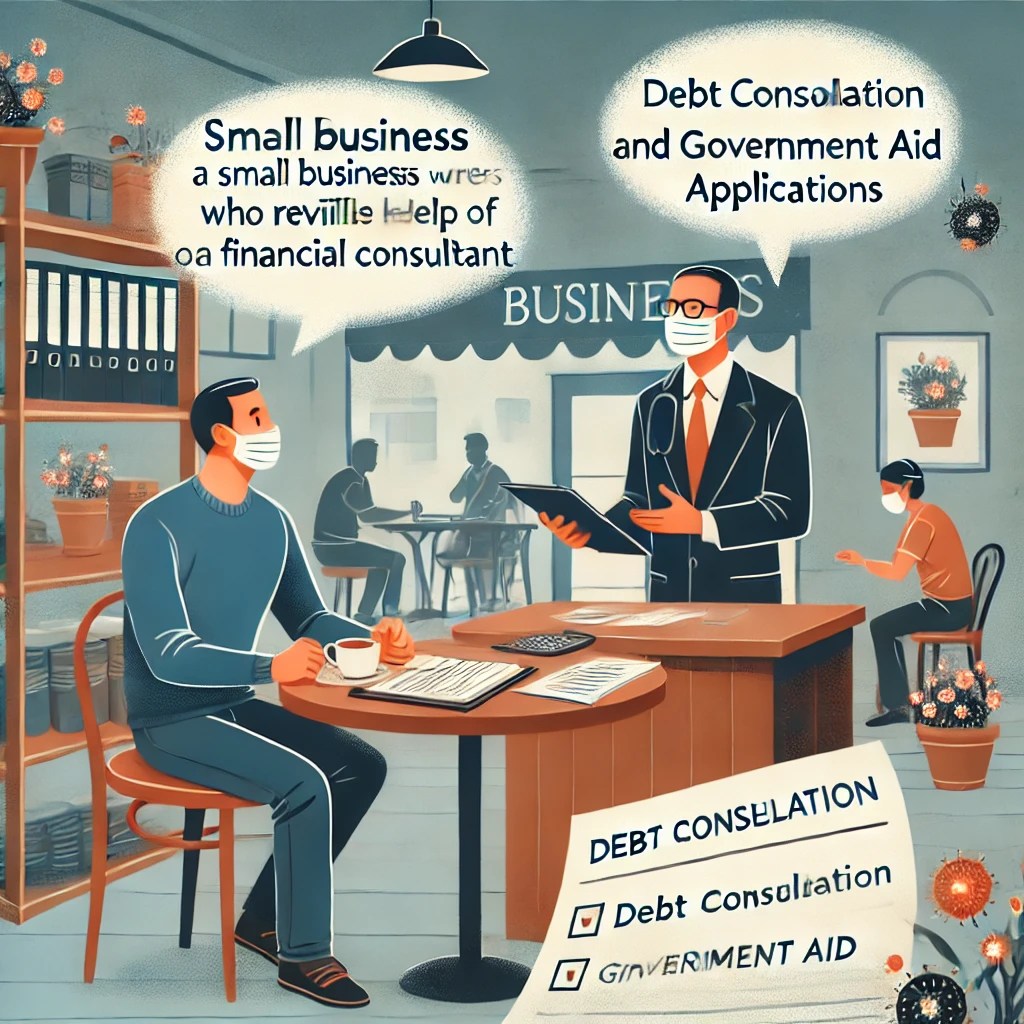
A small business owner avoided bankruptcy by negotiating lower payments and consolidating debts.
15. Maintaining Sustainable Debt Management
The ultimate goal of debt management is not just paying off debts but creating a sustainable financial future.
Sustainability Tips
- Set long-term financial goals beyond debt repayment.
- Regularly review your financial health and make necessary adjustments.
- Celebrate small victories to stay motivated.
- Build a network of financial advisors and supportive peers.
Conclusion
Debt management is about more than clearing debts—it’s a vital step toward achieving financial stability and independence. With proper planning, execution, and support, anyone can manage their debt effectively and build a brighter financial future.
 Summit Select
Leave a comment