
1. Introduction: The Future of Healthcare with AI
Artificial Intelligence (AI) is no longer just a futuristic concept; it’s a transformative force that is reshaping industries, including healthcare. By enhancing diagnostic accuracy, tailoring treatment plans, and improving patient monitoring, AI is revolutionizing the way we approach medicine.
From detecting diseases earlier than ever before to supporting overburdened healthcare systems, AI is stepping in as an indispensable tool. But how exactly is AI being used in healthcare, and what challenges and opportunities does it bring? Let’s explore the key ways AI is revolutionizing the healthcare landscape.
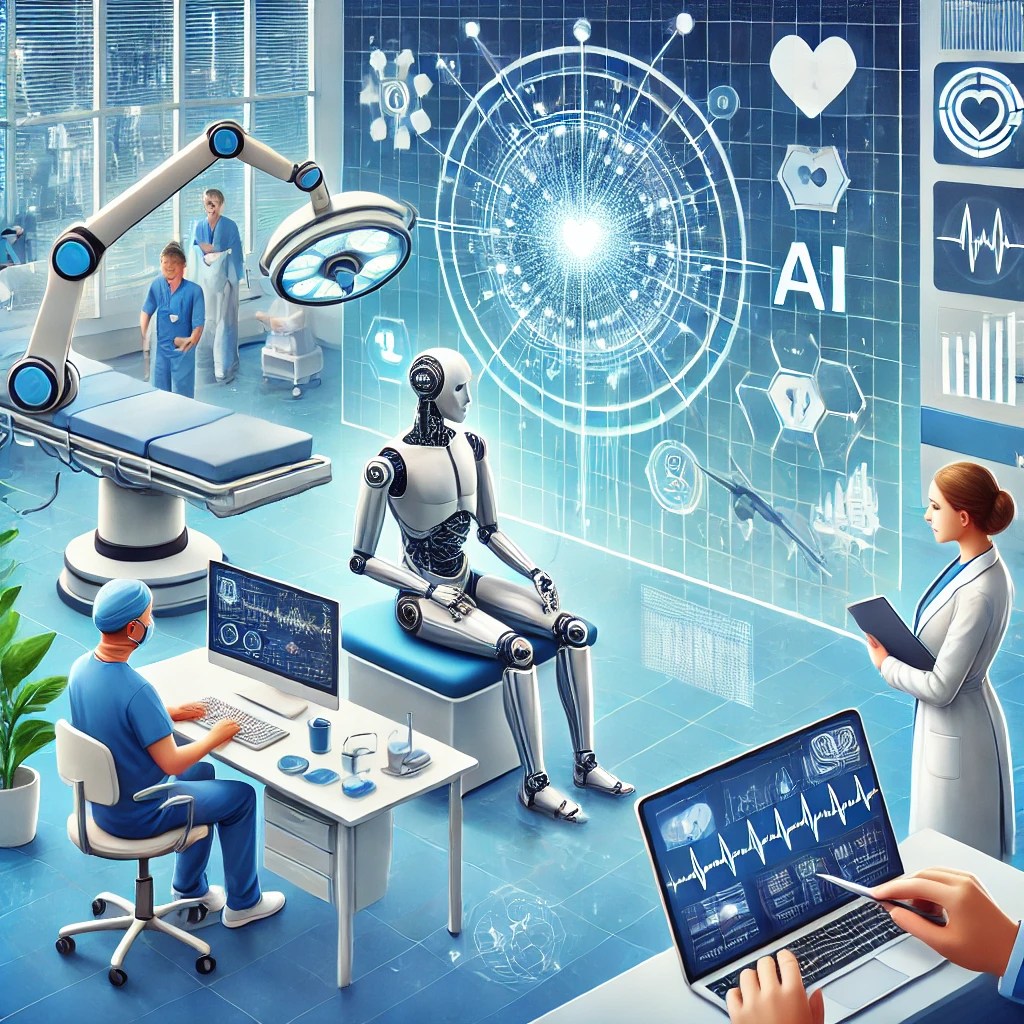
2. The Need for AI in Healthcare
Challenges in Current Healthcare Systems
Modern healthcare faces several significant challenges:
- Diagnostic Errors: Even the best physicians can make mistakes, leading to delayed or incorrect diagnoses.
- Resource Shortages: Increasing patient numbers often outpace available medical professionals and facilities.
- Time and Cost Constraints: Analyzing patient data and monitoring health takes immense time and resources.

Why AI is Essential
AI addresses these gaps by offering rapid, accurate data analysis, improving efficiency, and reducing errors. Its ability to process massive amounts of information makes it an invaluable tool for modern medicine.
Transition:
“Let’s take a closer look at the areas where AI is already making a difference in healthcare.”
3. Key Areas of AI Application in Healthcare
1) Enhancing Diagnostic Accuracy
AI excels at analyzing large datasets to identify patterns and detect diseases early.
- Examples:
- Google DeepMind: Their AI system has achieved the same diagnostic accuracy as expert ophthalmologists in detecting eye diseases.
- Medical Imaging: AI can analyze CT scans, MRIs, and X-rays to identify conditions like cancer, cardiovascular disease, and pneumonia in their early stages.

2) Personalized Treatment Plans
AI uses patient data to recommend highly customized treatment options.
- Examples:
- IBM Watson Health: This system provides tailored cancer treatment suggestions by analyzing patient histories and clinical trial data.
- Genetic Analysis: AI predicts how specific drugs will affect patients based on their genetic profiles, minimizing side effects.
3) Patient Monitoring and Predictive Care
Wearable devices integrated with AI track patients’ vital signs in real time, detecting potential issues before they escalate.
- Applications:
- Devices like Apple Watch monitor heart rates and ECG data, alerting users to irregularities like atrial fibrillation.
- AI predicts complications such as infection risks or disease progression based on historical patient data.
4) Accelerating Drug Discovery
AI significantly reduces the time required to develop new medications by analyzing chemical compounds and predicting their efficacy.
- Real-World Example: During the COVID-19 pandemic, AI was instrumental in identifying potential treatments and accelerating vaccine development.
Transition:
“These advancements sound promising, but let’s explore real-world examples to see the impact AI has already made in healthcare.”
4. Real-World Success Stories of AI in Healthcare
1) The UK: AI in Early Eye Disease Detection
Google DeepMind partnered with the NHS to develop an AI system that diagnoses eye diseases with precision. This innovation has helped prevent blindness in thousands of patients by enabling earlier interventions.
2) The US: AI-Powered Cancer Treatments
The Memorial Sloan Kettering Cancer Center uses AI to analyze patient data and recommend the most effective cancer treatments. This approach has improved survival rates and treatment outcomes.
3) Japan: AI-Assisted Elderly Care
Japan, facing an aging population, has implemented AI-powered robots to assist in elderly care. These robots monitor health, assist with daily tasks, and reduce the workload on healthcare professionals.

5. Benefits of AI in Healthcare
1) Improved Accuracy and Efficiency
AI analyzes complex data sets with incredible precision, enabling faster and more reliable diagnoses and treatments.
2) Broader Access to Healthcare
AI-driven telemedicine services ensure that even patients in remote or underserved areas receive high-quality care.

3) Cost Reduction
AI minimizes unnecessary tests and optimizes treatment processes, significantly reducing healthcare costs.
6. Challenges and Limitations of AI in Healthcare
1) Data Privacy and Security Concerns
Handling sensitive patient data requires robust security measures to prevent breaches and misuse.
2) Building Trust Among Patients and Healthcare Providers
Transparency in AI recommendations is essential to ensure that both patients and doctors trust the system’s outputs.

3) Bridging the Technology Gap
Access to AI technology remains uneven, especially in developing regions, creating disparities in healthcare quality.
Transition:
“Overcoming these challenges will be critical for maximizing the benefits AI can offer in healthcare.”
7. The Future of AI in Healthcare
1) Precision Medicine
AI will continue to integrate genetic data to create even more personalized prevention and treatment strategies.
2) Predictive Healthcare
AI will analyze individual health data to predict disease risks and recommend preventative measures.
3) Expanding Roles for AI-Powered Robots
Robots equipped with AI will assist in surgeries, provide routine patient care, and even offer emotional support to patients.

Conclusion: A Healthier Future with AI
AI is not just a tool—it’s a game-changer for the healthcare industry. By enhancing diagnostic accuracy, personalizing treatments, and improving access to care, it is reshaping the medical landscape.
However, its success hinges on addressing ethical concerns, data security, and equitable access to technology. With collaboration among governments, healthcare providers, and tech companies, AI has the potential to build a healthier and more efficient future.
Question:
How do you envision AI transforming healthcare in the next decade? Share your thoughts in the comments below—we’d love to hear your perspective!
 Summit Select
Leave a comment