
Introduction
Time travel: it’s a fascinating concept that’s captivated humans for centuries. From the pages of H.G. Wells’ The Time Machine to Hollywood blockbusters, time travel poses an intriguing “what if.” But what would happen if time travel were possible? More importantly, could you change the past, rewrite history, and alter your fate?
These questions lie at the heart of one of the most engaging mysteries in science and philosophy. In this article, we’ll dive into the theories, paradoxes, and questions surrounding time travel. Through examples and thought-provoking questions, we’ll explore ideas that push the boundaries of our understanding. Whether you’re a science enthusiast or a casual reader, prepare for a journey through the mysteries of time.
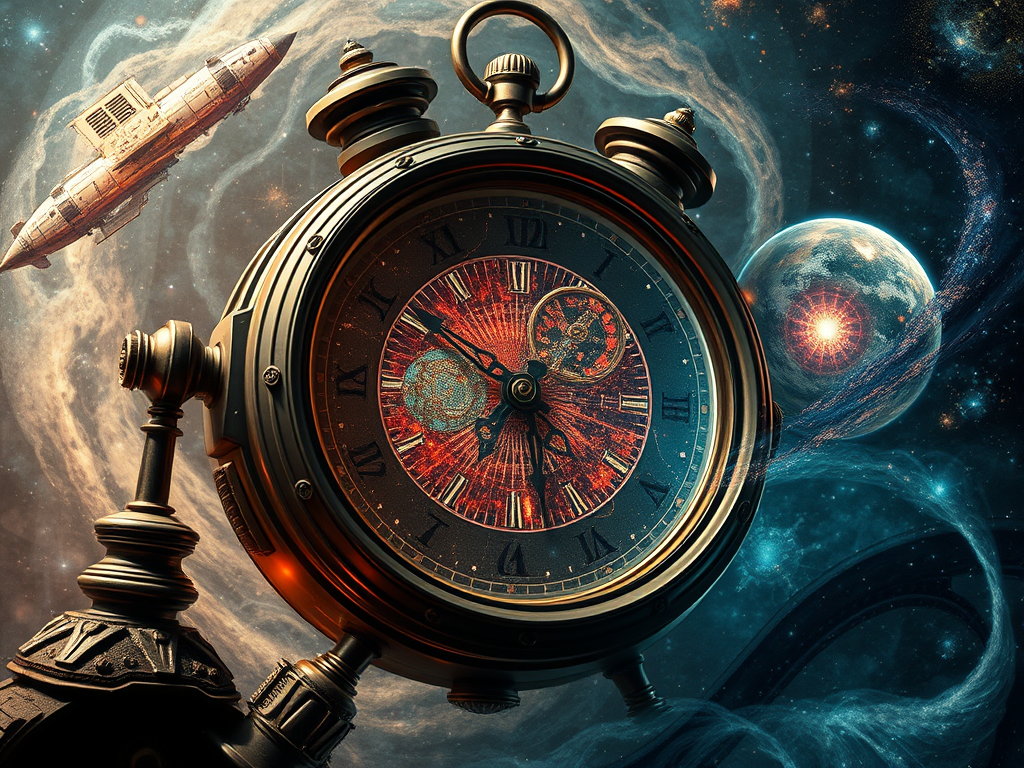
Understanding Time Travel: Is It Possible?
Time travel isn’t just a science fiction fantasy—it’s a concept with some grounding in scientific theory. While we experience time as a one-way journey, scientists have shown that time is more complex than it seems. The Theory of Relativity, proposed by Albert Einstein, was revolutionary in suggesting that time can slow down or speed up based on speed and gravity. This theory suggests that, theoretically, time travel may be possible under specific conditions.
Einstein’s relativity may allow for time dilation (where time moves slower or faster depending on speed), but actual backward time travel—the kind that lets you visit the past—is much more complicated. In science fiction, it’s often depicted as simple, but the reality would require an understanding and control of physics that we haven’t yet achieved.
The Grandfather Paradox: Can You Change Your Past?
Imagine you travel back in time and accidentally prevent your grandfather from meeting your grandmother. Would you still exist? This is known as the grandfather paradox—a classic scenario that illustrates the problems with changing past events. If you were never born, how could you go back in time in the first place? The paradox shows that changing the past may be impossible because it creates a loop of contradictions.
To simplify, think of it like editing a book after it’s been published. If you rewrite an essential chapter, it could change the entire story, including the parts that led to you wanting to change it in the first place! This paradox raises big questions about causality and whether actions taken in the past would “stick” or simply revert back.
The Multiverse Theory: A World of Infinite Possibilities
One solution to the grandfather paradox is the multiverse theory. According to this idea, every decision or action we take spawns a new universe with different outcomes. So, if you traveled back in time and prevented your grandfather’s marriage, you wouldn’t erase your own existence but instead create an alternate timeline. You’d return to your original universe with no changes, while the alternate universe carries on with its own altered history.
Consider it like creating a “fork” in the road: when you take one path, the other still exists as an alternate reality. This theory would mean that we can change the past—just not in the way we imagine, since any changes would affect a different timeline, not the one we originated from. If multiverse theory is true, we could theoretically make any change in an alternate past without risking our original timeline.
Fixed Timeline Theory: The Unchangeable Past
Another perspective, the fixed timeline theory, suggests that the past is “locked in.” This means no matter how hard you try, you can’t change history—whatever you do in the past was always meant to happen. Imagine a movie where every scene is pre-set; even if you could jump back to a previous scene, you couldn’t alter its outcome. You could interact with it, even participate, but everything would unfold just as it always had.
This theory is often explored in fiction, where characters try to change the past only to realize they were part of those very events. For instance, if you traveled back to prevent a historical accident, your actions might inadvertently cause the accident instead. It’s a bit like a self-fulfilling prophecy where your attempt to change something is actually what brings it into being.

Dynamic Timeline Theory: The Changeable Past and Its Consequences
In contrast to the fixed timeline theory, dynamic timeline theory proposes that the past can be altered, resulting in an entirely new present. With each change, the world adapts and shifts. However, this theory opens the door to unpredictable consequences and a phenomenon known as the butterfly effect—a small action in the past, like stepping on a butterfly, could lead to major differences in the future.
Imagine traveling back to a time before the internet and removing a single computer from existence. This might seem small, but in a world where technology shapes every aspect of life, the ripple effects could be massive, potentially resulting in a completely different present. This theory is frequently used in time-travel fiction, allowing characters to “fix” past mistakes, only to return to an altered, sometimes worse, reality.
Quantum Mechanics: Does the Future Affect the Past?
In quantum mechanics, particles operate in strange, almost paradoxical ways. The theory of superposition suggests that particles can exist in multiple states at once. This phenomenon could mean that all possible timelines might exist simultaneously at the quantum level. Quantum entanglement—where particles affect each other regardless of distance—also hints that time may not be as linear as we think.
Quantum theory leaves room for the idea that timelines could interact in ways we don’t fully understand. Perhaps, rather than us changing the past, the past, present, and future are connected in a web, where every moment impacts every other. In this view, time travel might be less about moving through time and more about shifting between interconnected realities.
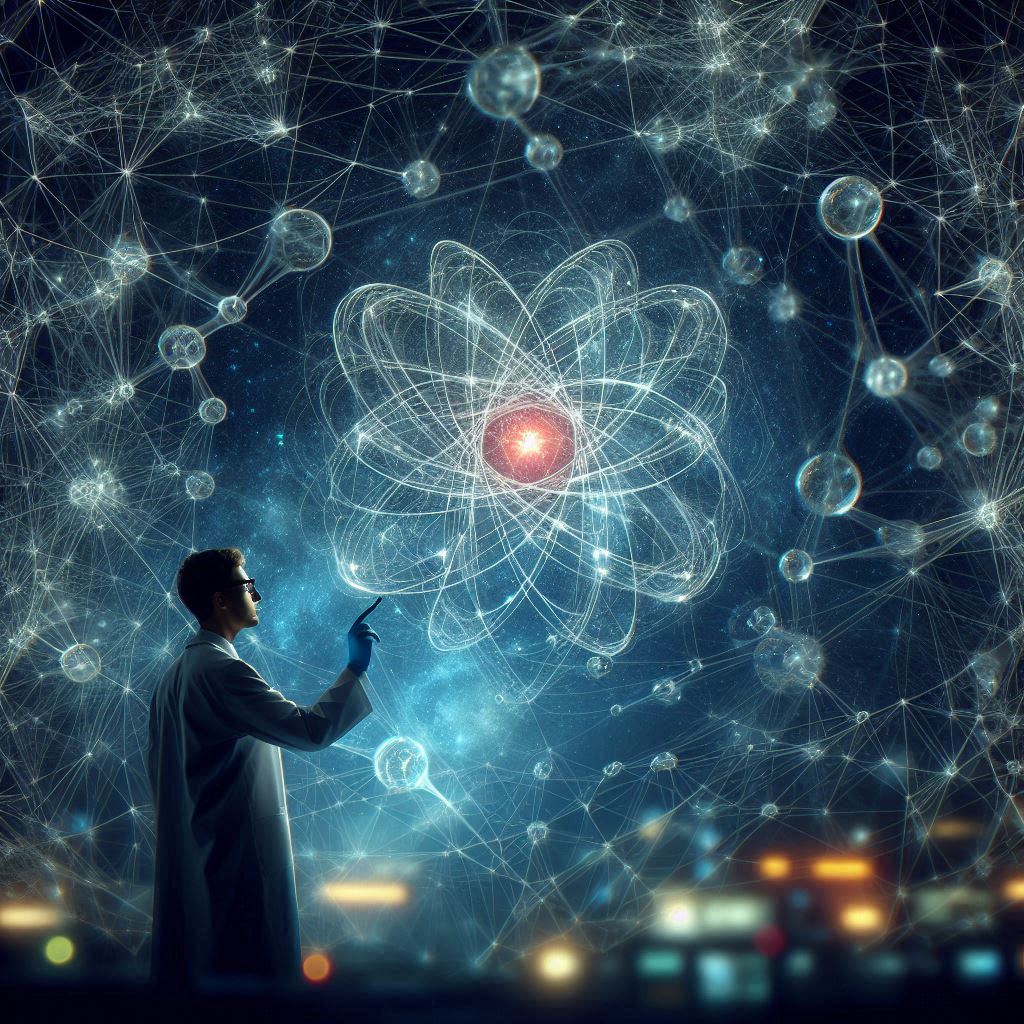
Wormholes: Shortcuts Through Time
Wormholes, also known as Einstein-Rosen bridges, are hypothetical “tunnels” that connect different points in spacetime. Imagine bending a piece of paper in half and poking a hole between the two points—this shortcut would allow you to move across vast distances (or even times) instantly. If a wormhole could connect two different points in time, theoretically, one might step through it to reach the past or future.
Wormholes have captivated scientists and storytellers alike because, in theory, they could allow time travel without violating the laws of physics. However, stabilizing a wormhole would require “exotic matter” with negative energy, something that remains speculative. Still, wormholes represent one of the few scientifically plausible ideas for time travel.
The Butterfly Effect: How Small Changes Could Transform the Future
The butterfly effect, rooted in chaos theory, suggests that tiny, seemingly insignificant actions can have enormous consequences. In time-travel terms, even stepping on a blade of grass could trigger a ripple of changes that reshape history. This concept appears in movies like The Butterfly Effect, where minor adjustments to the past lead to drastic and often unintended consequences in the present.
Think of it like tossing a pebble into a pond. The small waves it creates seem harmless, but over time, they spread outward, influencing other waves and creating complex patterns. Similarly, altering a minor detail in the past could send ripples across time, leading to an unpredictable and potentially catastrophic future.

The Role of Consciousness: Can We Perceive Time Differently?
Time isn’t just a scientific concept; it’s deeply tied to how we experience life. Our consciousness affects how we perceive time. Studies suggest that our brains construct a “timeline” based on memory and perception, creating a sense of continuity. This raises an interesting question: could we travel through time without physically moving, simply by altering our consciousness or perception?
Some theorists argue that time may be more of a mental construct than an objective reality. If true, perhaps there are ways to access past memories or future possibilities by changing our perception, not our physical location. Could it be that our brains hold the key to “mental time travel”?

Could Time Travelers Be Among Us?
Over the years, stories of time travelers have popped up in folklore and modern media alike. From the famous urban legend of John Titor, a man who claimed to be a time traveler from 2036, to mysterious photos and artifacts that some claim are “proof” of time travelers, our fascination with time travel even seeps into conspiracy theories.
While these tales lack scientific backing, they reflect our deep curiosity and desire to believe that time travel could be real. It’s the ultimate “what if,” capturing our imagination with possibilities beyond our current reality.
Ethical Questions: Should We Change the Past If We Can?
If time travel were possible, should we use it to change the past? Would it be ethical to interfere with history, knowing the potential risks? These questions form the ethical core of time travel. Altering the past to “fix” mistakes might seem tempting, but it could also erase or alter countless lives and experiences.
For example, if someone traveled back to prevent a global tragedy, would it be right to erase all the lives that were shaped by that event? This raises a dilemma: changing the past might help some people but harm others. Time travel, if it were real, would require a moral compass as well as scientific knowledge.

Conclusion
Time travel remains one of the most exciting yet puzzling concepts in science and philosophy. While theories like multiverses, fixed timelines, and quantum mechanics give us frameworks to imagine how it might work, they also reveal the complexity and risks involved. Our curiosity to understand and, perhaps, control time speaks to our desire to overcome the limits of our existence.
Whether time travel will ever be possible remains a mystery, but our exploration of the concept enriches our understanding of reality and our place within it.
 Summit Select
Leave a comment