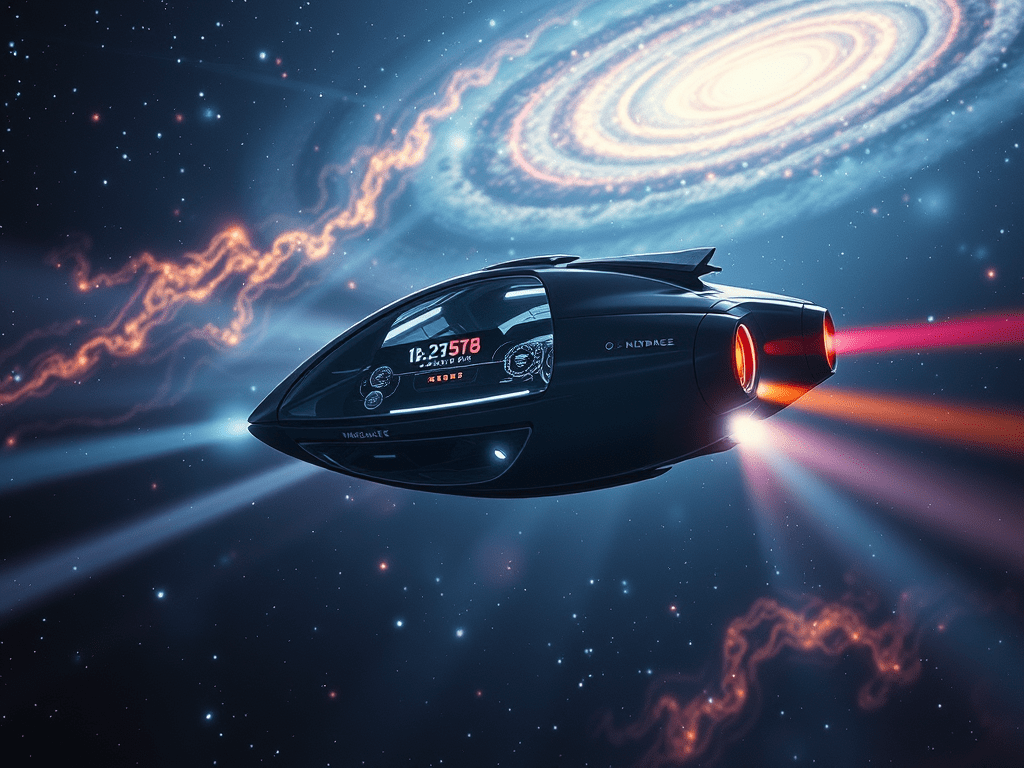
The concept of time travel has captured humanity’s imagination for generations. From ancient myths to blockbuster movies, the idea of journeying through time—either to change the past or glimpse the future—has been a source of fascination, excitement, and endless speculation. But could time travel ever become a reality? While it remains largely in the realm of science fiction, advancements in physics, quantum mechanics, and cosmology offer tantalizing possibilities that scientists are beginning to explore. In this article, we’ll delve into the science of time travel, the distinctions between cinematic portrayals and real-world theories, and what current research suggests about the potential to manipulate time.
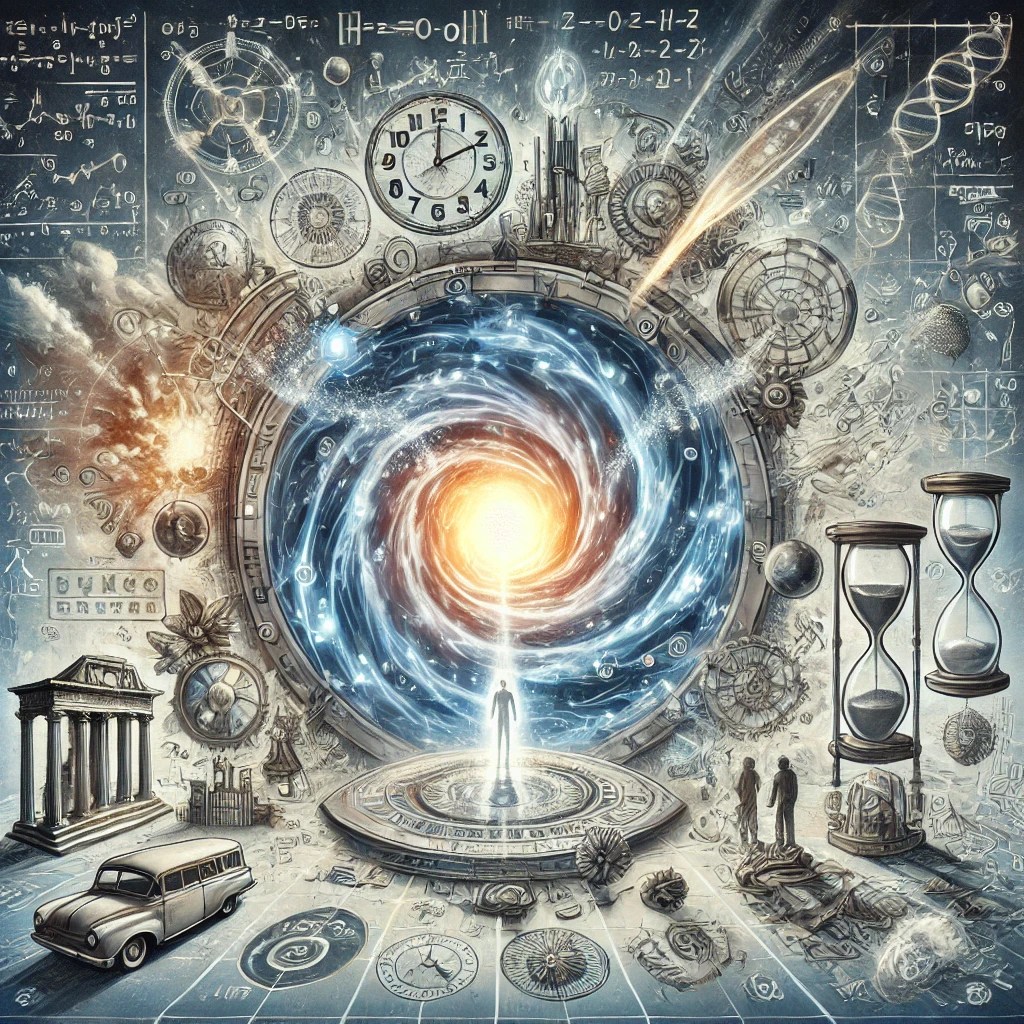
1. What is Time Travel? Understanding the Basics
Defining Time Travel and Its Possibilities
Time travel, in simple terms, is the concept of moving through time in a non-linear fashion, enabling a person to experience events from the past or future. Unlike our daily experience, where time flows forward steadily, time travel suggests the possibility of bending, pausing, or reversing this flow.
Cinema vs. Science: Popular Myths and Real Possibilities
Movies like Back to the Future, Interstellar, and The Time Machine often depict time travel as a thrilling adventure achieved through machines or portals. While entertaining, these portrayals oversimplify the complex physics involved. In reality, any viable time-travel technology would need to consider the nature of spacetime, the structure of the universe, and the limitations set by quantum mechanics and relativity.
2. The Science Behind Time Travel: Key Theories and Principles
Einstein’s Theory of Relativity: Time Dilation and Its Implications
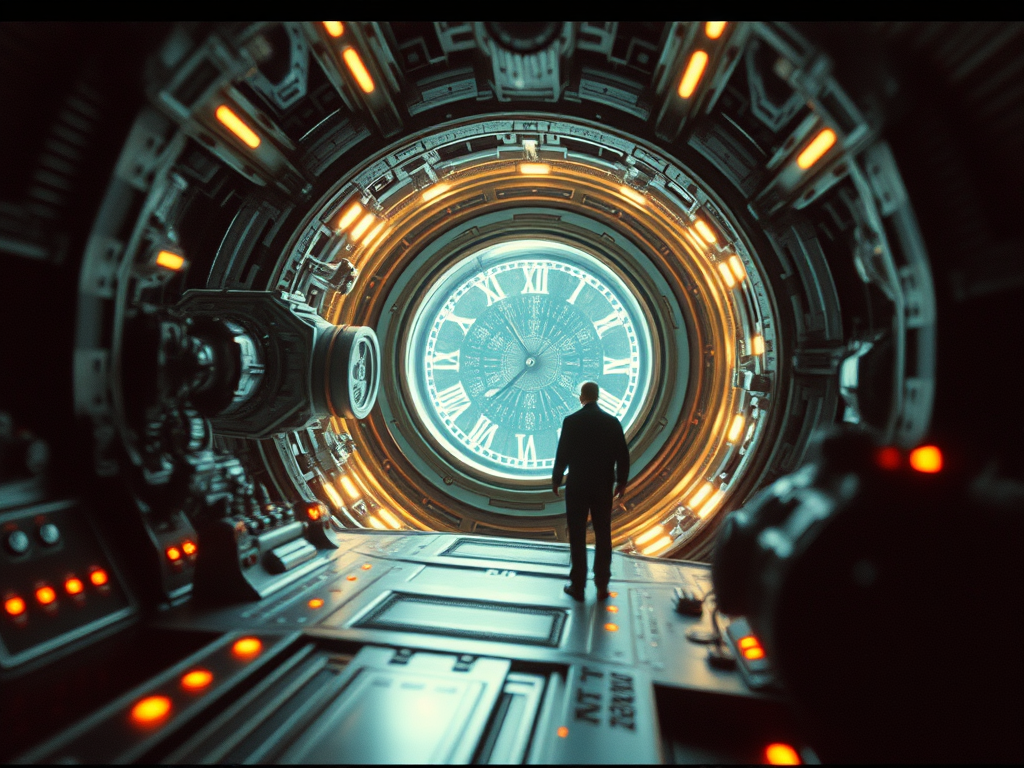
Albert Einstein’s theory of relativity lays the groundwork for scientific discussions about time travel. According to Einstein’s work, time is not a fixed entity but can be stretched or compressed based on speed and gravity. This phenomenon, called time dilation, means that objects moving at extremely high speeds or within intense gravitational fields experience time differently from those in ordinary conditions.
For instance, astronauts on the International Space Station experience time slightly slower than people on Earth due to their speed. This effect, although minimal on a human scale, has been measured using atomic clocks, where time dilation caused even slight differences in time readings. In theory, if someone could travel at near-light speed, they would age more slowly than people on Earth, effectively allowing them to “travel” to the future relative to others.
Wormholes: Theoretical Portals Through Time
Wormholes, theoretical tunnels in spacetime that could connect distant points in the universe, offer another fascinating possibility for time travel. According to Einstein’s general relativity, wormholes could act as shortcuts through space and time, potentially allowing for instantaneous travel between two points. Some physicists speculate that if a wormhole could be stabilized, it might serve as a tunnel between different times as well as places.
An illustration of the concept of time travel through quantum mechanics and the interpretation of the multiverse
However, creating and stabilizing a wormhole would require “exotic matter” with negative energy, something that has yet to be proven to exist. While theoretical, the concept of wormholes raises the possibility of time travel, albeit with significant scientific and engineering challenges.
Quantum Mechanics and the “Many-Worlds” Interpretation
Quantum mechanics introduces another potential avenue for time travel. The “many-worlds” interpretation suggests that every decision creates a branching of alternate realities or parallel universes. This theory has sparked debate among physicists about whether time travelers could avoid paradoxes by entering alternate timelines instead of their own. Although purely theoretical, it raises the intriguing possibility that time travel might not disrupt causality if each trip branches off into a new timeline.
3. Current Research on Time Travel: Small Steps Toward Big Ideas
Experimental Proof of Time Dilation
One of the most concrete findings supporting the potential for time travel comes from experiments with atomic clocks. In one experiment, a pair of synchronized atomic clocks was separated, with one placed on a jet traveling at high speed. When the clocks were compared afterward, the airborne clock showed a slightly slower passage of time, proving that speed affects time. This “forward” form of time travel through time dilation has been demonstrated, albeit on a very small scale.
Quantum Computers and Closed Timelike Curves
In theoretical physics, closed timelike curves (CTCs) are pathways that loop back on themselves, allowing particles to travel in time. Quantum computers may one day have the computational power to simulate CTCs, giving us insights into how particles might behave under time-warping conditions. While the technology is still in its infancy, research on CTCs through quantum simulations could eventually lead to breakthroughs in time manipulation on a subatomic level.
Particle Accelerators and the Search for Micro-Wormholes
Particle accelerators like the Large Hadron Collider (LHC) offer a unique avenue for exploring time travel’s feasibility. By smashing particles together at near-light speeds, scientists have theorized that they might create minuscule wormholes. Although this has yet to be observed, the high-energy conditions within the LHC provide a testing ground for theories about wormholes and quantum gravity.

4. The Paradoxes and Risks of Time Travel
The Grandfather Paradox and Causality Concerns
One of the most famous time travel paradoxes is the “grandfather paradox,” which questions what happens if a time traveler prevents their grandparents from meeting. This scenario creates a logical inconsistency, as it would prevent the traveler from existing to go back in time in the first place. Such paradoxes challenge our understanding of causality and suggest that time travel, if possible, might require an entirely new framework of rules to avoid contradictions.
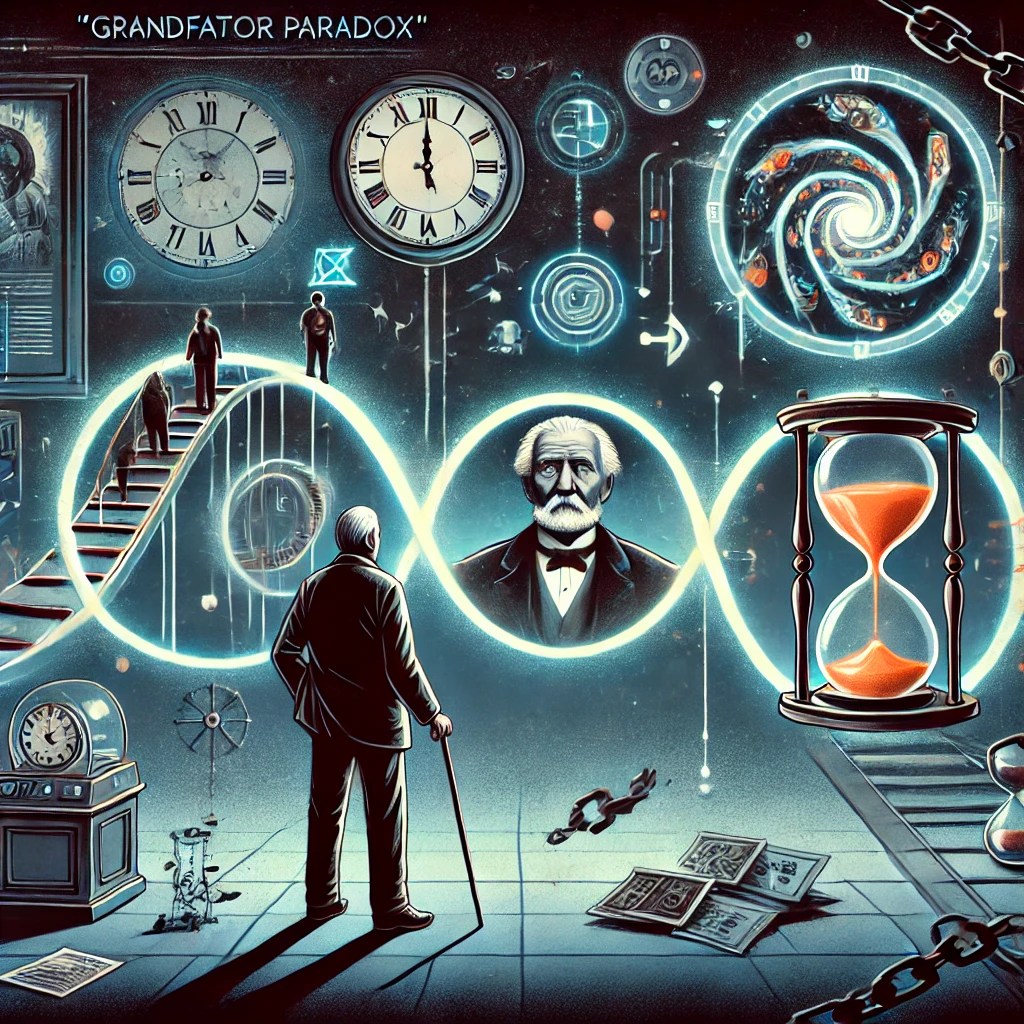
an illustration of the logical contradictions of the ‘Grandfather Paradox’ and the paradox of time travel
Parallel Universes as a Solution to Paradoxes
To resolve these issues, some scientists suggest that any attempt to alter the past would create an alternate reality rather than changing the original timeline. This “parallel universe” solution is based on the multiverse theory, which posits that each decision spawns a new universe. If true, time travelers might be able to avoid paradoxes by shifting into an alternate timeline rather than altering their own history.
Energy Demands and Exotic Matter
Any attempt to manipulate time on a large scale would likely require enormous amounts of energy. For example, creating a stable wormhole might require the energy of a star, a resource far beyond our technological reach. Furthermore, scientists believe that manipulating time would require “exotic matter,” a substance with negative energy density that remains theoretical. Without access to exotic matter, human-scale time travel remains impossible.
5. The Future of Time Travel Research and Potential Societal Impacts
Technology Limitations and Ethical Implications
Even if science advances enough to enable time travel, it would bring complex ethical dilemmas. Should people have the right to alter their past? What if future knowledge could be used for profit or control? There would also be questions of access—who gets to travel through time, and should this privilege be available to all?
The Impact of Time Travel on Human Identity and Relationships
If time travel became a reality, it could transform society’s relationship with the past, present, and future. People might become preoccupied with correcting mistakes, witnessing historical events, or anticipating outcomes, potentially shifting focus from the present. This could impact human psychology, relationships, and the way we view our personal responsibility within the flow of time.
Conclusion: The Ongoing Mystery and Appeal of Time Travel
The scientific exploration of time travel invites us to question fundamental aspects of reality, causality, and our place in the universe. Theories of time dilation, wormholes, and quantum mechanics offer glimpses into what might be possible, while experimental research with atomic clocks and particle accelerators keeps the idea grounded in scientific discovery. However, practical time travel remains distant, hindered by technological limitations and immense energy demands.
For now, time travel is a fascinating thought experiment—a gateway to contemplating the nature of time and our relationship with it. Even if we never develop the means to travel through time, the journey to understand its mysteries will continue to inspire curiosity, creativity, and innovation.
 Summit Select
Leave a comment