
In today’s fast-paced world, effective time management is essential for achieving goals, reducing stress, and maintaining a healthy balance between work and personal life. This article offers practical strategies and reflective insights on time management that can help you set meaningful goals and make steady progress. With a clear approach and relevant examples, let’s dive into the key strategies to make the most of your time.

Here’s an illustration emphasizing effective time management, featuring strategies like goal planning, prioritizing tasks, and balancing work-life responsibilities.
1. Define SMART Goals to Set Clear Direction
Setting specific goals gives structure to time management. One popular framework is SMART goals: specific, measurable, achievable, relevant, and time-bound. SMART goals are essential for staying motivated, tracking progress, and achieving tangible results.
- Example: Instead of a broad goal like “exercise regularly,” a SMART goal could be, “walk for 30 minutes five days a week for the next three months.” By making your goal measurable and time-bound, you increase the likelihood of sticking to it.
Reflective Question: Are your current goals specific enough to motivate daily action?
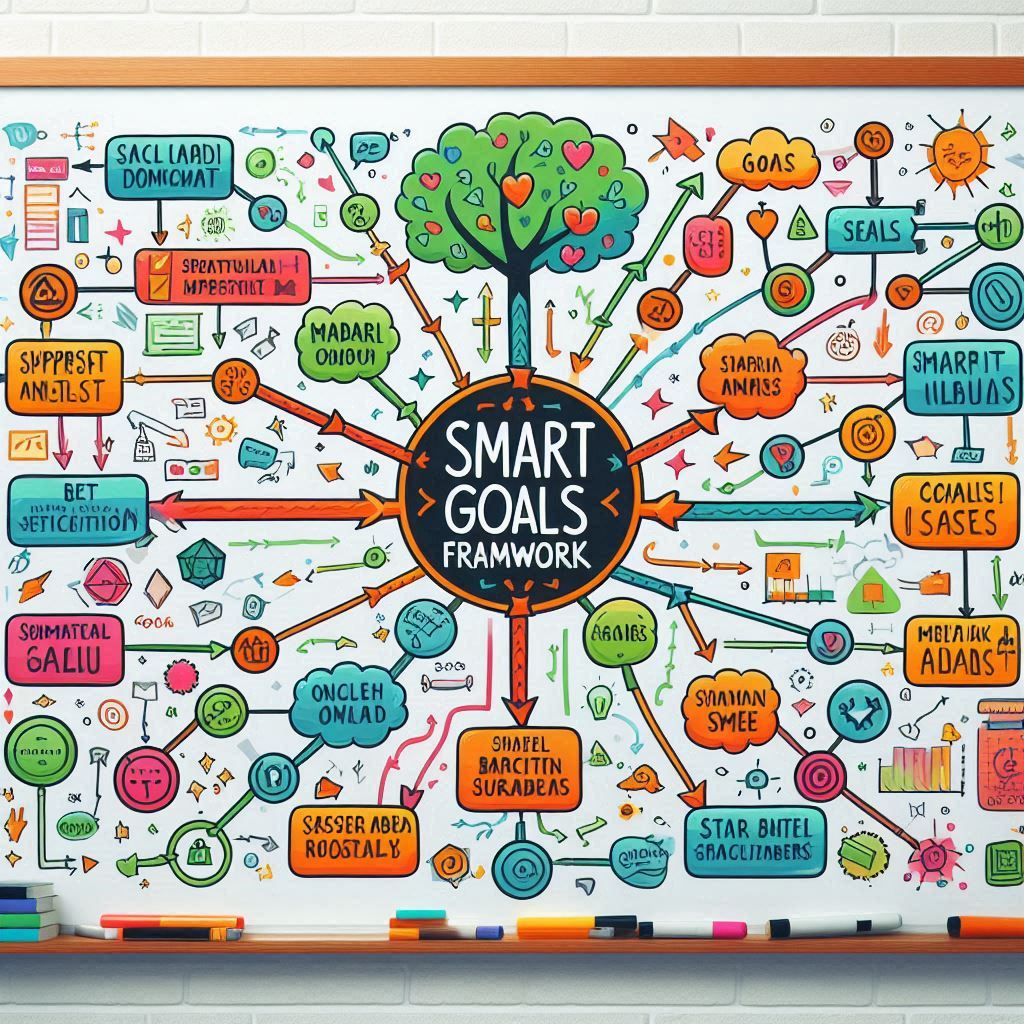
Here is an illustration for the concept of SMART goals, highlighting their importance in setting structured, effective goals.
2. Break Down Large Goals into Manageable Tasks
When faced with a large goal, it’s easy to feel overwhelmed and put off starting. Breaking down these goals into smaller, actionable tasks helps you make progress without feeling paralyzed.
- Example: If you’re working on a big project, break it down into research, drafting, editing, and final review. Set mini-deadlines for each part to stay on track.
Reflective Question: How can you break down your big goals into smaller, daily actions?

3. Prioritize Using the Eisenhower Matrix
The Eisenhower Matrix is a simple tool to help prioritize tasks by urgency and importance:
- Urgent and Important: Do these tasks first.
- Important, Not Urgent: Schedule these to prevent last-minute pressure.
- Urgent, Not Important: Delegate if possible.
- Not Urgent, Not Important: Consider eliminating to free up time.
Using this method not only clarifies priorities but also helps avoid procrastination on tasks that can make a real impact.
- Example: Prioritizing a presentation due in three days (urgent and important) over reorganizing your desktop files (not urgent or important).
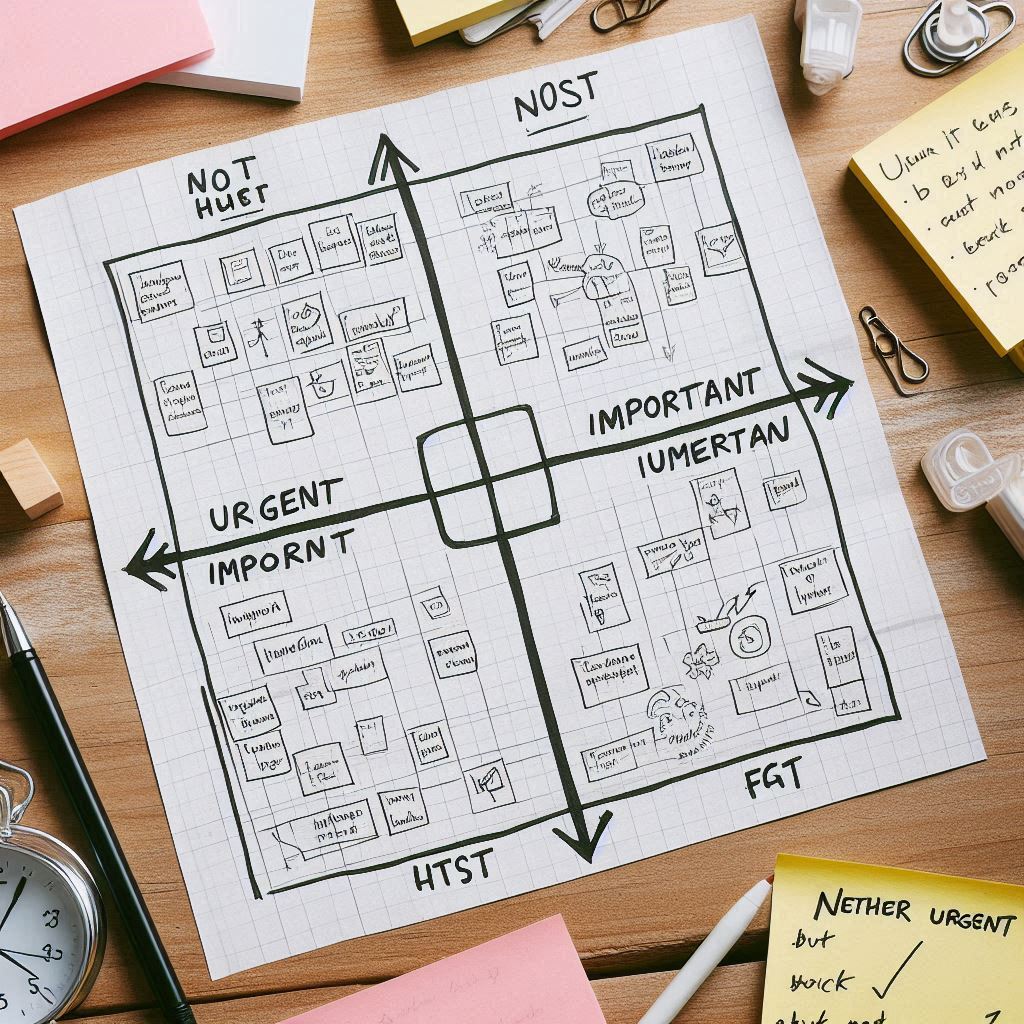
Here’s the illustration for the Eisenhower Matrix:
Reflective Question: Are there tasks you could delegate or eliminate to focus on what truly matters?
4. Utilize Time-Blocking to Maximize Focus
Time-blocking is a technique that involves dedicating specific blocks of time to specific tasks. This method prevents multitasking and allows for deep focus on one thing at a time.
- Practical Tip: Use time blocks for key projects, then break them up with short breaks (such as using the Pomodoro Technique: 25 minutes of work followed by a 5-minute break).
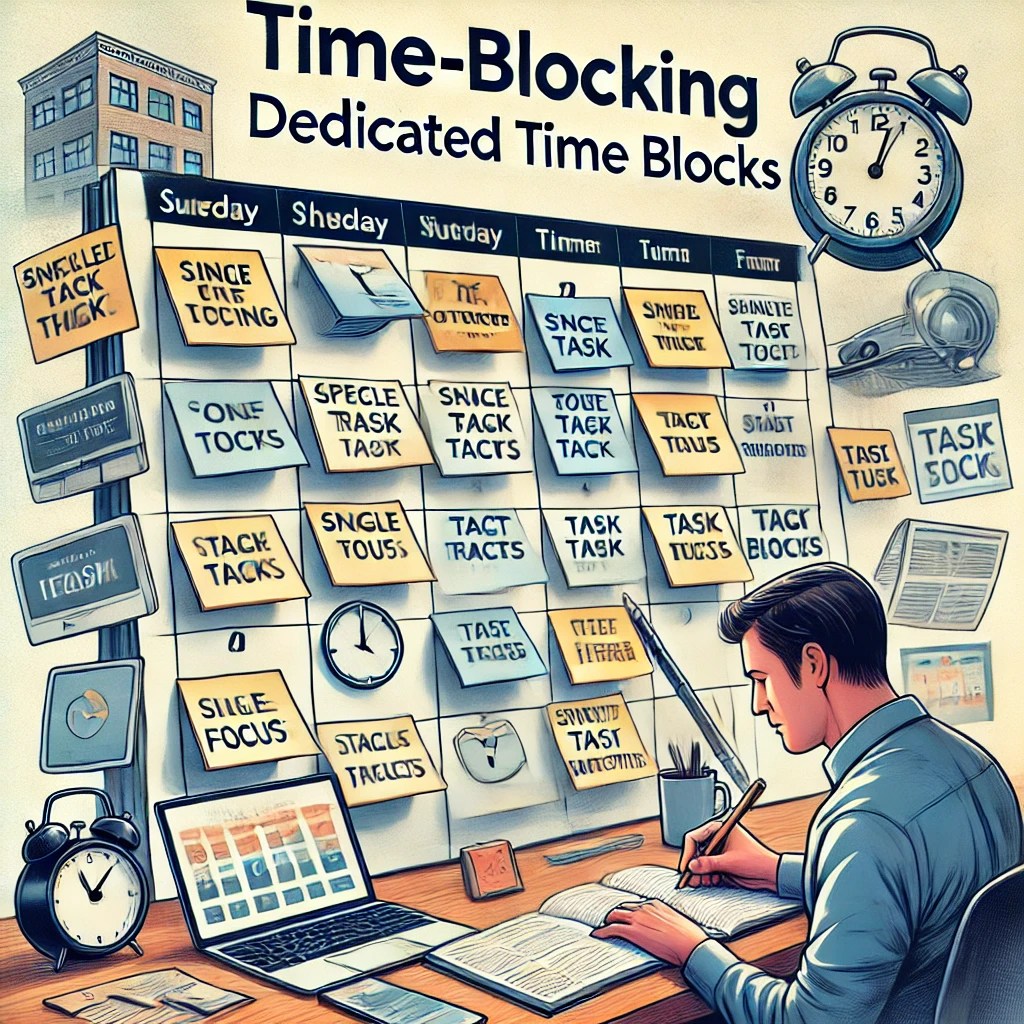
Here’s an illustration depicting the time-blocking technique, showing organized blocks of time for focused tasks. It emphasizes a distraction-free environment for single-task productivity.
Reflective Question: Which tasks could benefit from dedicated, uninterrupted time blocks?
5. Minimize Distractions to Stay on Track
In today’s digital age, distractions are everywhere. Identify common distractions and limit them. Turning off phone notifications, using website blockers, and creating a dedicated workspace can all reduce interruptions.
- Example: Use apps like Freedom or StayFocusd to block social media during work hours.
Reflective Question: What distractions could you reduce to improve your focus?

6. Leverage Time Management Tools for Organization
Time management apps and digital tools can streamline scheduling, to-do lists, and deadlines. Here are some useful tools:
- Trello or Asana for task management
- Google Calendar for scheduling and time-blocking
- Evernote or Notion for note-taking and project organization
These tools can help you keep track of deadlines, monitor progress, and stay organized.
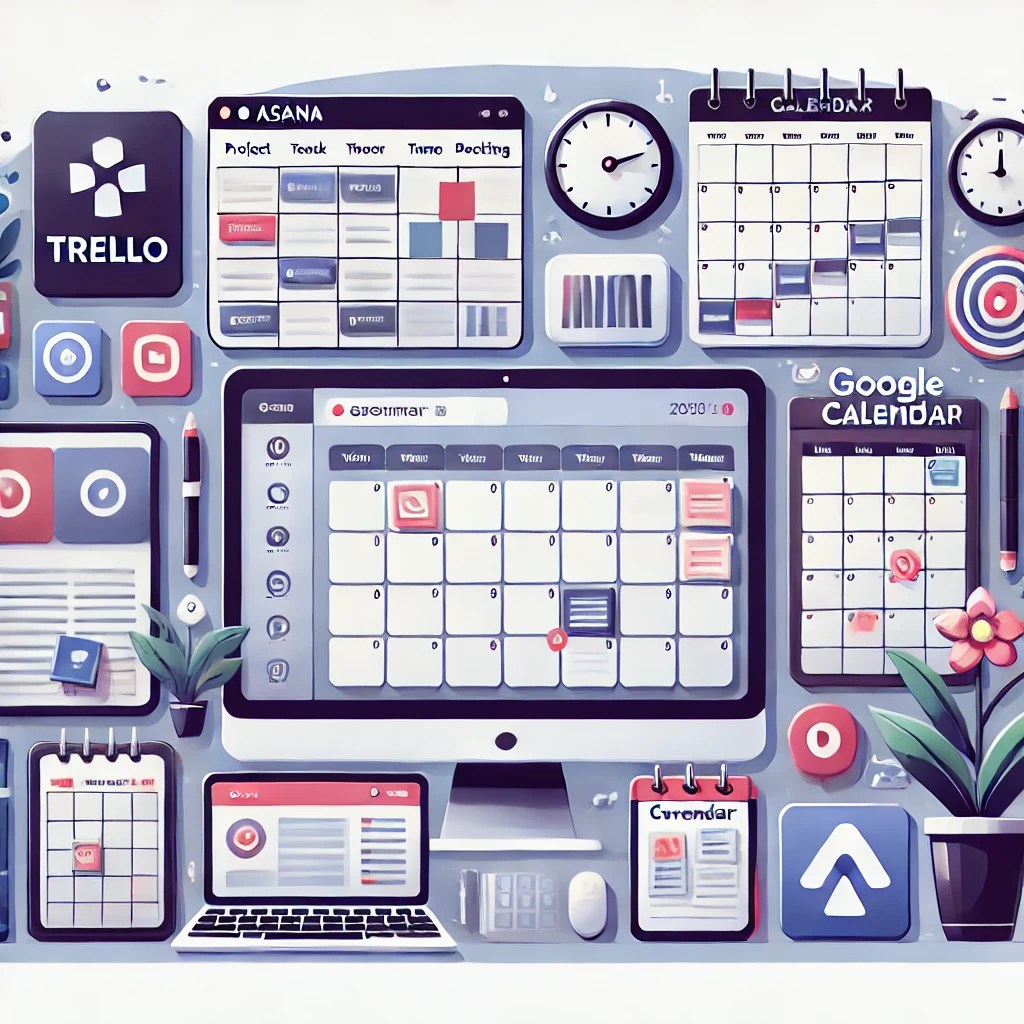
Here’s an illustration showcasing productivity tools like Trello, Asana, Google Calendar, and Evernote/Notion for managing projects, tasks, and time. It visually emphasizes an organized digital workspace focused on efficiency and organization.
Reflective Question: Which time management tools can you integrate into your routine to improve productivity?
7. Reflect and Adjust with Weekly Reviews
Take a few minutes each week to evaluate your progress, challenges, and accomplishments. A weekly review can be an opportunity to realign with your goals, adjust priorities, and make necessary changes.
- Example: At the end of each week, reflect on your completed tasks, any obstacles you encountered, and your main achievements. Consider how you can improve the following week.

This illustration is a visual representation of your goals and progress through weekly review time and reflecting the changes you need. Having weekly review time is a really effective way to manage your time. How do you manage your weekly reviews?
Reflective Question: What did you accomplish this week, and what will you adjust moving forward?
8. Maintain Work-Life Balance by Setting Boundaries
Setting boundaries between work and personal life helps maintain balance and prevents burnout. Define clear work hours and stick to them, allowing time for relaxation, family, and hobbies outside of work.
- Actionable Advice: Set a cut-off time for work emails and activities. Engage in activities that bring joy, such as reading, exercise, or spending time with loved ones.
Reflective Question: How can you set boundaries that allow you to enjoy both work and personal time?

Conclusion: Time Management for a Fulfilled Life
Mastering time management is about creating habits that align with your personal and professional goals. By setting SMART goals, prioritizing, breaking down tasks, and reflecting regularly, you can achieve more and find greater satisfaction in your day-to-day.
Call to Action: What are your favorite time management tips? Share your thoughts in the comments, and let’s learn from each other’s experiences in managing time effectively!
 Summit Select
Leave a comment