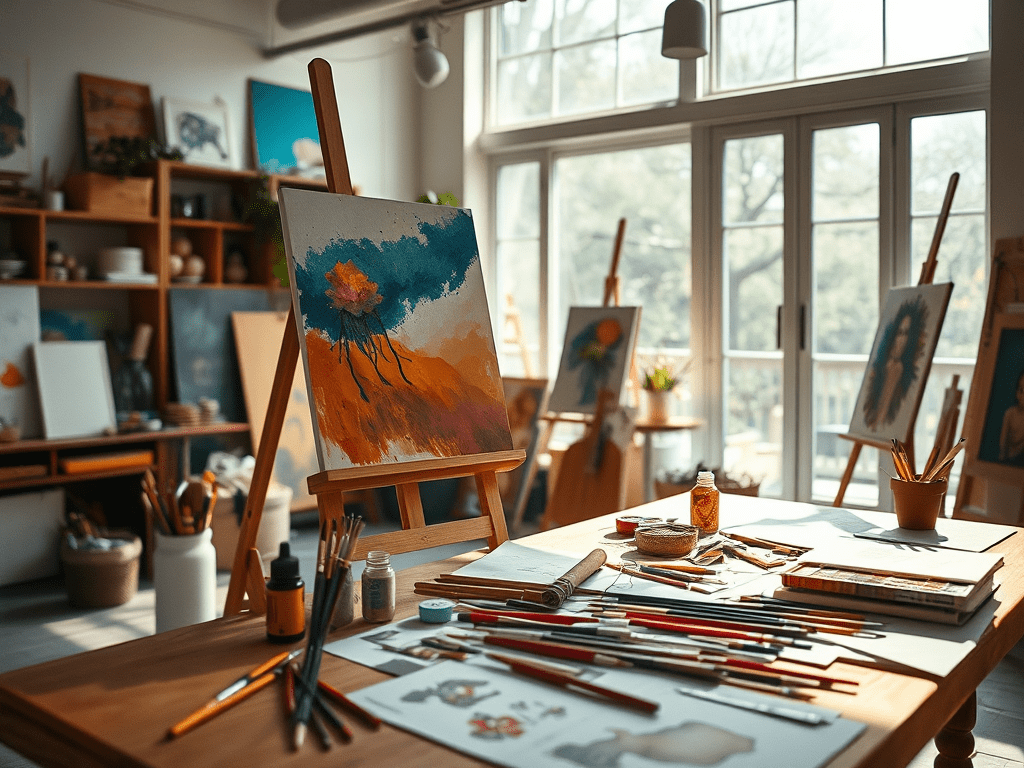
In a world constantly filled with demands, finding meaningful ways to relax and increase happiness is essential. Creative hobbies, such as art, writing, and music, offer unique and fulfilling ways to express oneself, reduce stress, and enhance mental well-being. With research-backed benefits and actionable insights, this article will explore how creative hobbies can bring happiness, provide examples of how to start, and highlight the power of creative expression in everyday life.
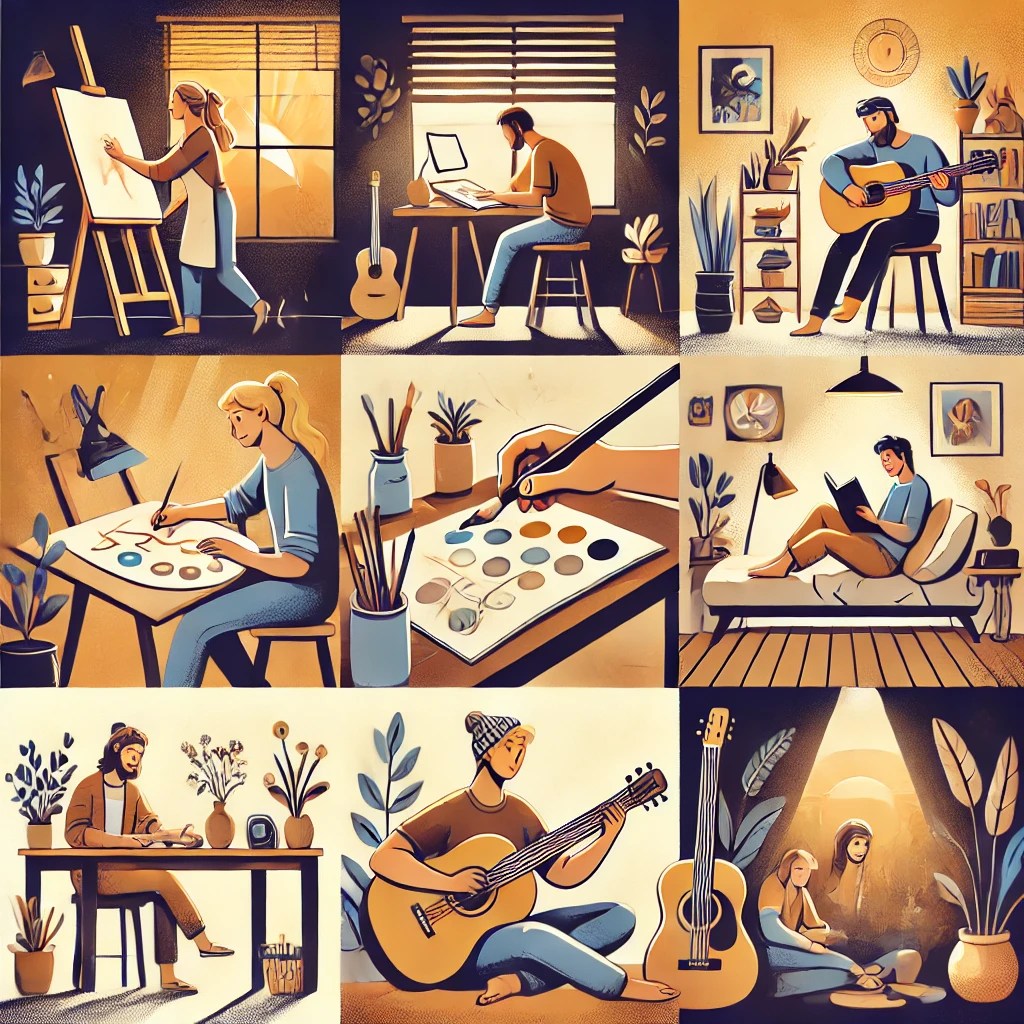
Here are some illustrations that show scenes where people reduce happiness and stress through creative hobbies. They focus on art, writing, and musical activities, and show feelings of comfort and enjoyment.
1. The Happiness Factor in Creative Expression
Engaging in creative activities is more than just a pastime—it has a measurable impact on our mood. When we create, our brains release dopamine, a neurotransmitter linked to pleasure and satisfaction. A study from Drexel University showed that engaging in artistic activities can increase dopamine levels, leading to a more positive mindset and reduced anxiety (Kaimal et al., 2016).
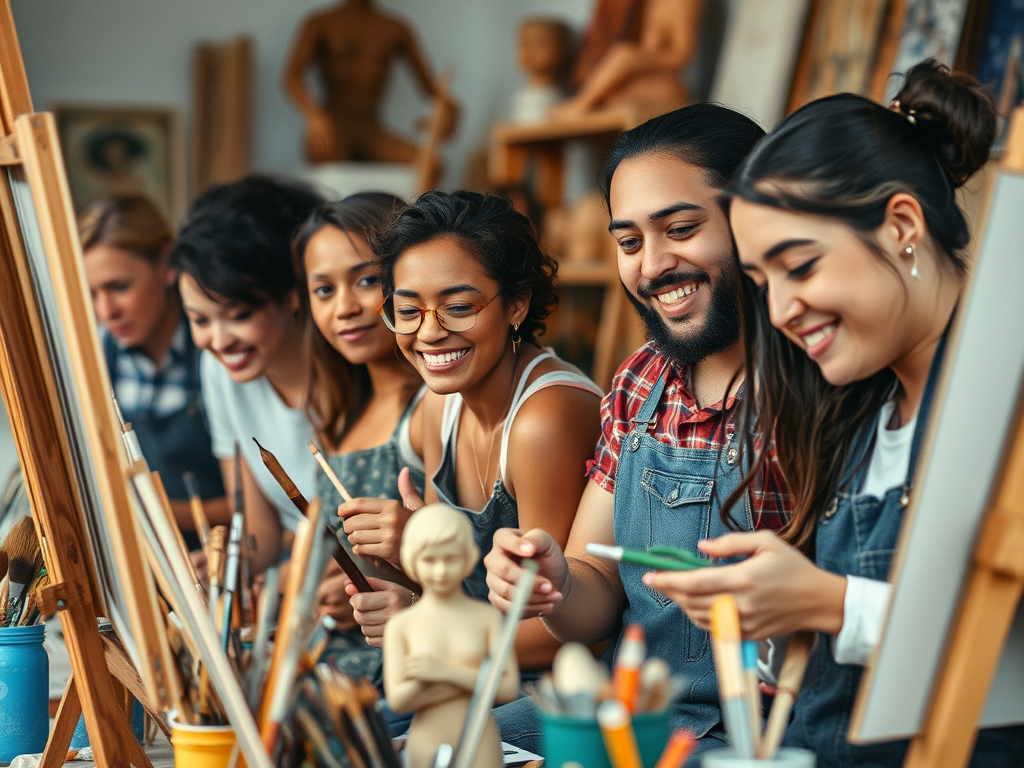
Escaping Stress through Creativity
Life’s daily pressures can often leave us feeling drained. Engaging in creative activities helps shift our focus away from stressors, offering a “mental break” through something positive. Psychologist Mihaly Csikszentmihalyi describes this as the “flow state”—a period of deep immersion in an activity that allows us to lose track of time and experience heightened focus. Reaching this state through creativity has been linked to increased well-being and stress reduction, providing a powerful outlet for managing modern-day stress.
Keywords: benefits of creativity, mental health benefits of art, reducing stress with hobbies
2. The Healing Power of Art: Painting, Drawing, and Crafting
Artistic activities such as painting, drawing, and crafting help us externalize emotions that might be difficult to put into words. According to the American Art Therapy Association, creating art can help individuals process trauma, manage stress, and improve emotional resilience.
Benefits of Art Therapy and Mindfulness
Art therapy has become widely recognized as an effective way to manage anxiety, depression, and PTSD. For example, a study in Psychology of Aesthetics, Creativity, and the Arts demonstrated that engaging in artistic creation reduces cortisol levels, helping to stabilize mood and increase feelings of calm. Crafting activities such as knitting or sculpting engage both mind and body, promoting mindfulness and providing a fulfilling sense of accomplishment.
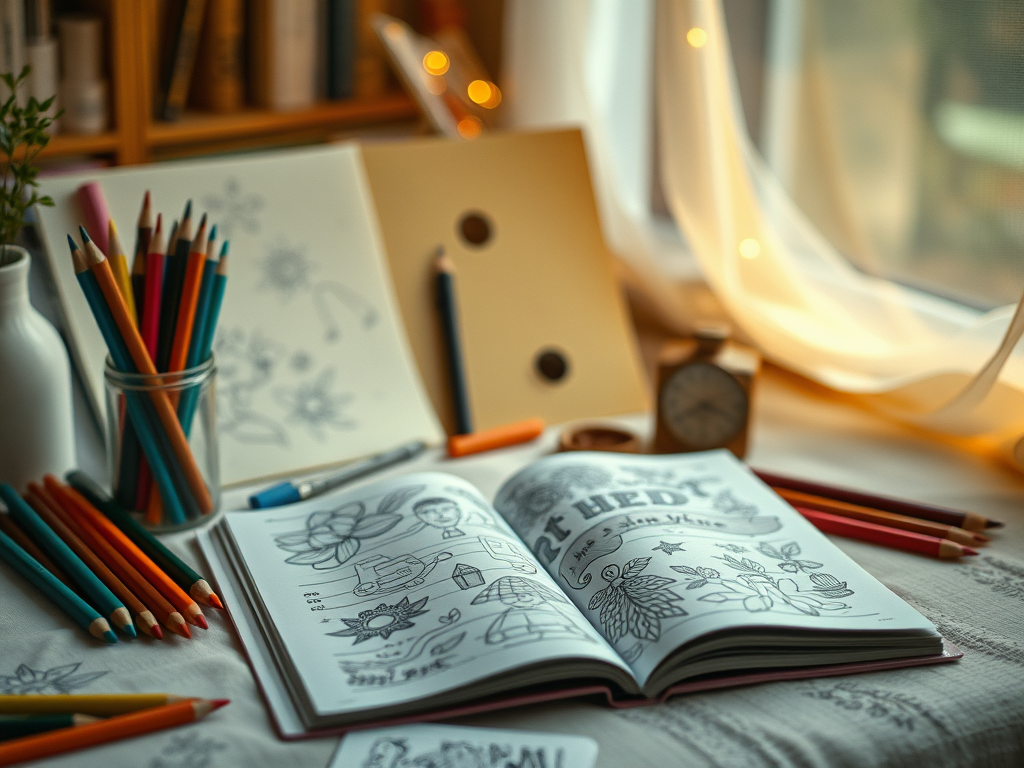
Action Step: If you’re new to art, begin with simple doodling or adult coloring books. These are low-stress ways to tap into creativity without the pressure of producing something “perfect.”
Keywords: art therapy benefits, mindfulness through art, creative hobbies for stress relief
3. The Emotional Release of Writing
Writing is a powerful way to process emotions, clarify thoughts, and reduce stress. Whether through journaling, storytelling, or poetry, writing allows for introspection and self-reflection. Researchers from the University of California found that individuals who journaled regularly reported fewer symptoms of depression and anxiety, highlighting the psychological benefits of this practice.
Journaling for Clarity and Emotional Release
Journaling provides an accessible way to articulate thoughts, work through challenges, and gain new perspectives on life’s challenges. Creative writing, such as fiction or poetry, offers a different type of therapeutic release, allowing us to experiment with storytelling and explore emotions from different perspectives. These forms of writing enable individuals to “rewrite” their own experiences, providing comfort and insights into personal growth.
Reader Engagement: Have you tried journaling or storytelling as a way to process emotions? If so, what benefits have you noticed?
Keywords: benefits of journaling, writing as therapy, creative writing for mental health

4. The Universality of Music: A Path to Joy and Calm
Music is an almost universal form of self-expression that transcends language and culture, often bringing joy and comfort. Playing an instrument, singing, or even dancing along to a favorite song can reduce stress and provide an emotional release. Research from McGill University shows that music can increase dopamine levels, elevate mood, and reduce stress levels (Salimpoor et al., 2011).
Playing an Instrument for Mindfulness
Learning an instrument, such as the piano or guitar, requires focus and repetition, helping to ground us in the present moment. Practicing music not only enhances concentration but also provides a sense of achievement and self-discipline. A study in Frontiers in Psychology found that engaging in musical activities reduces cortisol levels and lowers blood pressure, making it a valuable tool for stress relief.
Keywords: benefits of music, music and mental health, playing instruments for happiness

5. Starting Your Creative Journey: Tips for Beginners
Starting a creative hobby can be intimidating, but creativity isn’t about achieving perfection; it’s about self-expression and enjoyment. Here are beginner-friendly suggestions for diving into various hobbies:
- Art: Start with watercolors or coloring books. These are forgiving mediums that allow for experimentation without pressure.
- Writing: Begin with daily journaling, noting things you’re grateful for, or try freewriting—jotting down thoughts without worrying about structure.
- Music: Try a free online piano or guitar tutorial, or experiment with music apps like GarageBand to create simple beats.
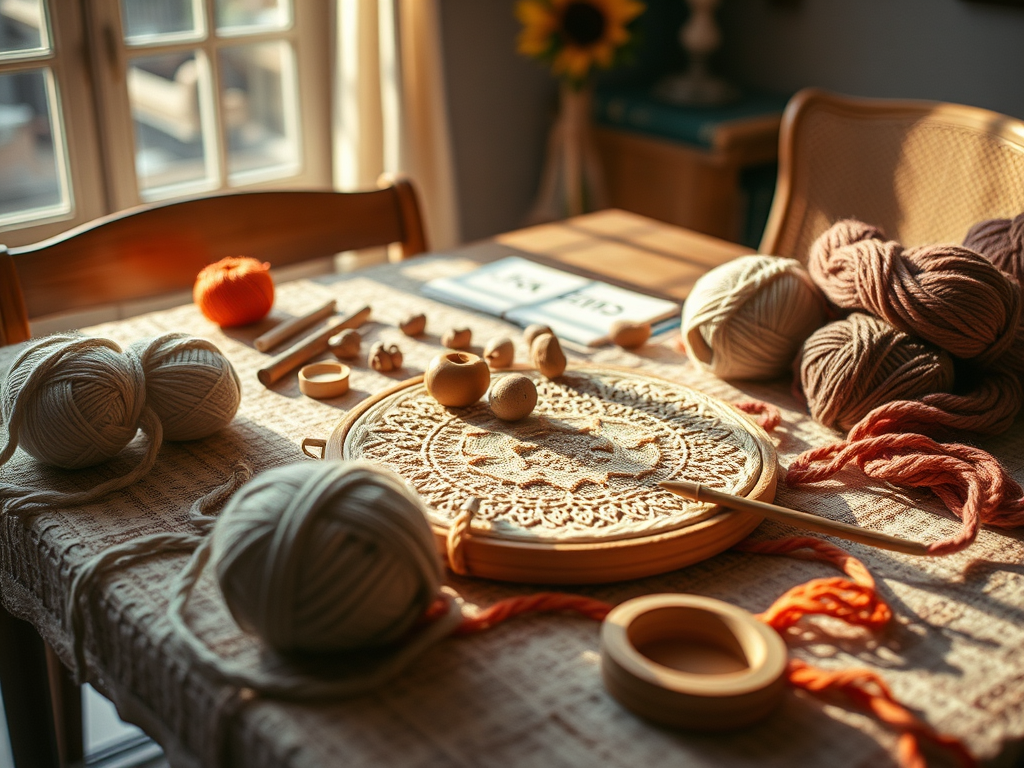
- Crafting: Consider starting with knitting, embroidery, or other DIY crafts that involve repetitive, calming motions.
Remember, the purpose is to focus on the process and experience joy in creation, rather than perfection. Over time, the practice of engaging in creative hobbies becomes its own reward, contributing to a positive mindset and increased resilience.
Keywords: beginner creative hobbies, how to start a hobby, creative hobbies for mental well-being
6. Cultivating Lasting Happiness through Creativity
The benefits of creative hobbies extend far beyond immediate relaxation; they contribute to long-term well-being and emotional resilience. Regular engagement in creative activities can enhance self-esteem, promote positive emotional health, and help build mental strength over time. When we allow ourselves the freedom to create, we’re not only reducing stress but also connecting with deeper parts of ourselves and nurturing personal growth.
Call to Action: Have you found joy in creative hobbies? Share your experiences or any beginner tips with our community below. Let’s inspire each other to embrace creativity as a path to happiness!
Keywords: happiness through creativity, benefits of creative expression, mental health and hobbies, creative activities for stress relief
 Summit Select
Leave a comment