In today’s fast-paced society, stress has become an unavoidable element in daily life. Various situations in the workplace, home, and academic life continuously expose us to stress, and failing to manage it effectively can negatively impact both physical and mental health. This article offers a systematic understanding of stress and introduces unique, research-based stress management techniques to help maintain health and well-being.
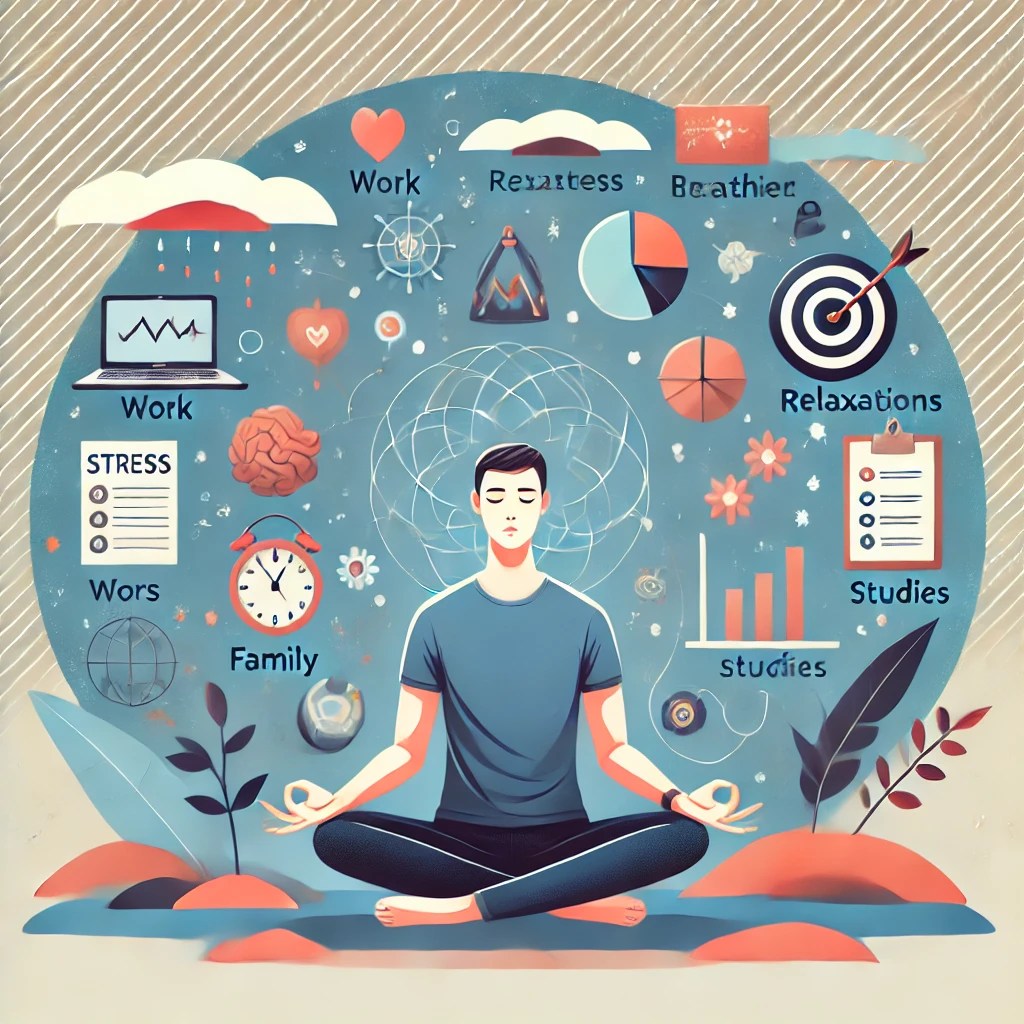
Illustrations have been prepared to express stress and how to manage it in modern society. It is an image that visually expresses various stressors such as work, family, and study, and scientific management methods to effectively deal with them. Using it with blog posts will make it easier for readers to understand the importance of stress management.
1. Understanding Stress: Why Do We Feel It?
Stress is a physiological response that occurs when our body reacts to external stimuli. Particularly in moments of crisis, the body automatically releases adrenaline and cortisol to help it respond swiftly. This “fight-or-flight” response has been essential for survival since ancient times. However, in modern society, this response often becomes chronic, which can be detrimental to health over the long term. Studies show that chronic stress can lead to high blood pressure, weakened immunity, digestive issues, and other health problems. Understanding the origins of stress and how our bodies respond is crucial in learning effective stress management techniques.
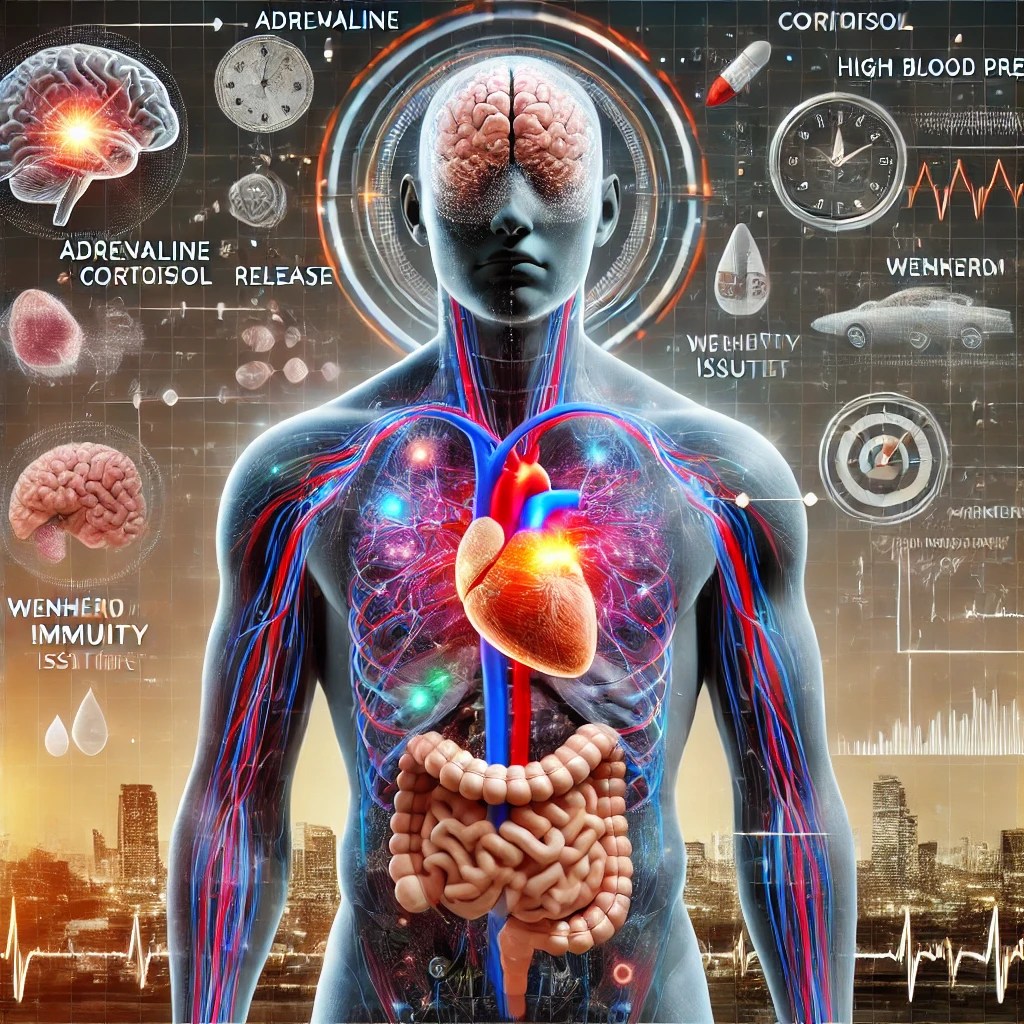
The following are some illustrations that express the body’s stress response and its effects. These images convey the importance of stress management by emphasizing the secretion of adrenaline and cortisol and its long-term effects on the body.
2. Innovative Stress Management Techniques: A Different Approach
Many stress-relief methods exist, but the ones introduced here are practical and easy to implement. They don’t just suppress stress but aim to provide fundamental relief.
(1) Sensory Immersion: Reducing Stress Through the Senses
Sensory immersion is a technique that uses the five senses to focus on the present moment. This approach, often associated with mindfulness, helps us forget past regrets or future anxieties and find inner peace.
- How to Practice: Try enjoying a cup of coffee by fully savoring its aroma, warmth, and taste. Or, take a quiet walk and pay close attention to the sound of the wind, rustling leaves, and other small details around you.
- Effectiveness and Research: Sensory immersion helps balance the autonomic nervous system, reducing the release of stress hormones. A 2020 study found that regular mindfulness practice can lower cortisol levels by up to 20%, making it particularly helpful for managing daily stress.
(2) Inner Dialogue Technique: Solving Problems Through Self-Talk
The inner dialogue technique helps organize and resolve stress and worries internally. By identifying the roots of stress, this technique allows for clear and constructive self-talk, almost like a mental conversation with a counselor.
- How to Practice: Find a quiet place, close your eyes, and imagine discussing your concerns with an inner “advisor.” For example, describe work conflicts to this “assistant” and imagine receiving helpful advice. This exercise helps categorize emotions and gain perspective.
- Effectiveness and Research: Self-reflective dialogues aid in emotional organization and stress reduction. Studies have shown that inner self-reflection can decrease anxiety and depression while enhancing positive problem-solving skills.

(3) Natural Healing: Forest Therapy
Spending time in nature is proven to reduce psychological and physiological stress. Forest therapy or forest bathing has become particularly popular among modern people as a way to restore inner peace through natural sights, sounds, and scents. A study in Japan revealed that forest bathing significantly lowers cortisol levels, stabilizes heart rates, and reduces blood pressure.
- How to Practice: Make it a weekly routine to visit a nearby park or forest. Observe the trees, flowers, and birds around you, taking deep breaths to relax in nature.
- Effectiveness and Research: Forest therapy helps stabilize the autonomic nervous system and has been shown to reduce stress by over 15%. It also has positive effects on emotional balance and immunity.
Stream Your Favorites Faster & Better! 📺
Why wait? Upgrade to Amazon Fire TV and enjoy lightning-fast streaming and thousands of apps at your fingertips. It’s time to level up your TV game! 🚀
✨ [Check Price on Amazon.com (USA)]
✨ [Check Price on Amazon.ca (Canada)]
3. Practical, Everyday Stress Management Tips
Now, let’s look at practical stress management methods that can be easily incorporated into daily life. Small habit changes can significantly reduce stress.
(1) Organizing To-Do Lists: Reducing Work Stress
Stress from work and studies often comes from heavy workloads. Organizing tasks into a To-Do List provides structure, making the workload more manageable while providing a sense of accomplishment.
- How to Practice: List today’s tasks by importance and urgency. Check off each task as you complete it, experiencing a sense of achievement along the way.
- Effectiveness and Research: To-do lists improve task efficiency and reduce stress by providing a visual overview of responsibilities. Studies have shown that people using checklists report 30% lower stress levels than those who don’t.
(2) Gratitude Journaling: Cultivating a Positive Mindset
Gratitude journaling is a practice of writing down small things you are thankful for each day. This helps reinforce positive thinking, making it an effective tool for stress management.
- How to Practice: Each night, jot down two or three things you were grateful for during the day. Even minor things can be meaningful and boost positive emotions.
- Effectiveness and Research: A 2019 study found that individuals who kept gratitude journals experienced higher happiness levels and lower stress compared to those who didn’t.

(3) Deep Breathing: Finding Mental and Physical Calm
Deep breathing is a simple yet effective way to calm the mind and body. This technique regulates the autonomic nervous system, making it an excellent method for stress relief.
- How to Practice: Take a deep breath, hold it briefly, and slowly exhale, repeating this process 5–10 times. Practicing this habit during moments of tension can help you refocus and relax.
- Effectiveness and Research: Deep breathing can reduce stress by over 20%, lowering heart rates and blood pressure, similar to the effects of meditation.

Conclusion and Engagement: Small Changes Make Big Differences
The key to stress management lies not in grandiose methods but in small, easily actionable habits that can be practiced daily. By making a bit of effort each day to find stress management techniques that work best for you and maintaining them consistently, you’ll gradually build resilience to stress and be able to preserve mental and emotional balance. Techniques such as sensory immersion, inner dialogue, forest bathing, to-do list organization, gratitude journaling, and deep breathing are all simple to approach and can be practiced in various settings, making them suitable for long-term stress relief.
One of the best things about these methods is that they do not require complicated equipment or special environments, making it easy for anyone to get started. Each technique can be tailored to suit individual circumstances, allowing them to fit seamlessly into daily life. Considering the impact of stress on health, these small changes can significantly improve both mental and physical well-being, becoming a key factor in enhancing one’s quality of life.
If you have an effective stress relief technique that has worked for you, feel free to share it with others! Or, if you try one of the methods discussed here, we’d love to hear about your experience. Through sharing our stories, we can explore how small habit changes can lead to substantial differences and support each other on our journey toward a better life! .
Stream Your Favorites Faster & Better! 📺
Why wait? Upgrade to Amazon Fire TV and enjoy lightning-fast streaming and thousands of apps at your fingertips. It’s time to level up your TV game! 🚀
 Summit Select
Leave a comment