
Personal development is essential for anyone looking to improve both their personal and professional life. By focusing on productivity, goal-setting, and time management, you can better handle your responsibilities and make consistent progress toward your ambitions. This guide will walk you through practical strategies, real-life examples, and actionable steps to help you build a productive, goal-oriented mindset.
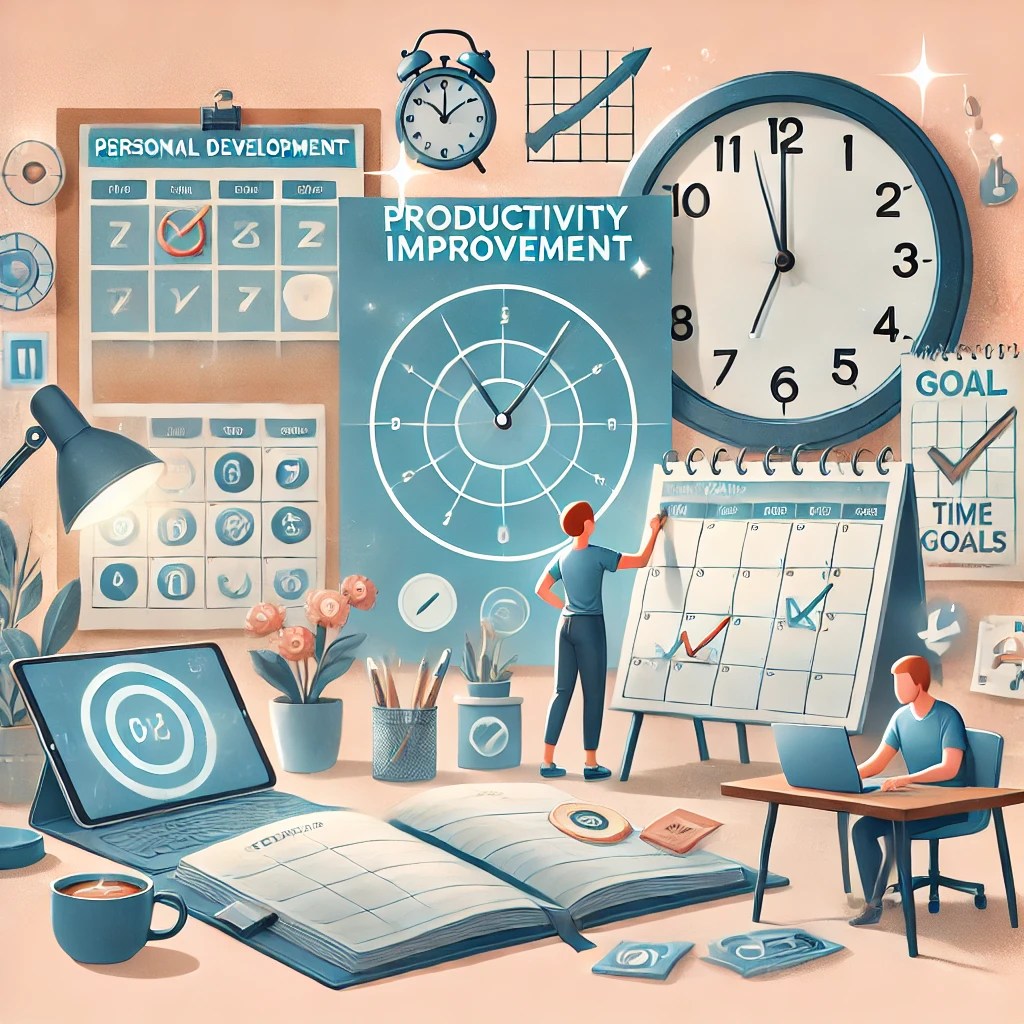
Here is an illustration that expresses productivity improvement, goal setting, and time management related to personal development. With this image, you will be able to understand the importance of organized and focused self-development more easily!
Boosting Productivity: Strategies to Get More Done
Getting more done isn’t just about working harder; it’s about working smarter. Here are some effective productivity techniques to help you make the most of your time and energy.
1. Utilize the Pomodoro Technique
The Pomodoro Technique is a time-management strategy where you work intensely for a short period, typically 25 minutes, followed by a five-minute break. After completing four “Pomodoros,” take a longer break.
- Example: Imagine you have a project that requires focused attention, like writing a report. Set a timer for 25 minutes and focus solely on that task. Once the timer goes off, reward yourself with a short break. Over time, you’ll find this technique helps maintain energy and focus.
- Summary: The Pomodoro Technique can be an effective tool for maintaining energy levels and combating fatigue, especially for tasks that require deep concentration.
2. Batch Similar Tasks Together
Batching is the practice of grouping similar tasks and completing them in one go. By minimizing the mental shift between different types of work, you can save time and reduce fatigue.
- Example: If you have several emails to send, set aside 30 minutes to write and send all of them at once instead of doing them sporadically throughout the day.
- Summary: Batching helps prevent task-switching fatigue, allowing for more efficient use of time.

3. Track Your Energy Levels
Rather than only focusing on time, pay attention to your energy patterns. Schedule tasks requiring deep focus when you feel most alert and leave simpler tasks for low-energy times.
- Example: If you’re more alert in the morning, reserve this time for high-priority tasks, such as strategic planning or creative work. Save less intensive tasks like administrative work for the afternoon when your energy might dip.
- Summary: Aligning tasks with your energy peaks and troughs allows for higher productivity without over-exertion.
4. Remove Digital Distractions
Distractions, especially from digital devices, are one of the biggest productivity killers. Use tools and apps to limit distractions during work sessions.
- Example: Consider using productivity apps like Freedom or Focus@Will, which block distracting sites or provide focus-enhancing background music to help keep you on task.
- Summary: Eliminating digital distractions is crucial for maintaining focus during work sessions, especially in the digital age.

Here is a picture that shows how to reduce and focus on digital distractions. If you use this image with your writing, you will easily sympathize with how to reduce digital disturbances.
Goal Setting: Building a Clear Path Forward
Setting well-defined goals gives you a roadmap for success and motivation along the way. By breaking down your goals and tracking progress, you can stay focused and achieve meaningful results.
1. SMART Goals: Set Effective Objectives
SMART goals are Specific, Measurable, Achievable, Relevant, and Time-bound. This format helps you create actionable steps that lead to real progress.
- Example: Instead of setting a vague goal like “get fit,” create a SMART goal: “Lose five pounds in two months by exercising three times a week and eating balanced meals.”
- Summary: SMART goals bring clarity and structure to goal setting, making it easier to create actionable steps.
2. Break Down Goals into Milestones
Large goals can feel overwhelming, so break them down into smaller, more manageable milestones. This way, you’ll have a sense of accomplishment as you reach each step.
- Example: If your goal is to save $10,000 by the end of the year, set monthly or quarterly savings targets. Reaching each target will keep you motivated and on track.
- Summary: Dividing larger goals into milestones makes the journey feel achievable and allows for celebrating incremental successes.

3. Write Down Your Goals
Studies show that writing down your goals makes you more likely to achieve them. By putting them on paper, you reinforce your commitment and create a visual reminder of your priorities.
- Example: Use a journal or a digital planner to record your goals, reviewing them weekly to track progress and stay aligned.
- Summary: Physically writing down goals reinforces commitment and keeps them top of mind.
Time Management: Techniques to Make the Most of Every Day
Good time management lets you handle multiple responsibilities while maintaining balance. Here are some strategies to help you master your time.
1. Try Time Blocking for Structure
Time blocking involves allocating specific time slots for different tasks, creating a clear structure for your day. This method helps maintain organization and reduces the likelihood of procrastination.
- Example: Reserve 9:00–11:00 AM for deep work, 11:00–11:30 AM for checking emails, and 1:00–2:00 PM for team meetings. Structuring your day in this way increases focus and productivity.
- Summary: Time blocking creates a structured schedule, making it easier to prioritize and manage time.
2. Prioritize with the Eisenhower Matrix
The Eisenhower Matrix divides tasks into four categories: Urgent and Important, Important but Not Urgent, Not Important but Urgent, and Not Important and Not Urgent. This helps you focus on the tasks that truly matter.
- Example: If you’re facing multiple deadlines, categorize each task in the matrix to identify the most critical items to address first.
- Summary: The Eisenhower Matrix helps prioritize tasks, ensuring that important responsibilities are handled promptly.
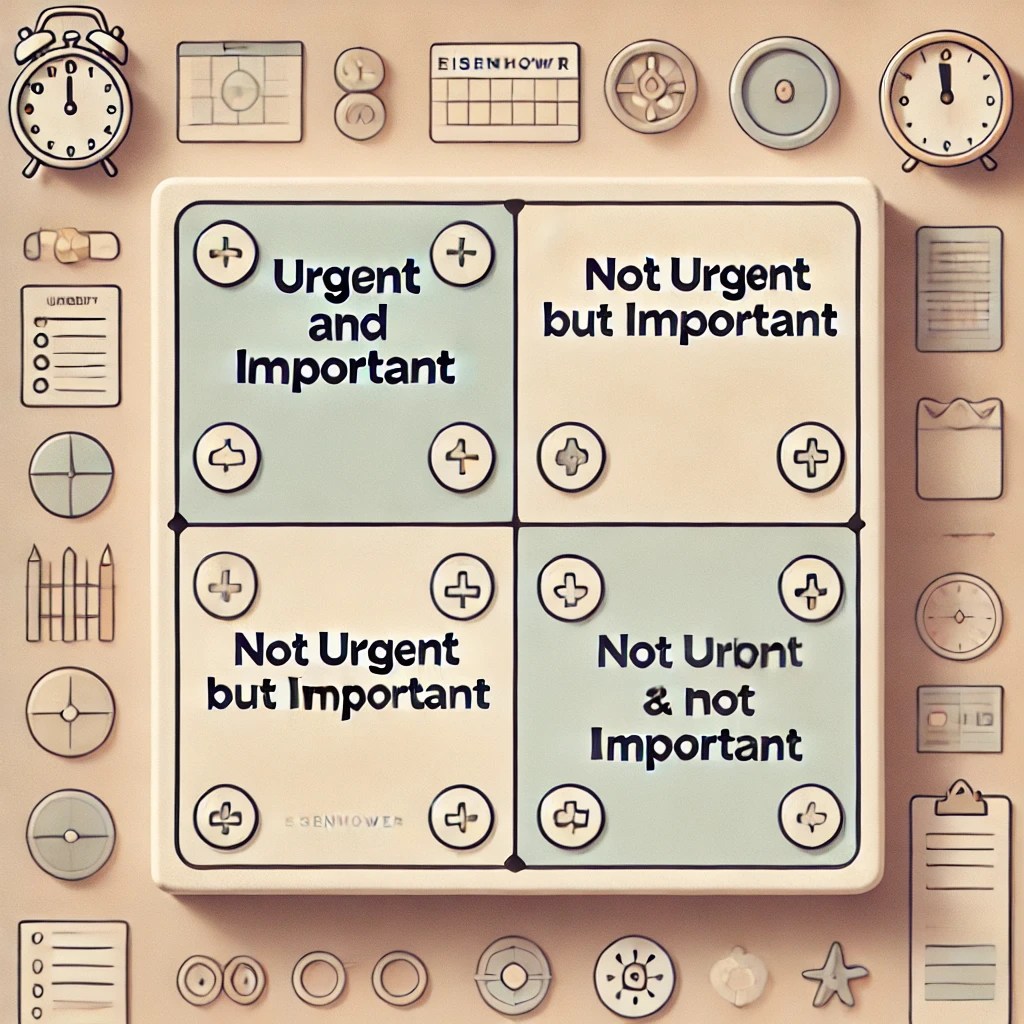
Here is an illustration of the Eisenhower matrix. The matrix, which is divided into four priorities, helps you easily understand the importance and urgency of your work. Use this image with your writing to help you visually understand how to use the matrix!
3. Implement the 2-Minute Rule
If a task takes less than two minutes, do it immediately. This helps you clear out minor tasks and prevents them from accumulating.
- Example: Filing a document or sending a quick email are tasks that can be completed quickly, helping you maintain a tidy to-do list.
- Summary: The 2-Minute Rule reduces the buildup of small tasks, helping to maintain a clear workspace.
4. Conduct a Weekly Review
Reviewing your week allows you to reflect on accomplishments, adjust goals, and plan for the next week. This practice keeps you on track and encourages continuous improvement.
- Example: Set aside 15–30 minutes at the end of each week to evaluate your progress, celebrate achievements, and set priorities for the coming week.
- Summary: A weekly review is an opportunity for reflection and adjustment, ensuring continuous growth.

Overcoming Common Obstacles in Personal Development
The journey to personal growth isn’t without its challenges. Here are ways to tackle common barriers:
- Procrastination: Break down tasks into smaller steps, use the Pomodoro Technique, and set clear deadlines to keep yourself accountable.
- Burnout: Balance productivity with rest. Schedule regular breaks, practice self-care, and seek support when needed.
- Perfectionism: Strive for progress over perfection. Allow room for mistakes, as they are part of the learning process.
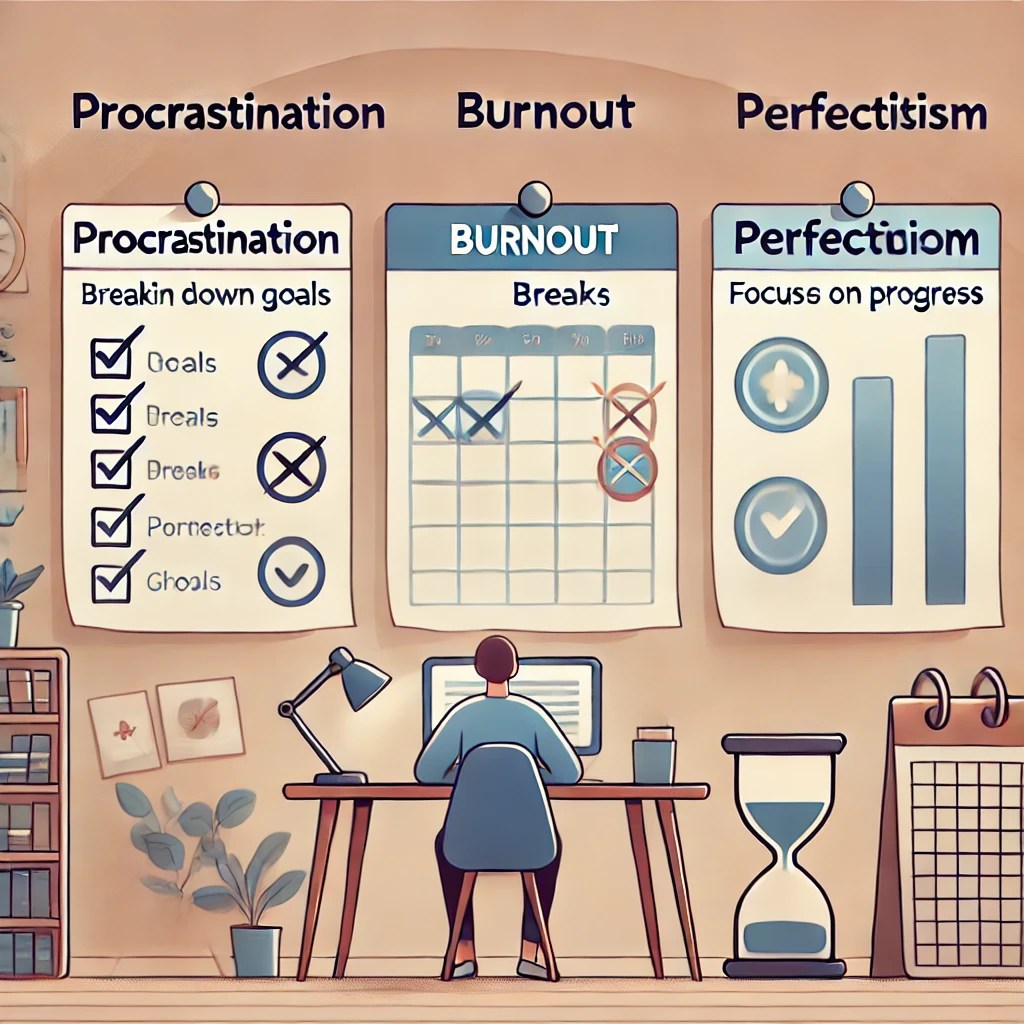
Here is an illustration that visualizes how to overcome the barriers to personal development. The elements for overcoming procrastination, burnout prevention, and perfectionism are well represented, so it will make it easy for readers to understand how to overcome them effectively when used with a blog post!
Conclusion: Taking the Next Steps Toward Personal Growth
Personal development is a lifelong journey that requires consistent effort, reflection, and the right strategies. By integrating productivity, goal setting, and time management techniques, you can make meaningful progress toward your aspirations.
Start small: Pick one technique to try this week, whether it’s time blocking, writing down your goals, or experimenting with the Pomodoro Technique. Remember, change happens step by step, and consistent improvement will lead you to the success you envision.
Call to Action: Which personal development strategy are you most excited to try? Share your plans or challenges in the comments, and let’s support each other in our journey toward growth!
 Summit Select
Leave a comment