
In today’s rapidly evolving job market, standing still is no longer an option. Whether you’re aiming for a promotion, transitioning into a new career, or simply staying relevant, continuous learning is the key to success. A 2022 survey from LinkedIn Learning found that 73% of employees believe that they need to learn new skills to remain competitive in the workforce. Real-world examples further highlight the importance of this: think of how Timothy, an IT specialist, transitioned into a cloud computing role by taking online courses in AWS (Amazon Web Services). Within six months, he earned a certification and secured a higher-paying position in a booming field.
This post will explore how online courses, skill development, and certifications can drive your professional growth, with actionable tips, resources, and real-world success stories to guide your journey.
Why Continuous Learning is Essential for Career Growth
The modern workplace changes rapidly, driven by advancements in technology and evolving industry demands. For example, roles in data analytics, AI, and digital marketing are expanding at a tremendous pace, and those without the necessary skills may find themselves left behind. Professionals who embrace lifelong learning are better equipped to adapt and seize new opportunities.
Statistics: According to the World Economic Forum, 50% of all employees will need reskilling by 2025 as new technologies emerge. Whether you’re in a technical field or creative industry, continuous learning is the only way to future-proof your career.

Leveraging Online Courses for Professional Development
Online courses are one of the most accessible tools for continuous learning. With flexibility, affordability, and a wide range of subjects, they allow professionals to learn at their own pace while maintaining a full-time job. Popular platforms like Coursera, Udemy, and edX offer thousands of courses across various fields.
Top Platforms for Online Learning
- Coursera: Partnered with prestigious institutions like Stanford and Yale, Coursera offers a mix of free and paid courses. Many courses include certificates upon completion, which can be displayed on your LinkedIn profile.
- Udemy: Known for its affordable pricing and vast catalog, Udemy covers everything from coding to creative writing. Udemy’s personalized recommendations help you find courses tailored to your career goals.
- edX: Another excellent option for academic-level courses, edX partners with top universities like Harvard and MIT. Many of their courses offer official certifications that are recognized in professional settings.
Tip: When choosing an online course, focus on those that align with your career objectives. For example, if you’re an aspiring manager, consider taking a course in leadership or project management.
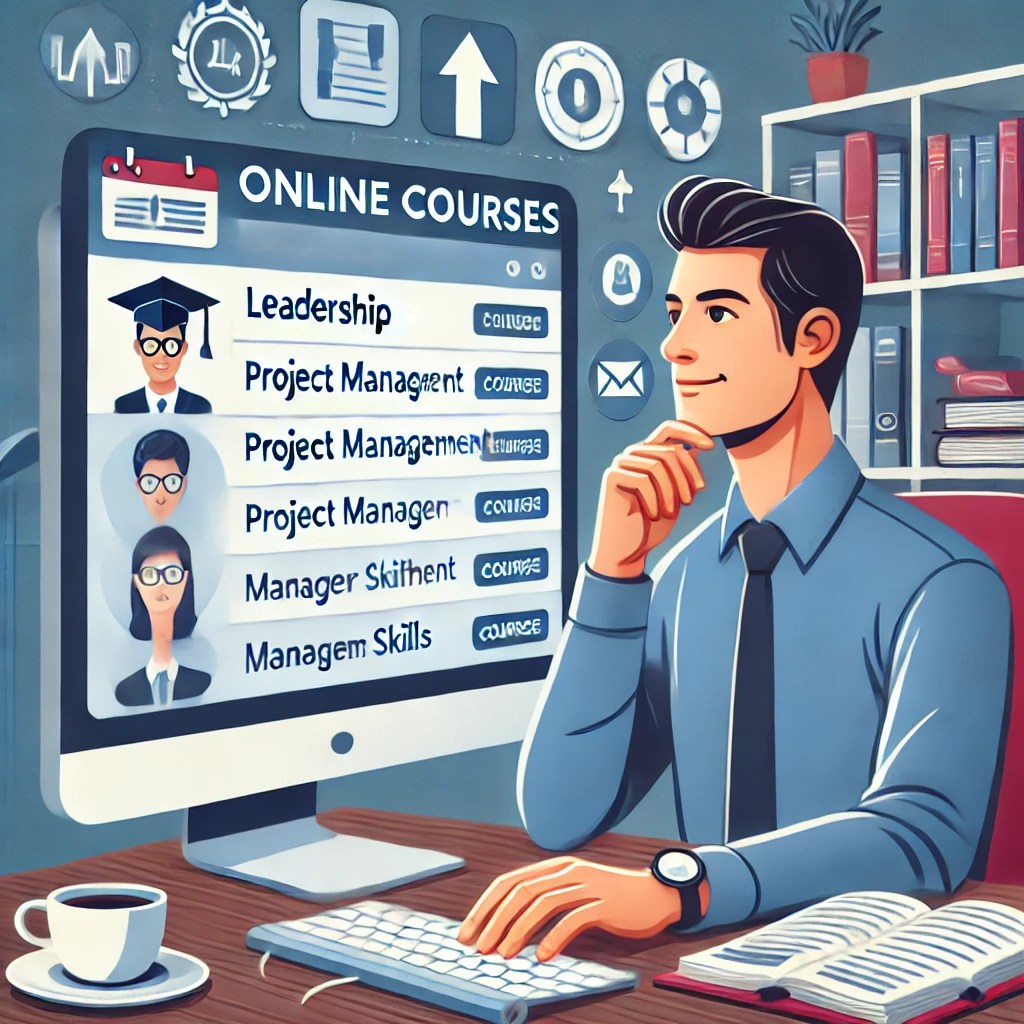
This illustration shows who chooses an online course. A young professional is reviewing an online course listing on his computer about leadership and project management, and the screen displays course titles and icons that represent management skills. It highlights a modern home office setting that symbolizes an active educational environment.
Skill Development: Staying Ahead in a Competitive Market
In addition to taking online courses, honing specific skills can dramatically improve your employability. Today, technical skills and soft skills are equally in demand, and striking the right balance between the two can elevate your career.
Top In-Demand Skills in 2024
- Data Analytics: With businesses increasingly reliant on data for decision-making, skills in Excel, SQL, or Python can set you apart.
- Digital Marketing: The digital shift has made SEO, content marketing, and social media strategy essential skills for professionals in almost every industry.
- Project Management: Familiarity with project management tools like Asana or Trello can increase your efficiency and leadership abilities, making you an invaluable team member.
Success Story: Meet Sarah, a graphic designer who upskilled by learning UX/UI design through a Skillshare course. After acquiring this in-demand skill, Sarah not only improved her design capabilities but also increased her freelance rates by 50%.
Tip: Subscribe to industry newsletters, attend webinars, or join professional groups to stay informed about emerging skills in your field.

Certifications: Proving Your Expertise
Certifications serve as tangible proof of your expertise and can give you an edge in competitive job markets. Many industries require or highly value specific certifications that demonstrate proficiency in key areas.
Key Certifications to Consider
- PMP (Project Management Professional): This certification is globally recognized and highly sought after by professionals looking to advance into senior project management roles.
- Google Data Analytics Professional Certificate: For those in analytics or looking to break into the field, this certification provides a robust foundation in data-driven decision-making.
- AWS Certified Solutions Architect: With the growing demand for cloud computing professionals, this certification is one of the most valuable for IT specialists working with Amazon Web Services.
Tip: Research which certifications are most relevant to your industry. Certifications like PMP or AWS may require significant time and financial investment but offer substantial career benefits, including higher salaries and job security.
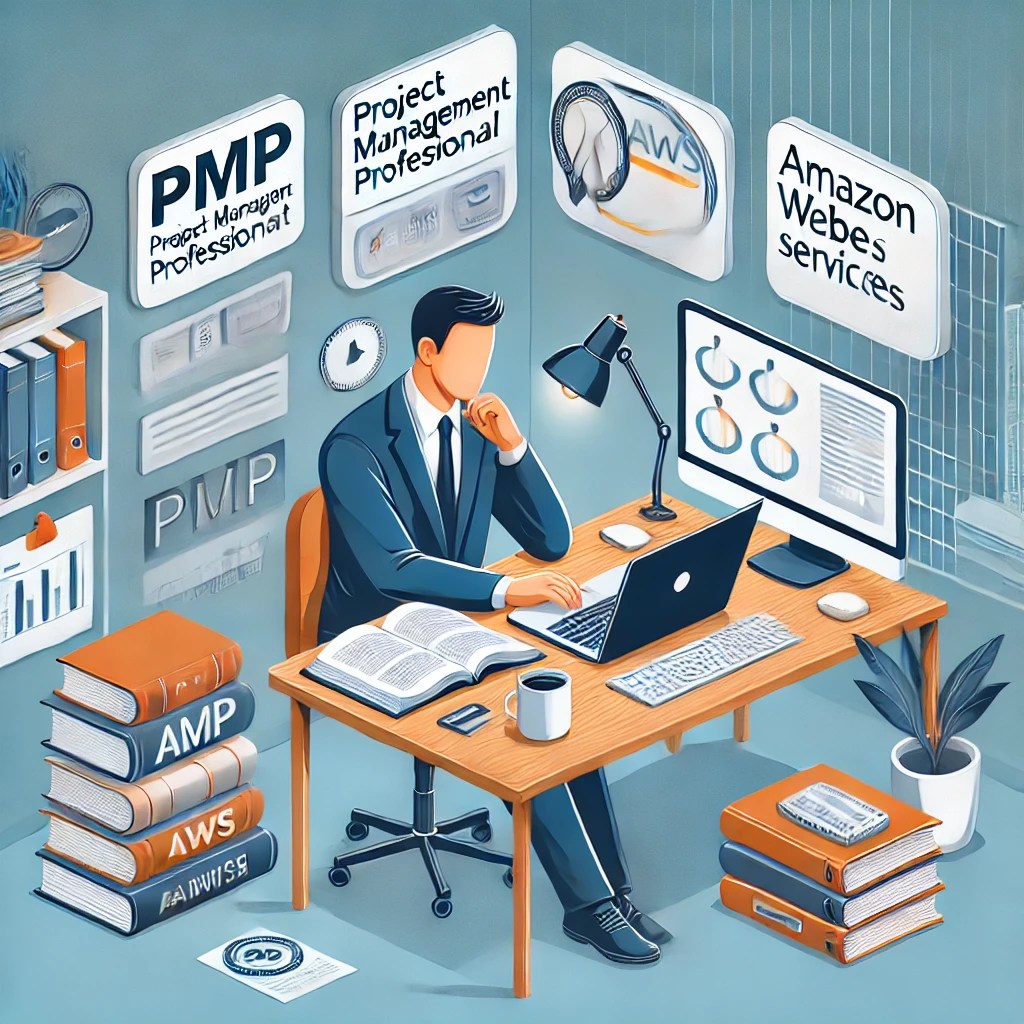
Here is the illustration related to researching certifications relevant to one’s industry, showing a professional analyzing options like PMP (Project Management Professional) and AWS (Amazon Web Services) at their desk.
Creating a Personalized Learning Plan
A structured learning plan is critical for turning your goals into reality. Without a roadmap, it’s easy to get overwhelmed by the sheer number of courses and certifications available. Here’s a step-by-step guide to help you stay on track:
Steps to Building Your Learning Plan
- Set Clear Career Goals: Define where you want to be in the next one to three years. Whether it’s a promotion, a new career, or simply acquiring a new skill, your goals will dictate your learning path.
- Identify the Right Skills or Certifications: Once you’ve established your goals, determine which skills or certifications will help you get there. If you’re aiming for a leadership role, consider a management certification or leadership course.
- Schedule Regular Learning Time: Consistency is key. Set aside 1-2 hours a week for learning, whether it’s completing a course module or reading industry reports. Treat this time as non-negotiable.
- Monitor and Adjust: Keep a log of the courses and certifications you’ve completed. Evaluate your progress every few months to ensure you’re on the right track or if you need to pivot based on industry changes.
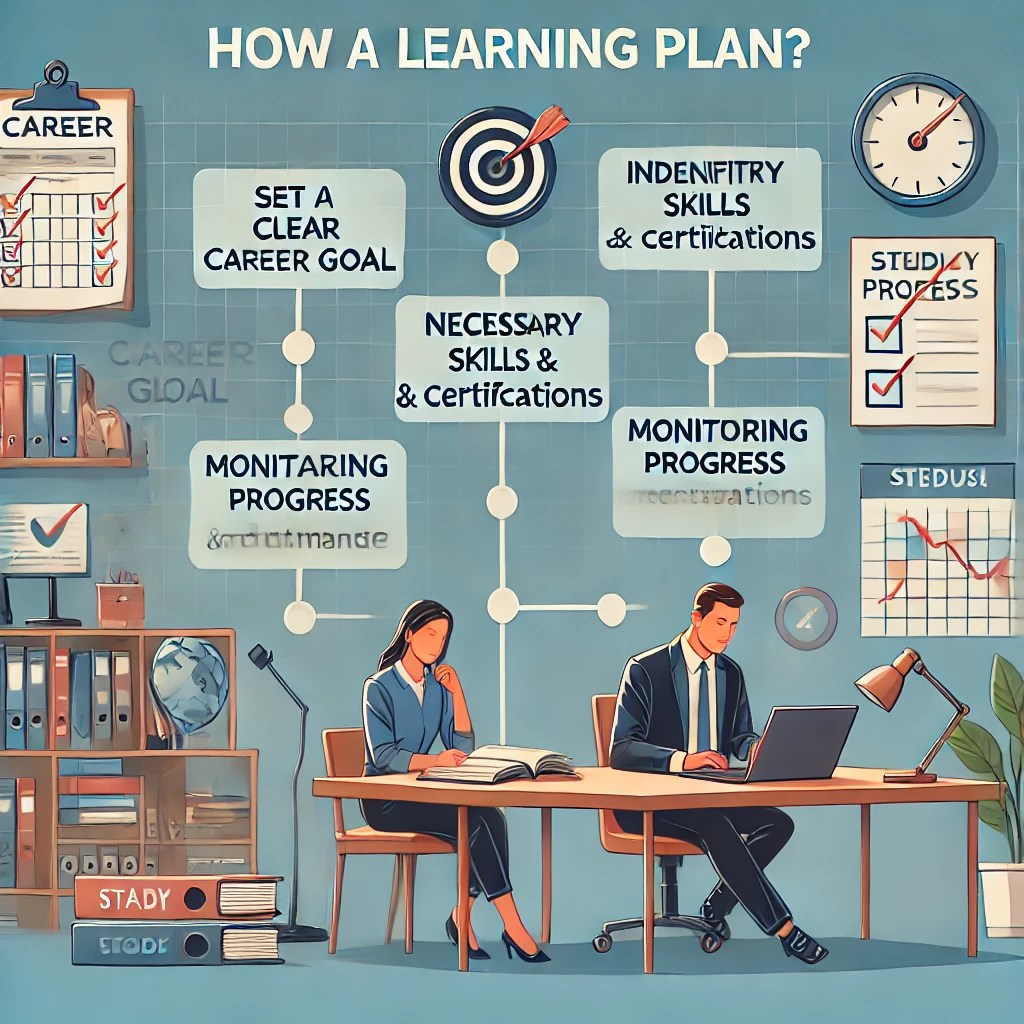
This illustration shows the process of making a learning plan. It includes setting clear career goals, identifying necessary skills or qualifications, and securing regular learning time. It also shows the process of monitoring and coordinating progress, creating an atmosphere that emphasizes adaptability and organizational power.
Conclusion: Start Your Learning Journey Today
In an ever-evolving job market, continuous learning is no longer optional—it’s essential. From online courses and skill development to industry-recognized certifications, there are countless ways to grow professionally. By creating a structured learning plan and committing to regular skill-building, you can remain competitive, achieve your career goals, and thrive in a constantly changing landscape.
Take the first step today: Choose a course, certification, or skill you want to master, and start your learning journey. The future of your career depends on it!
Resources for Further Learning:
This article provides a roadmap for professionals looking to enhance their careers through continuous learning. It includes actionable advice, real-world success stories, and resources to help you get started. With clear section headings and a step-by-step guide, this post aims to inspire readers to take charge of their professional development.
 Summit Select
Leave a comment