
In today’s hectic world, the importance of personal growth and mental well-being cannot be overstated. With the rising demands of work, social responsibilities, and the constant distractions of digital devices, many people struggle with stress, anxiety, and burnout. However, practices like mindfulness, positive psychology, and self-care are gaining recognition as powerful tools to manage these challenges and lead more fulfilling lives.
In this article, we will explore stress management techniques, ways to improve mental health, and strategies to boost productivity while maintaining a healthy work-life balance. We’ll also share personal anecdotes, scientific insights, and actionable tips to help you incorporate these habits into your daily routine.
Managing Stress: Finding Balance and Reducing Anxiety
1. Mindfulness and Meditation: The Power of Staying Present
One of the most effective ways to manage stress is through mindfulness and meditation. These practices encourage you to focus on the present moment without judgment, helping reduce feelings of anxiety and overwhelm. When I first started practicing mindfulness, I struggled to stay focused. However, after a few weeks of consistently meditating for 10 minutes every morning, I noticed a significant drop in my stress levels and an increase in my ability to handle daily challenges.
Research from the American Psychological Association has shown that mindfulness meditation reduces symptoms of anxiety and improves overall emotional regulation. Studies also indicate that regular mindfulness practices can lower the body’s cortisol levels, a hormone linked to stress.
Tip: Start with short sessions of 5-10 minutes. Focus on your breath, and if your mind wanders, gently bring it back to your breathing. Gradually increase your meditation time as you get more comfortable.
2. Exercise as a Stress Reliever: Move Your Body, Calm Your Mind
Physical activity is not only essential for physical health but also plays a crucial role in mental well-being. Exercise boosts the release of endorphins, the brain’s feel-good neurotransmitters, which naturally help reduce stress and improve mood. I recall a particularly stressful time during college when I felt overwhelmed with deadlines. A daily 30-minute walk in the park helped me clear my mind and approach tasks with renewed energy.
A 2021 study published in The Lancet Psychiatry found that people who engage in regular physical activity experience lower rates of mental health issues, including depression and anxiety.
Tip: Incorporate at least 30 minutes of moderate exercise into your daily routine, whether it’s walking, yoga, or cycling. Even a quick workout can have a profound effect on your mood and stress levels.
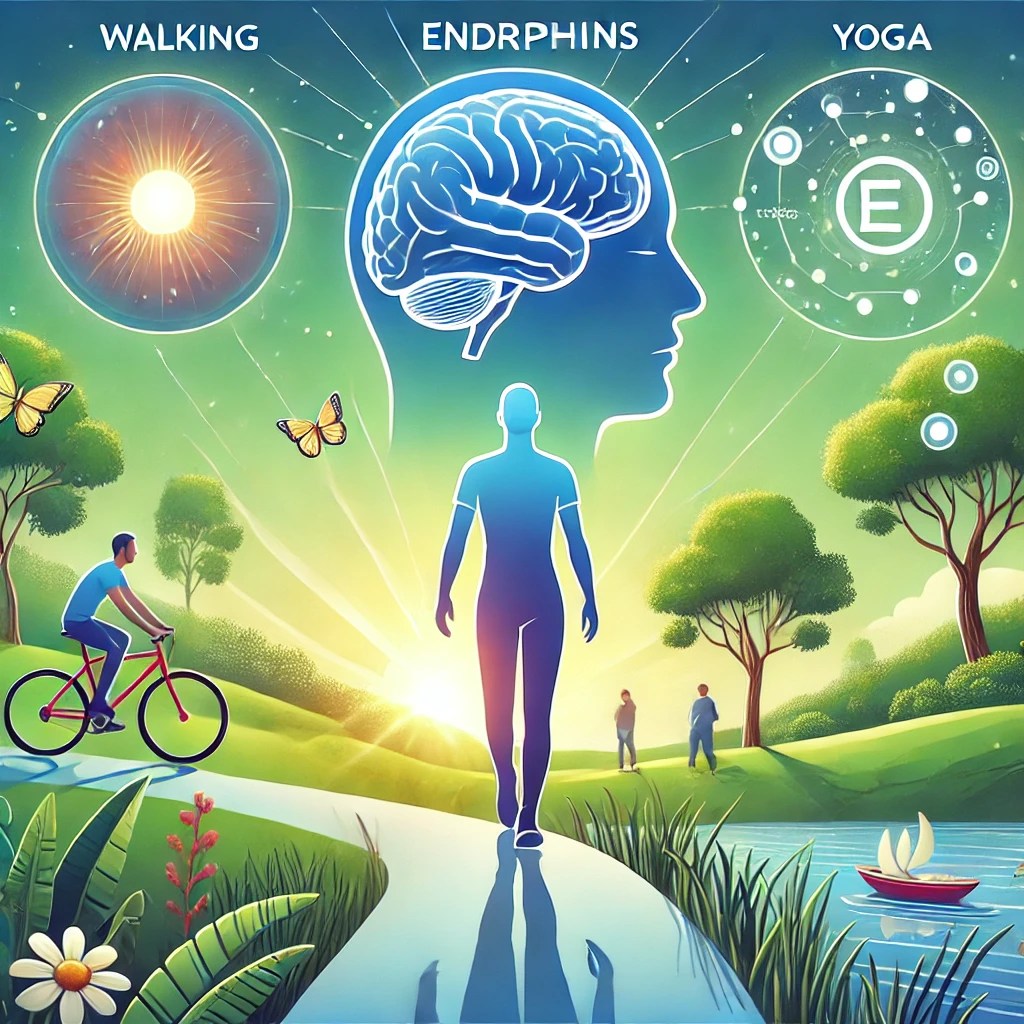
The illustration represents the positive effects of physical activity, such as walking, on physical and mental health. It shows a walker in green nature symbolizing the brain where endorphins are secreted, with reduced stress and anxiety.
Improving Mental Health: Overcoming Anxiety and Avoiding Burnout
1. Managing Anxiety: Gratitude and Positive Thinking
Anxiety is one of the most common mental health issues today, but it can be managed with simple techniques. Positive psychology—the study of happiness and well-being—encourages individuals to focus on what’s going right in their lives rather than what’s wrong. Personally, keeping a gratitude journal has helped me shift my focus from daily stresses to the small things I appreciate. Writing down three things I’m grateful for every night helps me end the day on a positive note.
According to a 2017 study in the Journal of Positive Psychology, practicing gratitude can significantly lower anxiety and depression symptoms. By focusing on the positives, we retrain our brains to look for joy and appreciation in everyday life.
Tip: Try keeping a gratitude journal. Every evening, write down three things you’re thankful for. This simple exercise rewires your brain to focus on positive experiences, reducing feelings of anxiety over time.
2. Self-Care: Building Healthy Habits for Mental Wellness
Self-care is the practice of taking care of your mental, emotional, and physical health. While self-care might sound like a luxury, it’s essential for avoiding burnout. During a particularly intense work period, I learned that skipping meals and sacrificing sleep led to more stress and lower productivity. Incorporating self-care habits, such as maintaining a healthy diet and getting enough sleep, helped restore my energy and mental clarity.
Tip: Make small adjustments to your routine by prioritizing sleep, balanced meals, and taking short breaks during the day. A 10-minute walk or even a mindful cup of tea can make a big difference in your overall well-being.

Boosting Productivity and Achieving Work-Life Balance
1. Time Management for Increased Productivity
Balancing productivity with mental well-being can be a challenge, but time management techniques can help you make the most of your day without overwhelming yourself. When I began scheduling tasks and setting clear priorities, I found I was able to accomplish more in less time, with far less stress.
One effective method is the Eisenhower Matrix, which encourages you to categorize tasks based on urgency and importance. This way, you can focus on high-priority tasks and delegate or eliminate less important ones.
Tip: Each morning, write down your top three priorities for the day and focus on completing those tasks first. Avoid multitasking—it often leads to lower quality work and more stress.
Maintaining focus during work can be difficult, especially with constant digital distractions. I’ve found the Pomodoro Technique—a time management method where you work for 25 minutes followed by a 5-minute break—extremely helpful for staying productive without burning out. The short bursts of work keep me focused, and the regular breaks prevent mental fatigue.
Tip: Set a timer for 25 minutes and work on a single task during that period. Afterward, take a 5-minute break before starting the next Pomodoro session. This method helps sustain concentration while giving your brain time to recharge.
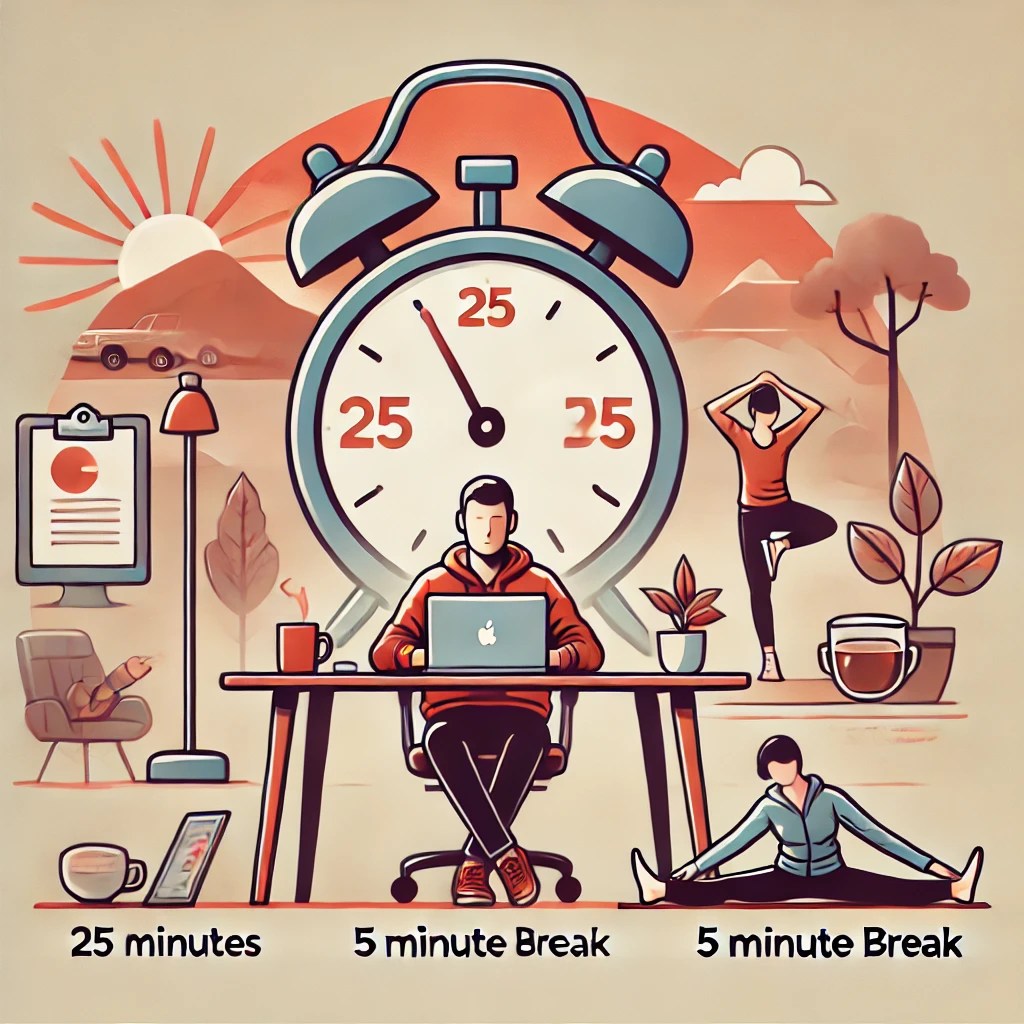
This illustration is a visual representation of a scene using the Pomodoro technique. It highlights 25 minutes of concentration, 5 minutes of rest, and shows the process of increasing concentration and productivity and recharging through rest.
3. Finding Work-Life Balance: Disconnect to Reconnect
One of the most important aspects of work-life balance is learning when to disconnect from work. After a long day, I make a conscious effort to avoid checking emails or responding to work-related messages. This allows me to unwind and enjoy my personal time, which is crucial for recharging my mental and emotional energy.
Tip: Set clear boundaries between work and personal life. After working hours, turn off work notifications and dedicate time to hobbies, family, or relaxation. This practice will help you avoid burnout and improve your overall mental well-being.

Conclusion: Key Takeaways for Personal Development and Mental Well-Being
Achieving personal growth and maintaining mental well-being require consistent effort, but the rewards are well worth it. Let’s recap the key takeaways:
- Mindfulness and meditation are powerful tools for managing stress and reducing anxiety.
- Regular physical activity not only benefits your body but also improves your mood and mental clarity.
- Gratitude practice and positive psychology help shift your focus away from negative thoughts and foster a sense of contentment.
- Self-care habits, like getting enough sleep and eating well, are essential for avoiding burnout.
- Effective time management and techniques like the Pomodoro Method boost productivity while preventing mental fatigue.
- Setting boundaries and prioritizing work-life balance are crucial for long-term mental health.
By integrating these practices into your daily routine, you can enhance your personal growth, improve your mental well-being, and live a more balanced life.
How do you practice self-care and manage stress? Share your experiences and tips in the comments below—let’s build a supportive community dedicated to mental well-being!
 Summit Select
Leave a comment