
In the rapidly evolving digital world, the way we consume news has undergone a profound transformation. While older generations still lean towards traditional media outlets, the younger generation is turning to more dynamic, video-based platforms such as TikTok. This shift marks a new era in news consumption, where short, engaging content is becoming the preferred method of receiving information. But what does this change mean for the future of journalism, and how are influencers, misinformation, and ethical concerns playing a role? Let’s delve into the data, studies, and real-world examples to understand this phenomenon.
The Stats Behind the Shift: Younger vs. Older Generations
According to the Digital News Report 2024 by the Reuters Institute, 23% of 18-24-year-olds now use TikTok as their primary source of news
Reuters Institute. This is a stark contrast to older adults, with only 7% of those aged 55+ turning to the platform. A study by Pew Research found that, overall, more than half of U.S. adults under 30 regularly get their news from social media platforms, with TikTok, Instagram, and YouTube being the most popular
DataReportal – Global Digital Insights.
For older generations, however, traditional platforms such as CNN, BBC, and Fox News remain more reliable sources, although the rise of social media has led many to supplement their news consumption with platforms like Facebook and YouTube. This generational divide reflects not only a difference in platform preference but also a shift in how news is processed. For younger audiences, TikTok’s short-form, easily digestible content fits seamlessly into their fast-paced digital lives.
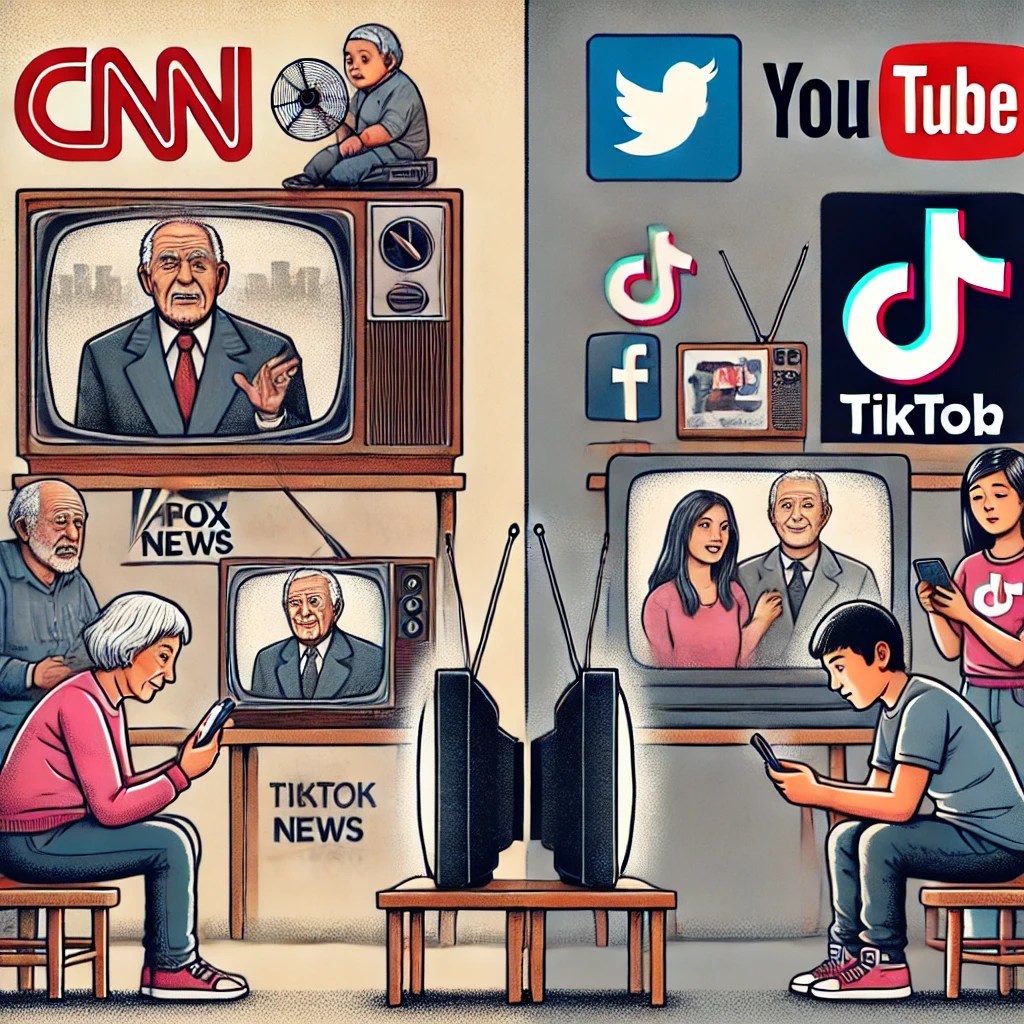
The illustration highlights the older generation’s preference for traditional news platforms such as CNN, BBC, and Fox News, as well as the younger generation’s preference for short and fast-spending news content on TikTok. This visually demonstrates differences in the way news is consumed between generations.
How TikTok Influencers Shape News Dissemination
TikTok has given rise to a new type of news anchor: the influencer. Unlike traditional journalists, these influencers engage with their audience in a more informal, relatable manner, often blending news with entertainment. For example, The Washington Post‘s TikTok account has gained popularity through humorous takes on serious news topics, using memes and trends to make information more engaging. This type of content appeals to younger audiences who prefer news that is both informative and entertaining.
One notable example of TikTok’s influence in news dissemination is during the COVID-19 pandemic. Influencers played a critical role in spreading accurate health information. In collaboration with the World Health Organization (WHO), TikTok influencers promoted campaigns encouraging young people to follow safety measures, wear masks, and get vaccinated. This strategy was highly effective in reaching a demographic that may not have been as responsive to traditional news outlets

Ethical Concerns: Misinformation and the TikTok Ecosystem
DataReportal – Global Digital Insights.
A specific case that highlights this issue is the spread of misinformation surrounding the COVID-19 vaccines. Despite efforts by TikTok to flag false information and promote verified content, numerous videos containing unfounded claims about vaccine safety gained millions of views before being removed. This points to a broader ethical challenge: how can news on platforms like TikTok maintain credibility when anyone can post content?

Ensuring Credibility and Accuracy on TikTok
As TikTok becomes a more prominent news platform, ensuring the credibility and accuracy of content is crucial. Traditional news organizations that are adapting to TikTok must uphold journalistic standards while delivering content in a format that resonates with younger audiences. One approach is through collaboration with fact-checking organizations. For instance, TikTok partnered with organizations like PolitiFact and Full Fact to verify claims in videos, allowing for prompt removal of misinformation
Moreover, news outlets need to prioritize transparency. Providing sources for claims made in videos, linking to full articles, and using verified accounts are ways to enhance credibility. A good example of this is NBC News, which often links to more in-depth articles on its TikTok posts, providing audiences with a more comprehensive understanding of the issues at hand.

This illustration visually represents the process by which TikTok works with fact-checking agencies such as PolitiFact and Full Fact to ensure the reliability and accuracy of its content. It highlights the process of verifying that the claims in the video are true and demonstrates how to clearly provide news sources to enhance transparency.
The Role of Algorithms in News Delivery
TikTok’s powerful algorithm plays a significant role in how news is delivered to users. By analyzing user behavior, the algorithm curates a feed of personalized content, often showing videos that align with users’ existing interests and beliefs. While this can increase engagement, it also raises concerns about echo chambers and confirmation bias. Users may only see news that reinforces their viewpoints, limiting exposure to diverse perspectives. This can lead to a more polarized society, where misinformation thrives and consensus is harder to achieve
To combat this, some news organizations are experimenting with ways to introduce users to different viewpoints. TikTok’s algorithm can be tweaked to include diverse content in the “For You” page, ensuring that users are exposed to a broader range of news stories.

TikTok and the Future of News
As TikTok continues to grow, its impact on the future of news is undeniable. The platform’s ability to deliver short, engaging news snippets has revolutionized the way younger generations consume information. However, for TikTok to be a credible news source, both the platform and content creators must address the challenges of misinformation and echo chambers. By ensuring transparency, collaborating with fact-checkers, and adapting traditional journalistic practices to the digital age, TikTok can become a trusted source of news.
Conclusion: Bridging the Gap Between Generations
The shift in news consumption between younger and older generations is a reflection of the broader changes taking place in our digital society. While platforms like TikTok appeal to younger audiences with their short, engaging content, older generations remain loyal to more traditional media. The rise of influencers, the spread of misinformation, and the ethical challenges facing platforms like TikTok highlight the complexities of the modern news landscape.
Moving forward, news organizations must find ways to bridge this generational divide, ensuring that all audiences have access to credible, reliable news. Whether through collaborations with influencers or partnerships with fact-checkers, the future of news will depend on the ability to adapt to new technologies while maintaining the core principles of journalism: accuracy, transparency, and integrity.
*** As platforms like TikTok gain popularity among younger generations, traditional media continues to be favored by older audiences. The emergence of influencers and the spread of misinformation on TikTok have raised ethical concerns and emphasized the complexities of today’s news landscape. To overcome these challenges, news organizations must bridge the generational gap and ensure that credible and reliable news is accessible to all. This can be achieved through collaborations with influencers and partnerships with fact-checkers, allowing journalism to adapt to new technologies while upholding the principles of accuracy, transparency, and integrity. TikTok not only revolutionizes news consumption but also transforms the very process of news creation. Despite the obstacles ahead, the future of journalism is filled with exciting prospects.
 Summit Select
Leave a comment