
Imagine waking up in the morning, feeling overwhelmed by the challenges ahead, and doubting whether you can tackle them. Now, imagine flipping that script: instead of focusing on the potential failures, you embrace the day with optimism, viewing each challenge as an opportunity for growth. Which mindset do you think will set you up for success? This is where the power of positive thinking comes in.
Changing your mindset from negative to positive has the ability to transform your life in profound ways. It’s not just a motivational mantra—it’s backed by science. Studies show that a positive outlook can improve mental health, reduce stress, and even enhance physical well-being. In this article, we’ll explore the science of positive thinking, offer practical tips to develop a more optimistic mindset, and share real-life stories of individuals who have used positivity to achieve success. By the end, you’ll see how shifting your mindset can help you live a more fulfilled and happier life.
What is Positive Thinking, Really?
Before diving into the benefits of positive thinking, it’s essential to understand what it is—and what it isn’t. Positive thinking doesn’t mean ignoring reality or pretending life is perfect. It’s about acknowledging challenges but choosing to focus on solutions instead of problems. It’s about believing that, despite obstacles, good things can happen.
Positive thinking involves reframing negative thoughts into empowering ones. For example, instead of saying, “I’m not good at this,” a positive thinker would say, “I’m learning, and I’ll get better with practice.” This subtle shift opens the door to growth and perseverance.

A Compelling Example of Positive Thinking’s Impact
Consider this: Research from the Mayo Clinic has found that people who engage in positive thinking experience fewer depressive symptoms and a lower risk of death from cardiovascular disease. Positive thinkers are generally healthier, as their optimistic mindset helps them cope better with stress. This isn’t just a coincidence—positivity affects both the brain and body in measurable ways.
How Negative Thinking Holds You Back
To fully appreciate the benefits of positive thinking, it’s worth examining how negative thoughts limit our potential. When we focus on what could go wrong, we become stuck in fear, doubt, and inaction. Negative thinking triggers stress hormones like cortisol, which, over time, erode both mental and physical health.
For example, consider someone who constantly tells themselves they’re not good enough at their job. This mindset leads to procrastination, lack of confidence, and ultimately, missed opportunities for advancement. In contrast, positive thinking encourages action and helps us step outside our comfort zones.
The Science Behind Positive Thinking
Positive thinking is more than just an emotional state—it has physiological benefits too. Studies have shown that when we think positively, our brains release dopamine and serotonin, which are natural mood enhancers. These chemicals reduce anxiety and promote a sense of well-being.
Research published in the American Journal of Cardiology reveals that optimistic individuals are 30% less likely to suffer from heart disease. Optimism has also been linked to faster recovery times after surgeries and illnesses, as it bolsters the body’s immune system by reducing inflammation.
These scientific findings show that positivity doesn’t just make you feel good—it can literally extend your life.
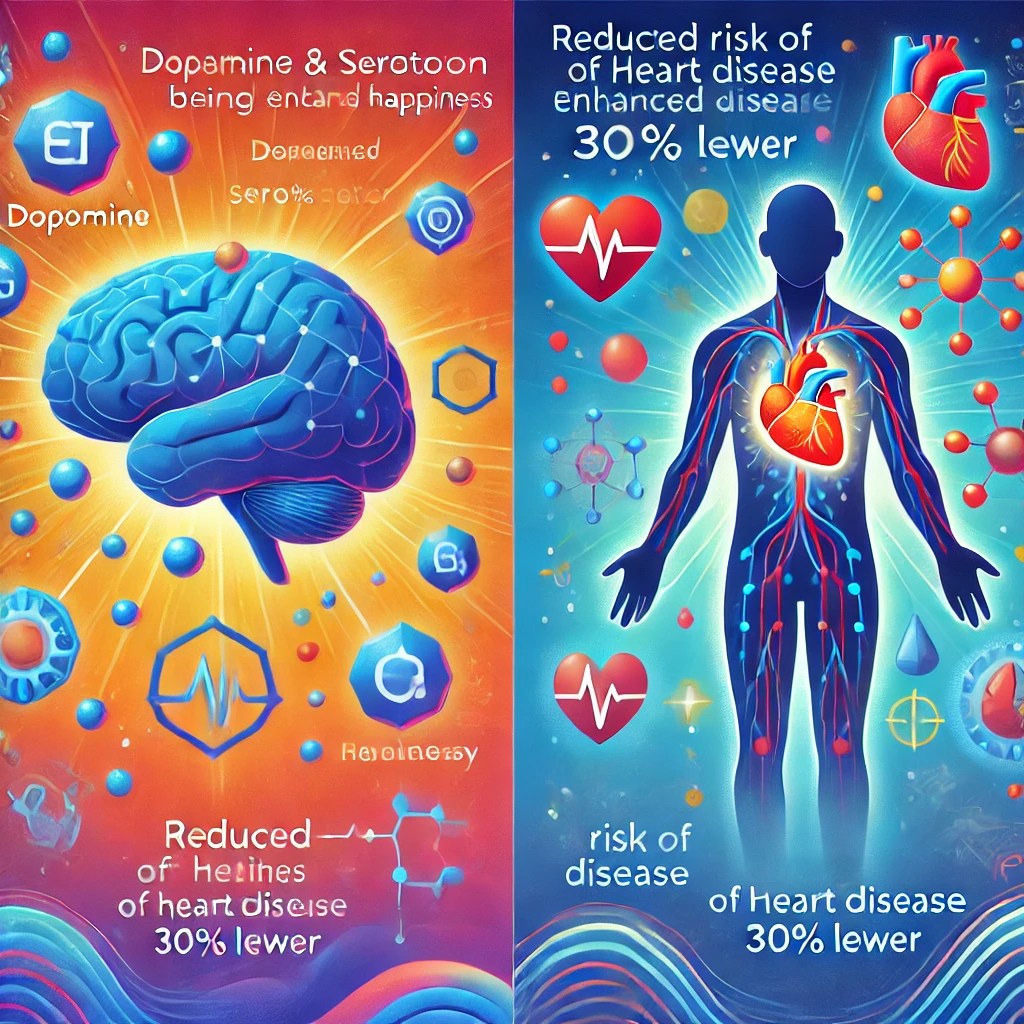
This illustration visually illustrates the process by which positive thinking can provide physiological benefits. Dopamine and serotonin are secreted from the brain to reduce anxiety and promote happiness, and optimistic thinking can lower the risk of heart disease and strengthen the immune system.
Practical Tips to Cultivate a Positive Mindset
Developing a positive mindset takes time and effort, but the rewards are worth it. Here are some proven strategies to help you think more positively:
1. Practice Gratitude Daily
Gratitude is one of the simplest yet most effective ways to foster positivity. When you focus on what’s going right in your life, you naturally shift away from negativity. Studies show that people who regularly express gratitude have better relationships, sleep better, and experience fewer feelings of envy.
Tip: Start a gratitude journal and write down three things you’re thankful for each day. This practice trains your brain to look for positive aspects, even in difficult situations.

2. Reframe Negative Thoughts
When you catch yourself thinking negatively, ask yourself, “How can I view this differently?” Reframing doesn’t deny the difficulty of a situation; instead, it offers a way to see the silver lining.
For instance, instead of thinking, “I failed this exam, so I’m not smart,” you could reframe it as, “This exam was tough, but now I know what to focus on for next time.”
3. Surround Yourself with Positivity
Your environment has a profound impact on your mindset. If you’re surrounded by pessimism, it’s harder to stay positive. Seek out uplifting people, inspiring books, and motivating podcasts that nurture optimism.
Tip: Find a mentor or friend who encourages growth and offers constructive feedback. Avoid toxic relationships that bring you down.

4. Visualize Your Success
Visualization is a powerful tool used by successful athletes and entrepreneurs. When you picture yourself achieving your goals, your brain starts to believe that success is possible. Visualization activates the same neural pathways that are involved in performing the activity, increasing your confidence and motivation.
Tip: Spend a few minutes each day visualizing your goals. Imagine how success looks, feels, and even smells—make it real in your mind.
5. Engage in Positive Self-Talk
Your internal dialogue has a profound effect on your actions and attitudes. If your self-talk is full of criticism, you’ll struggle to see the positives in life. On the other hand, affirming statements like, “I’m capable of handling anything that comes my way,” boost your confidence and resilience.
Tip: Start the day with positive affirmations. Over time, these small shifts will change how you approach challenges.
Real-Life Examples of Positive Thinking in Action
1. J.K. Rowling: From Struggling Writer to Global Icon
J.K. Rowling, the author of the Harry Potter series, faced significant adversity before finding success. She was rejected by numerous publishers, struggled financially as a single mother, and could have easily given up. However, her positive mindset and belief in her story kept her going. Rowling’s resilience and determination are a testament to the power of believing in oneself, even when things seem impossible.
As Rowling herself said, “Rock bottom became the solid foundation on which I rebuilt my life.”

2. Jim Carrey: Visualizing Success
Before becoming one of Hollywood’s biggest stars, Jim Carrey struggled to make ends meet as a young comedian. To stay motivated, Carrey wrote himself a $10 million check for “acting services rendered” and post-dated it for 1995. He kept that check in his wallet as a constant reminder of his goals. In 1994, he landed a major role in Dumb and Dumber and was paid exactly $10 million.
Carrey’s story shows the incredible power of visualization and positive thinking.

3. Oprah Winfrey: Turning Obstacles Into Opportunities
Oprah Winfrey grew up in poverty and faced many challenges throughout her life. Despite the setbacks, she used each hardship as an opportunity to grow. Oprah attributes much of her success to her positive attitude and belief that every challenge offers a lesson.
Oprah famously said, “The greatest discovery of all time is that a person can change their future by merely changing their attitude.”

How Positive Thinking Can Change Your Life
The benefits of positive thinking extend far beyond professional success. A positive mindset can improve your health, relationships, and overall well-being. It helps you navigate life’s challenges with resilience and grace. Instead of being overwhelmed by obstacles, positive thinkers view setbacks as opportunities for growth.
When you change your mindset, you change your reality. Positive thinking helps you focus on solutions instead of problems, opening the door to new possibilities. It’s not about denying hardships but about facing them with hope and determination.
SEO Keywords: positive thinking, mindset shift, power of optimism, gratitude practice, positive self-talk, visualization for success, reframe negative thoughts, mental wellness, success stories
Conclusion: The Life-Changing Power of Positive Thinking
Positive thinking isn’t just a feel-good concept—it’s a practical strategy that can transform your life. From J.K. Rowling to Jim Carrey and Oprah Winfrey, the most successful people in the world often credit their mindset for their achievements. But positive thinking isn’t reserved for celebrities. It’s something we can all practice to unlock our potential.
If you start practicing gratitude, reframing negative thoughts, and engaging in positive self-talk, you’ll be amazed at the changes you can make. Visualize your success, surround yourself with positivity, and remember—what you focus on grows.
How has positive thinking impacted your life? Share your stories in the comments below, and let’s build a community that embraces the power of positivity!
 Summit Select
Leave a comment