
AArtificial Intelligence (AI) is no longer just a futuristic idea from sci-fi movies. It’s a reality that’s increasingly shaping our world, and its impact is only going to grow. According to a study by PwC, AI could contribute up to $15.7 trillion to the global economy by 2030, signaling just how crucial it will become across industries. This rapid expansion raises questions like, “Will AI completely replace human jobs?” and “What does collaboration between AI and humans look like in the future?”
In this article, we’ll explore these pressing issues, making predictions about how AI and human interaction will evolve, and how the two will work together in the years to come.
1. The New Norm: AI and Human Collaboration
AI is transforming industries by working alongside humans rather than simply replacing them. It’s already integrated into sectors like healthcare, finance, and transportation, where it assists humans with complex tasks and enhances efficiency.
For example, in hospitals, AI analyzes medical images to help doctors make more accurate diagnoses, speeding up the process and improving outcomes for patients. In the financial sector, AI processes vast amounts of data in seconds, supporting financial advisors in making more informed decisions.
Example:
In the automotive industry, companies like Tesla are leading the way with AI-powered autonomous driving. Tesla’s vehicles combine human control with AI assistance to create safer driving experiences. In the near future, AI and human co-driving models will likely become even more common, showing how collaboration, not competition, will define the future of work.
Key Point: Collaboration between AI and humans will be essential in industries that require precision and large-scale data processing, making AI a valuable tool rather than a replacement for human expertise.

2. Will AI Replace Jobs?
The fear that AI will replace jobs entirely is understandable but not fully accurate. AI will indeed automate certain repetitive, manual jobs, but it will also create new opportunities in areas that require creativity, complex decision-making, and emotional intelligence—skills that are inherently human.
Research by the World Economic Forum predicts that while 85 million jobs could be displaced by AI by 2025, 97 million new jobs could emerge that are more suited to a digital and AI-driven economy. Fields such as AI development, cybersecurity, and data analysis will see tremendous growth.
Example:
In customer service, AI-powered chatbots can handle basic inquiries, but human representatives are still needed for more complex or emotionally charged interactions. AI acts as a support system, handling simple tasks so humans can focus on nuanced, high-stakes problems that require empathy and sophisticated problem-solving.
Key Point: AI will automate certain jobs but create new ones in fields where human creativity and emotional intelligence are critical, leading to a shift in job roles rather than outright replacement.

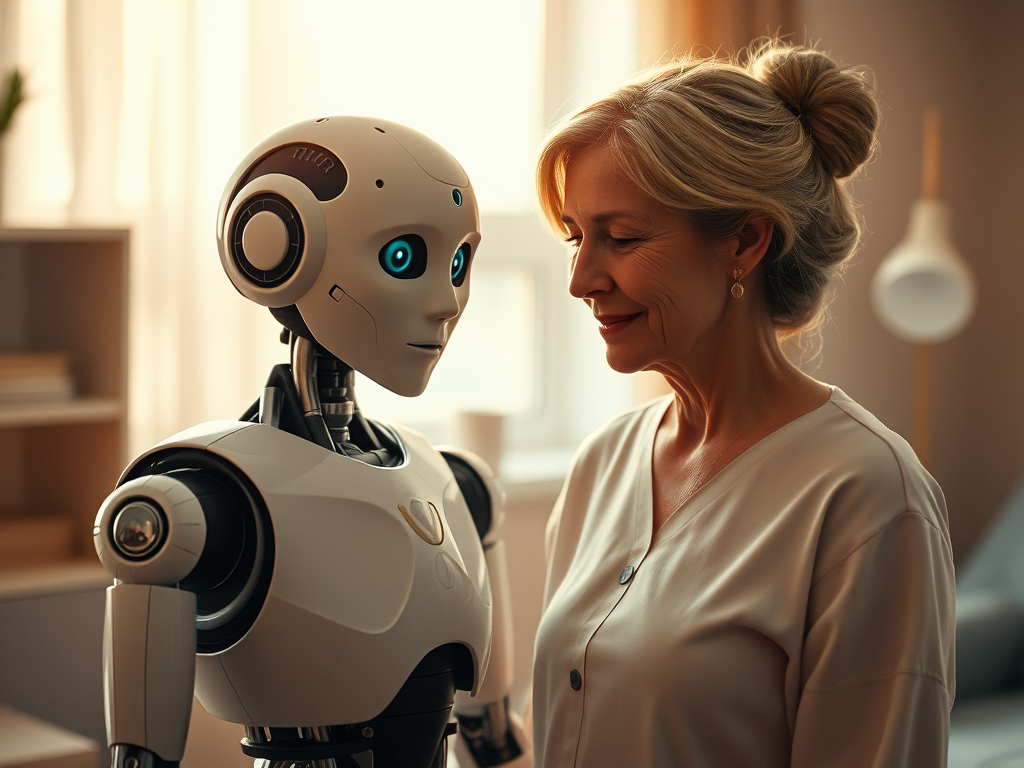
3. Emotional Interaction with AI: Can AI Truly Empathize?
One area where AI has made significant strides is emotional interaction, but can it ever truly “understand” emotions? While AI can analyze facial expressions, tone of voice, and language patterns to recognize emotions, it lacks the capacity for genuine empathy. Emotional AI is designed to read data points, but it doesn’t experience emotions the way humans do.
Example:
Take ‘Woebot,’ an AI chatbot designed to provide mental health support. Woebot uses algorithms to detect patterns in language that suggest a user’s emotional state. While this tool offers valuable initial support, it still requires human therapists to handle deeper emotional complexities. AI might recognize that someone is feeling down based on their language, but it can’t provide the nuanced care that a human therapist can.
Key Point: AI’s ability to “understand” emotions is data-driven, not emotional in itself. Humans will remain critical in fields that require true emotional intelligence, such as therapy and caregiving.
4. Creativity and AI: Human and Machine Synergy
Creativity is often considered one of the last frontiers that AI can’t touch, but even this is changing. AI has begun to play a role in creative fields like music, art, and writing by analyzing data and patterns to generate new ideas. However, AI creativity isn’t about replacing human artistry but rather enhancing it through collaboration.
Example:
IBM’s AI, Watson, collaborated with human composers to create original music by analyzing hundreds of compositions and suggesting patterns. The AI provided data-driven insights, but the emotional and creative interpretation was left to the human composers. This kind of AI-human partnership can lead to groundbreaking innovations in creative industries.
Key Point: AI can complement human creativity by providing insights and generating ideas, but the emotional and interpretive aspects of creativity remain uniquely human.

5. Ethical Considerations: Who Controls AI’s Decisions?
As AI becomes more integrated into decision-making processes, ethical concerns are becoming more pronounced. When AI makes a decision—whether in hiring, law enforcement, or healthcare—who is responsible for the outcomes? And can AI make unbiased decisions, or will it reflect the biases of the data it’s trained on?
Example:
Amazon’s AI-based recruitment tool was scrapped after it was found to be biased against female applicants. The AI had been trained on historical hiring data that reflected gender imbalances, leading it to favor male candidates. This case highlights the importance of human oversight and ethical considerations in AI development.
Key Point: Ethical guidelines and human oversight are essential to ensure that AI operates fairly and without bias. Developers and companies need to monitor AI systems continuously to address any potential issues of fairness and accountability.

6. Human Adaptability in the Age of AI: Developing AI Literacy
As AI continues to evolve, the role of humans will shift. Repetitive tasks are becoming automated, while more complex, creative, and strategic work is in higher demand. To thrive in an AI-driven world, workers will need to develop “AI literacy”—the ability to understand and work alongside AI technologies.
Example:
At Google, employees are being trained in AI-related skills, not just for technical roles but across various departments. This training helps employees leverage AI to improve their productivity and make better data-driven decisions.
Action Step:
Now is the time to start learning AI-related skills. Whether it’s data analysis, machine learning, or AI development, acquiring these competencies will make you more adaptable and valuable in the evolving job market.
Key Point: As AI reshapes the workforce, developing skills to work alongside AI will be essential for maintaining competitiveness in a rapidly changing job market.
Conclusion: A Future of Collaboration, Not Competition
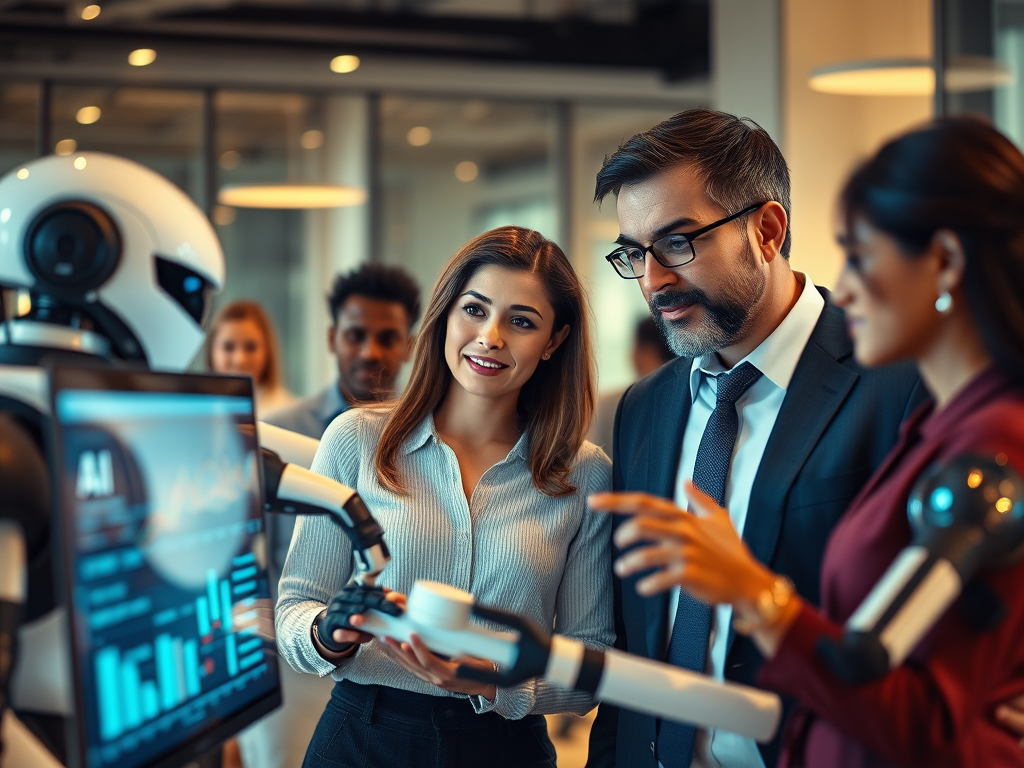
While fears of AI replacing human jobs persist, the future is likely to be one of collaboration rather than competition. AI will take on tasks that are data-heavy and repetitive, freeing humans to focus on roles that require emotional intelligence, creativity, and complex decision-making. Adapting to this future means embracing AI as a partner in our professional lives.
As AI continues to evolve, so must we. Developing the skills to work alongside AI will be critical for navigating the changing landscape of work. The future is not about choosing between humans and AI, but about how we can best collaborate to achieve greater innovation and productivity.
Call-to-Action:
Start preparing for the AI-driven future by learning AI skills today. Whether you’re in a technical field or a creative one, understanding how AI can complement your work will be essential for future success. Now is the time to take the first step in embracing AI as a collaborative tool in your professional journey.rtificial Inte
 Summit Select
Leave a comment