
Modern medicine often finds the ‘one-size-fits-all’ approach to treatment limited. The diversity in patients’ genetics, environments, and lifestyles highlights the need for personalized treatment. Artificial intelligence (AI) technology has become a crucial tool in enabling personalized medicine, significantly contributing to medical data analysis, disease prediction, and the improvement of treatment methods. In this blog post, we will explore how AI is revolutionizing personalized medicine and the changes it is bringing to patient care.
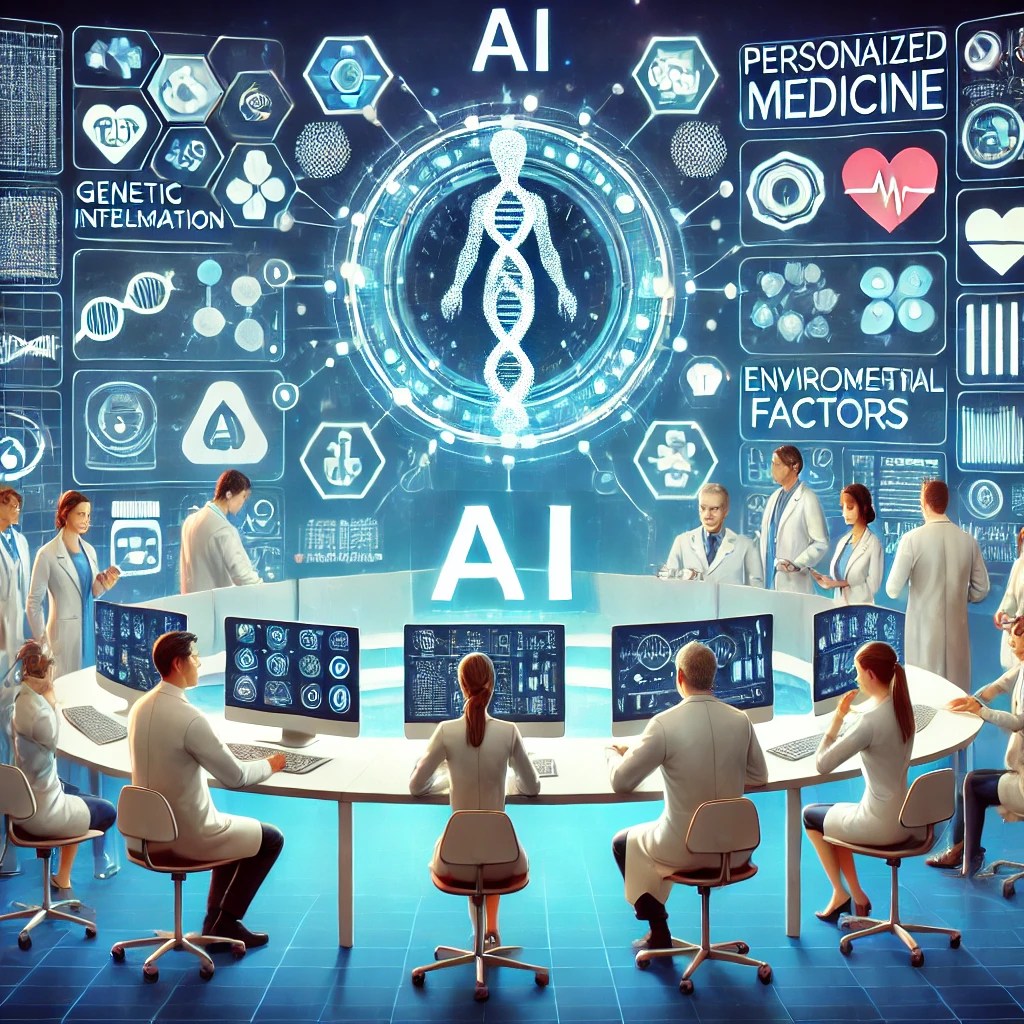
Here is the illustration depicting the impact of artificial intelligence on personalized medicine:
The scene shows a futuristic medical environment where a diverse group of doctors are analyzing large digital screens displaying various patient data.
It includes visual elements of AI algorithms processing genetic information, environmental factors, and lifestyle data, highlighting AI’s role in enhancing diagnostic precision and tailoring treatment plans.
The style is sleek and modern, emphasizing the integration of technology and healthcare.
This visual representation effectively conveys how AI is revolutionizing personalized medicine, making diagnostics and treatments more precise and tailored to individual needs.
Enhancing Data Management and Analysis
AI-powered data management systems help healthcare institutions efficiently manage and analyze patient information. These systems can quickly process massive amounts of patient data and identify crucial medical patterns, supporting medical professionals in making more informed decisions.
Personalized Patient Monitoring
By analyzing health data collected through wearable devices and mobile apps, AI enables continuous monitoring of an individual’s health and facilitates appropriate health interventions. This is particularly beneficial for patients with chronic conditions.
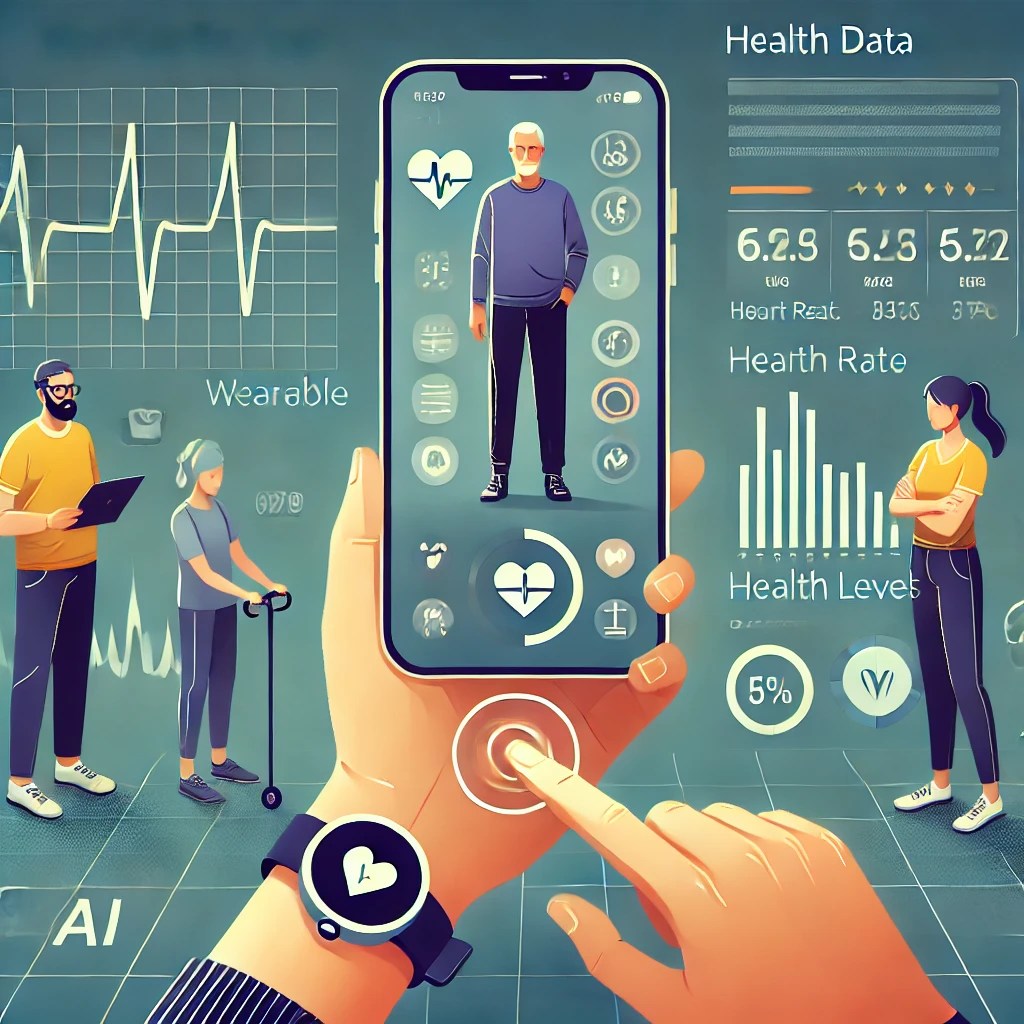
Here is the illustration depicting a person using wearable devices and interacting with a mobile app that displays health data:
The scene shows a diverse group of individuals, including one with a chronic condition, using various wearable technologies such as fitness bands and smartwatches.
These devices are connected to a smartphone app displaying real-time health metrics such as heart rate, blood pressure, and activity levels.
The app interface includes visual elements like graphs and health stats, emphasizing the role of AI in analyzing and providing insights for ongoing health monitoring.
This visual helps illustrate how wearable technology and mobile apps, powered by AI, can significantly benefit individuals, especially those with chronic conditions, by providing continuous health monitoring and timely health interventions.
Establishing Personalized Treatment Plans
AI analyzes a patient’s genetic information, past health records, and lifestyle choices to propose optimized treatment plans tailored to each individual. This approach reduces unnecessary treatments and maximizes the effectiveness of the care provided.
Disease Prediction and Prevention
AI can predict the likelihood of specific diseases and take preventative medical measures. Through the analysis of large-scale genetic databases, AI assesses an individual’s risk of disease and suggests customized preventative actions.
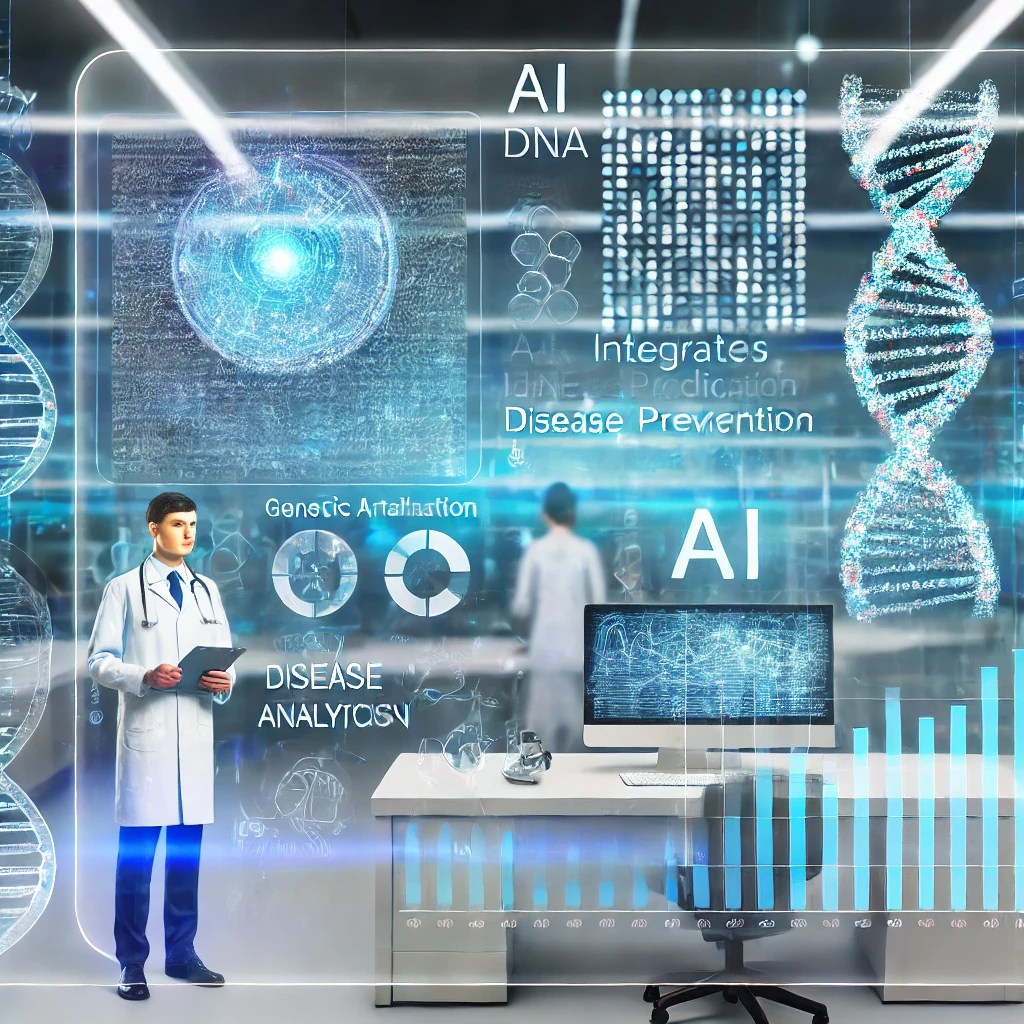
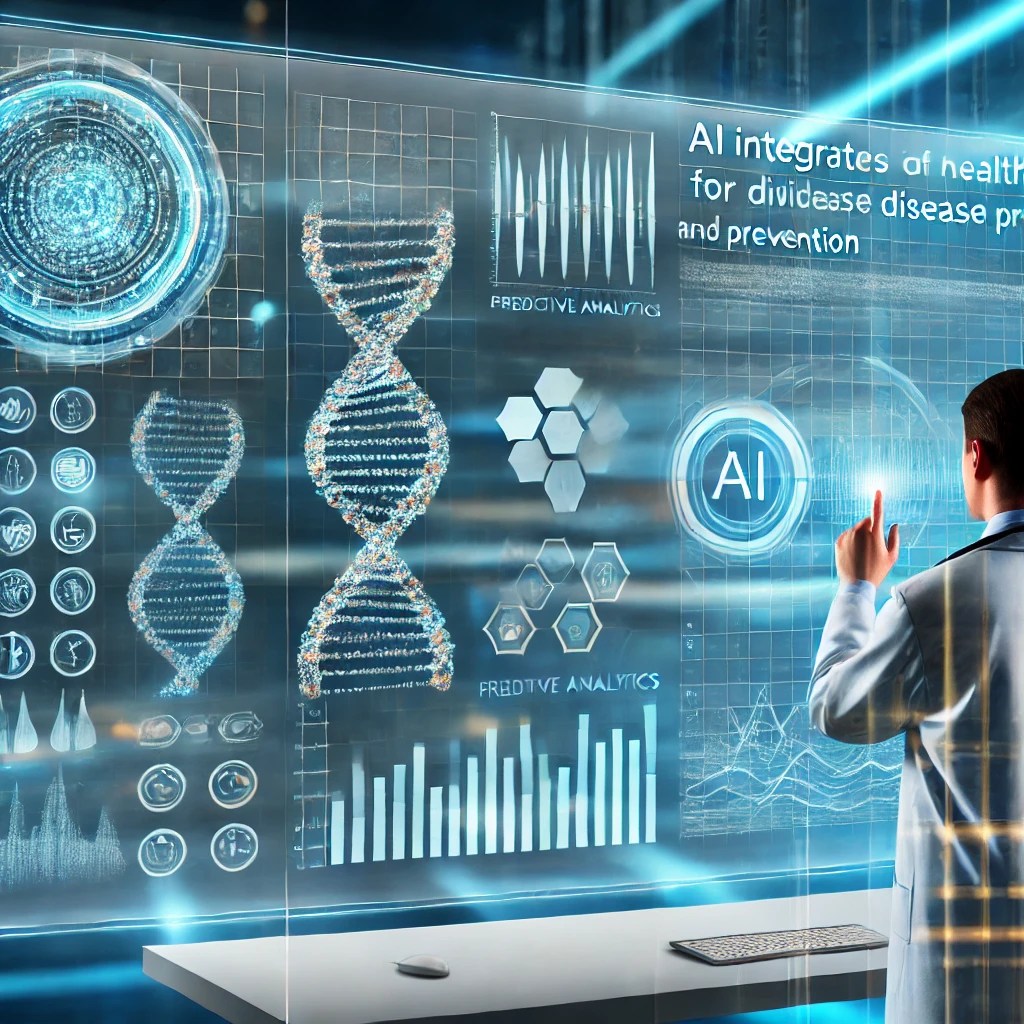
Here is the illustration depicting the use of AI in healthcare for disease prediction and prevention:
The scene shows a medical professional analyzing a large, transparent digital screen filled with genetic data and predictive analytics models.
The screen displays various DNA strands, graphs, and risk assessment tools, clearly depicting how AI integrates complex genetic information to assess individual disease risk and suggest preventive measures.
The background reflects a high-tech laboratory or medical office setting, emphasizing the futuristic aspect of personalized medicine.
This visual helps illustrate the advanced capabilities of AI in enhancing the precision of healthcare through genetic analysis and preventive strategies.
Conclusion
AI technology maximizes the potential of personalized medicine and improves the quality of medical services. This technological advancement provides more precise and effective treatment tailored to individual patients, radically transforming the future of medical services. The development of AI enables more accurate and efficient treatments, contributing to the delivery of optimized medical services for all patients.
 Summit Select
Leave a comment