
Meditation is an ancient practice that has been developed in India and East Asia for thousands of years. In modern society, meditation is increasingly recognized for stress management, mental health improvement, and overall well-being enhancement. As meditation’s popularity has grown, so has scientific research supporting its benefits.
The Relationship Between Meditation and the Brain Meditation has the power to significantly change the structure and function of the brain. Studies show that regular meditation can adjust brain wave patterns, increase activity in the frontal lobe, and enhance the brain’s neuroplasticity.
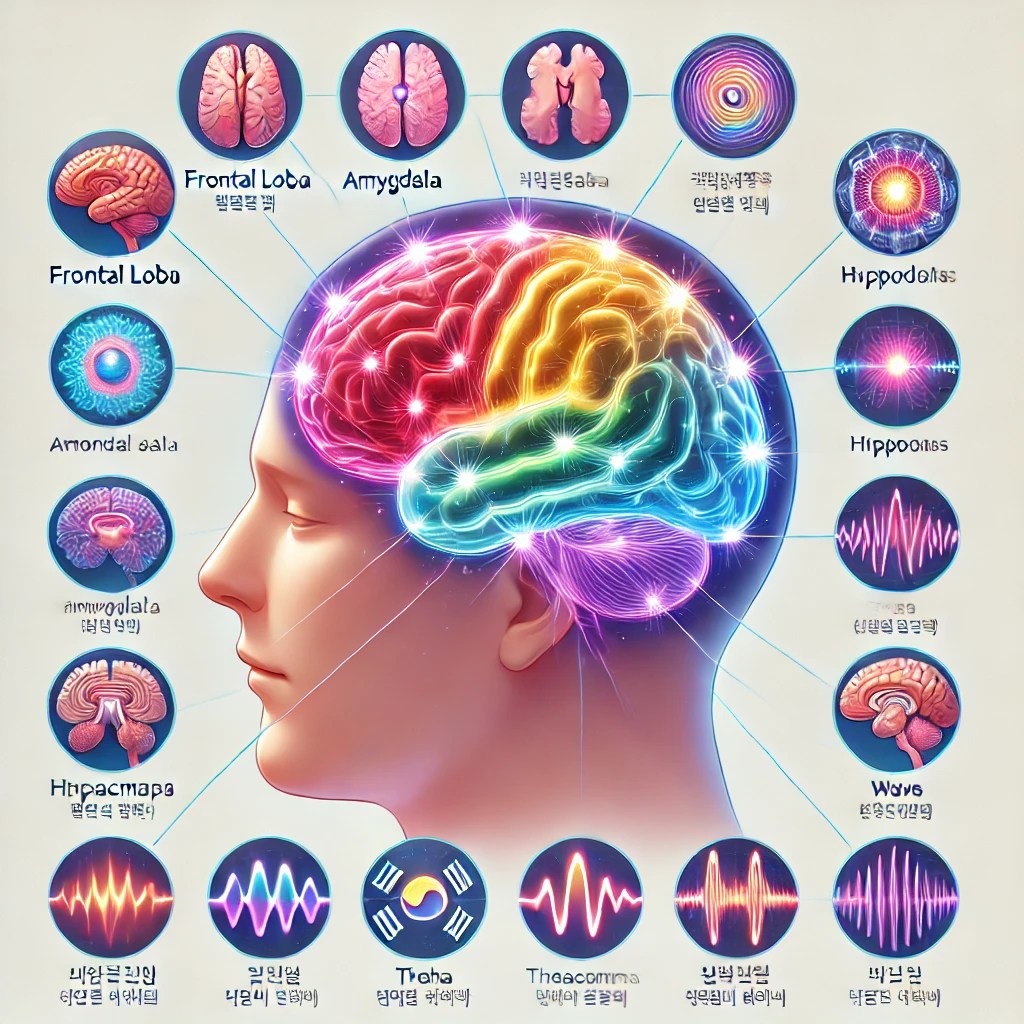
The figure above shows the various brain regions that are activated during meditation. Major areas such as the frontal lobe, the amygdala, and the hippocampus are emphasized, and activation of brain waves such as alpha and theta waves is also indicated. The activation areas and the type of brain waves in the brain are clearly marked in Korean, so it is easy to visually understand the effects of meditation on the brain.
Positive Effects of Meditation on Brain Health Generally, meditation helps reduce stress and alleviate anxiety and depression. It can also decrease the accumulation of amyloid plaques and increase the gray matter in the brain, thus preventing age-related diseases like Alzheimer’s.
Neuroscientific Basis of Meditation During meditation, the levels of neurotransmitters such as dopamine and serotonin increase. These chemicals improve mood, reduce stress, and are crucial for overall mental health.
Meditation and Emotional Stability Regular meditation helps balance emotions and control emotional responses. This can lead to long-term improvements in emotional stability and relationship quality.
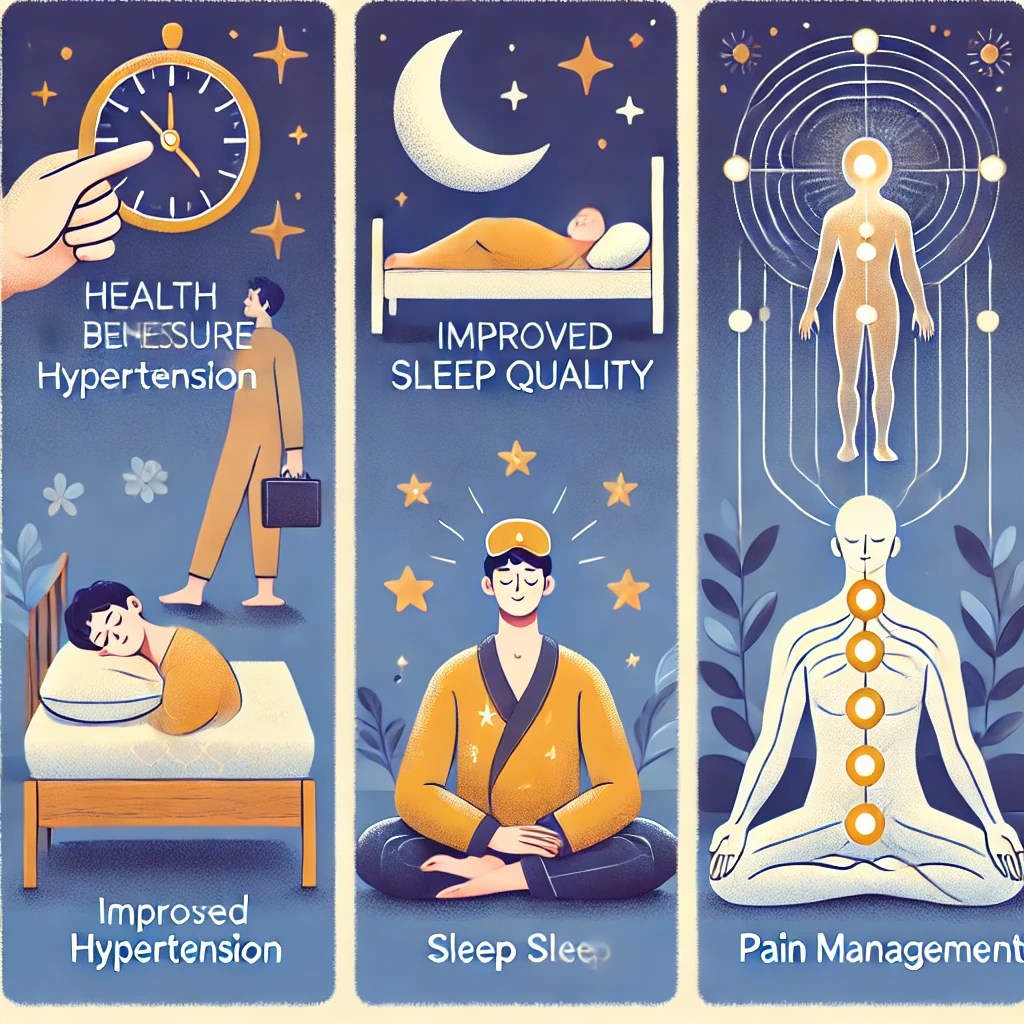
The picture above shows the health benefits of meditation in three panels. The first panel shows a blood pressure gauge that is lowering with a meditator, and it symbolizes a reduction in high blood pressure. The second panel shows a person who has fallen asleep peacefully in the presence of stars and peaceful months, thereby improving sleep quality. The third panel shows waves of relief flowing through the body of a meditator, which symbolizes pain management. Colors that represent peaceful and healing effects were used, along with Korean subtitles that describe each benefit.
Meditation Techniques and Practices There are various meditation techniques, such as mindfulness meditation, focused meditation, and dynamic meditation. Each technique can be chosen based on personal needs and easily integrated into daily life.
Clinical Research Related to Meditation The effectiveness of meditation for health improvement has been proven through various clinical studies. For example, meditation is effective in lowering high blood pressure, enhancing sleep quality, and managing chronic pain.
Limitations and Misconceptions of Meditation Not everyone experiences the same effects from meditation. Also, improper practice can lead to adverse effects, and misinformation can lead to unrealistic expectations.

Conclusion and Future Outlook Meditation is a powerful tool that can enhance both individual mental health and social well-being. Future research will provide deeper neuroscientific insights into meditation, which could expand its clinical applications.
Conclusion Meditation goes beyond a simple relaxation technique; it is a powerful means to positively transform the brain’s structure and function. It plays a crucial role in improving brain health, fostering emotional stability, and enhancing overall quality of life. As scientific research on meditation continues, we will better understand how this ancient practice can be integrated into modern life to benefit everyone.
 Summit Select
Leave a comment