As we step into 2024, the global economic landscape finds itself caught in a new paradigm. At the heart of this shift is the ongoing strategic competition between the United States and China. But this isn’t just another trade dispute — it’s a battle over the future of technology, defense, semiconductors, and data protection, all key industries that form the backbone of the 21st-century economy. Imagine two powerful tech kingdoms, each fortifying its castles, using technology as both shield and sword. That’s the stage we find ourselves on.
U.S. vs. China: The War for Global Tech Supremacy
The competition between the U.S. and China goes beyond economic supremacy. It’s about weaponizing technology in ways that affect global trade and national security. For example, the U.S. is enforcing export controls on semiconductor technology to curb China’s technological advancement, while China is working hard to build an independent tech ecosystem. It’s like watching a high-tech cold war, where each side is playing chess with semiconductors instead of tanks.
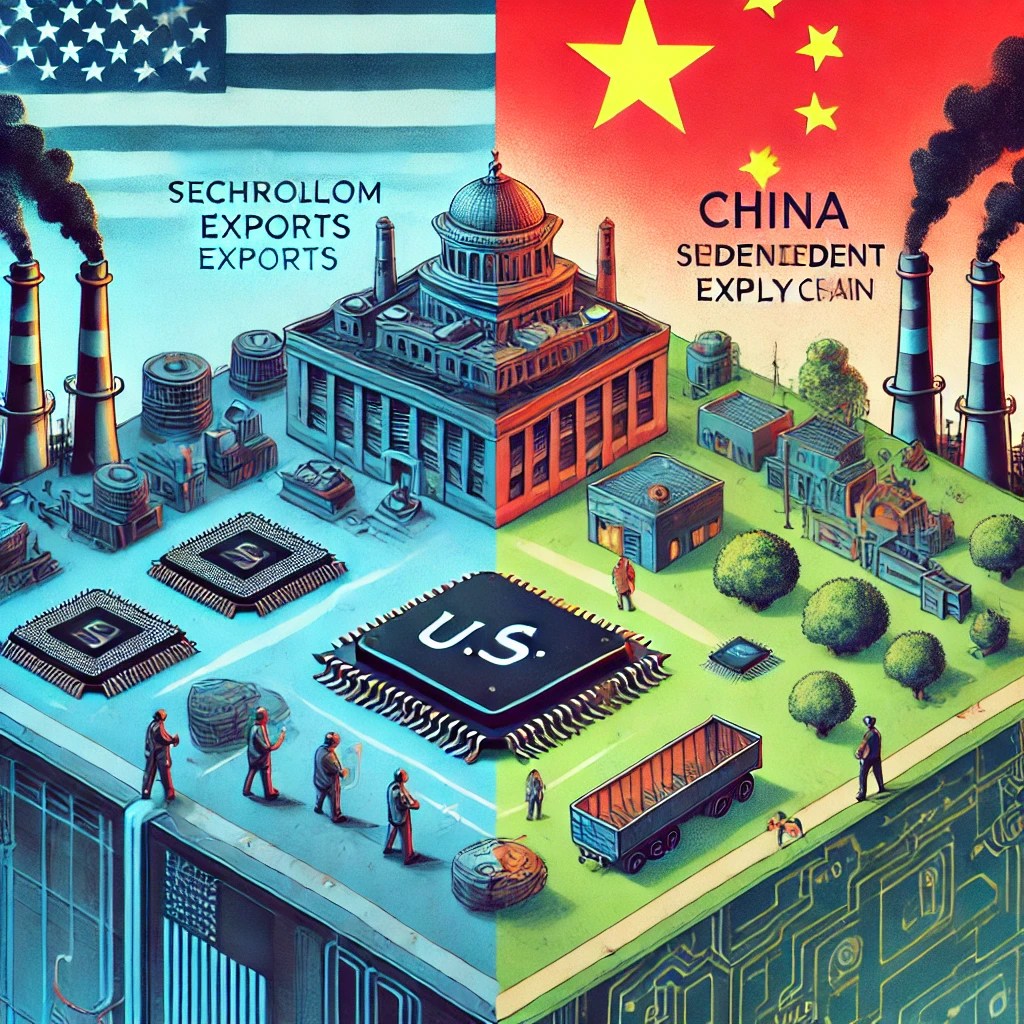
But here’s the twist: this isn’t just a U.S.-China issue. These tech moves ripple across the global economy, like a domino effect. Let’s say a small country relies on China for most of its semiconductor imports to produce electronic devices. If the U.S. enforces restrictions on those exports to China, suddenly that small country’s factories face shortages. The result? Higher prices for the smartphones we use every day. This shows how one country’s tech decisions can cascade into unexpected disruptions around the world.
Global Economy: A Technological Battlefield
What makes this even more fascinating is that this isn’t just a fight over who controls the most resources — it’s a race for technological innovation. Semiconductors, AI, 5G networks, and data protection are the battlegrounds where global dominance will be decided. Just as oil once dictated the world’s economic power, today, semiconductors and data are the new “oil.”
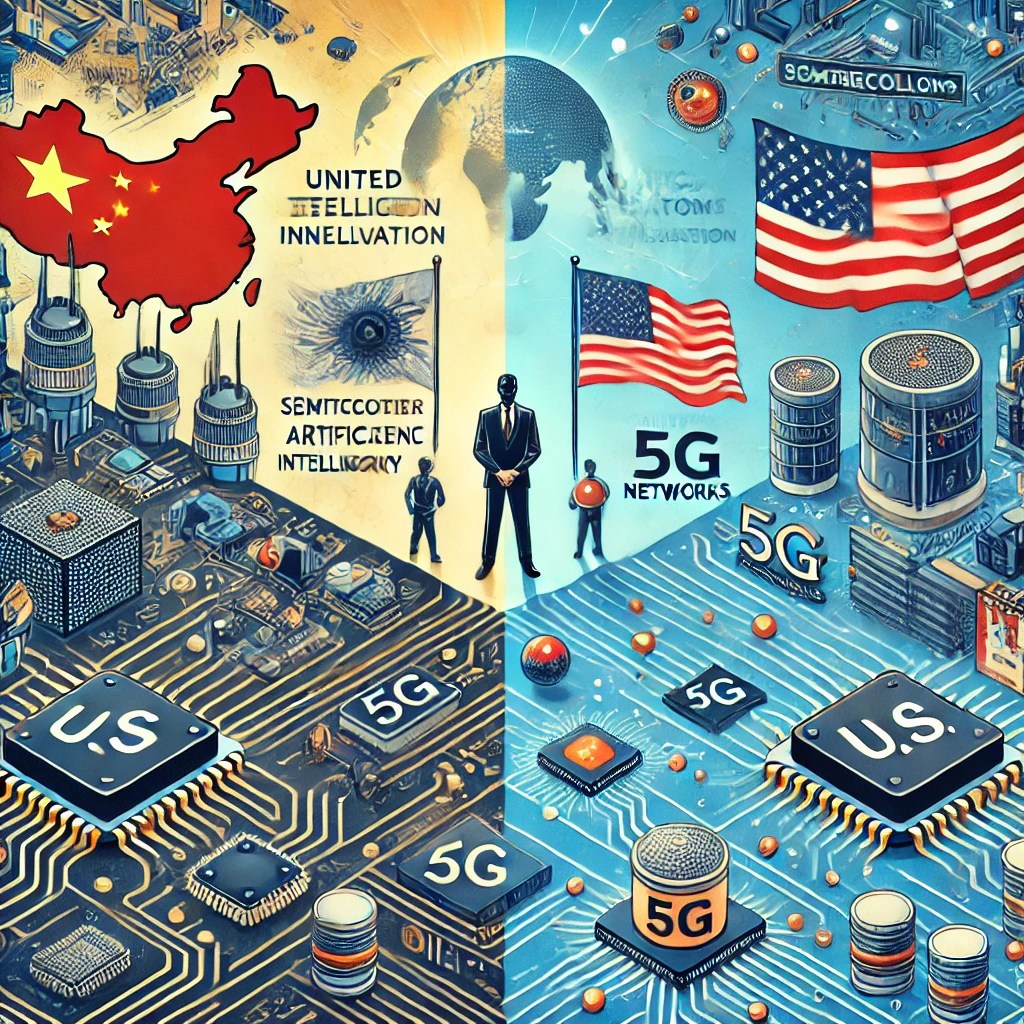
In particular, semiconductors are the lifeblood of the modern global economy. From smartphones and cars to computers and refrigerators, almost everything relies on these tiny chips. And guess where most of the world’s semiconductors come from? China. The U.S.’s efforts to curb China’s dominance in this field is a calculated move to maintain its own economic and technological superiority.
Welcome to the Weaponized Tech Era
But this isn’t the end of the story. As we move further into 2024, the larger question looms: how will these geopolitical tensions impact future innovation? When technology is weaponized, innovation itself risks becoming politicized. Instead of fostering global cooperation, we could see more barriers and regulations stifling progress.
However, amidst these challenges lie opportunities. How can smaller nations, caught between these two tech superpowers, carve out their own path? Some may position themselves as neutral tech hubs, while others may see innovation in overlooked sectors. New startups could emerge as key players, creating unexpected breakthroughs that shift the balance of power.

The Global Economy in a Tech War
The economy of 2024 is no longer just about trade regulations — it’s a complex game where technology dictates the rules. The strategic rivalry between the U.S. and China will continue, and their tech tactics will send shockwaves through the global economy. Yet, even within this tech war, we can expect new opportunities to arise. Innovation won’t stop, and the world will watch as the global economy evolves in ways we’ve never seen before.
So, where do you stand in this global tech competition? It’s time to keep a close eye on how technology will reshape the world economy — and our everyday lives.
Stream Your Favorites Faster & Better! 📺
Why wait? Upgrade to Amazon Fire TV and enjoy lightning-fast streaming and thousands of apps at your fingertips. It’s time to level up your TV game! 🚀
 Summit Select
Leave a comment