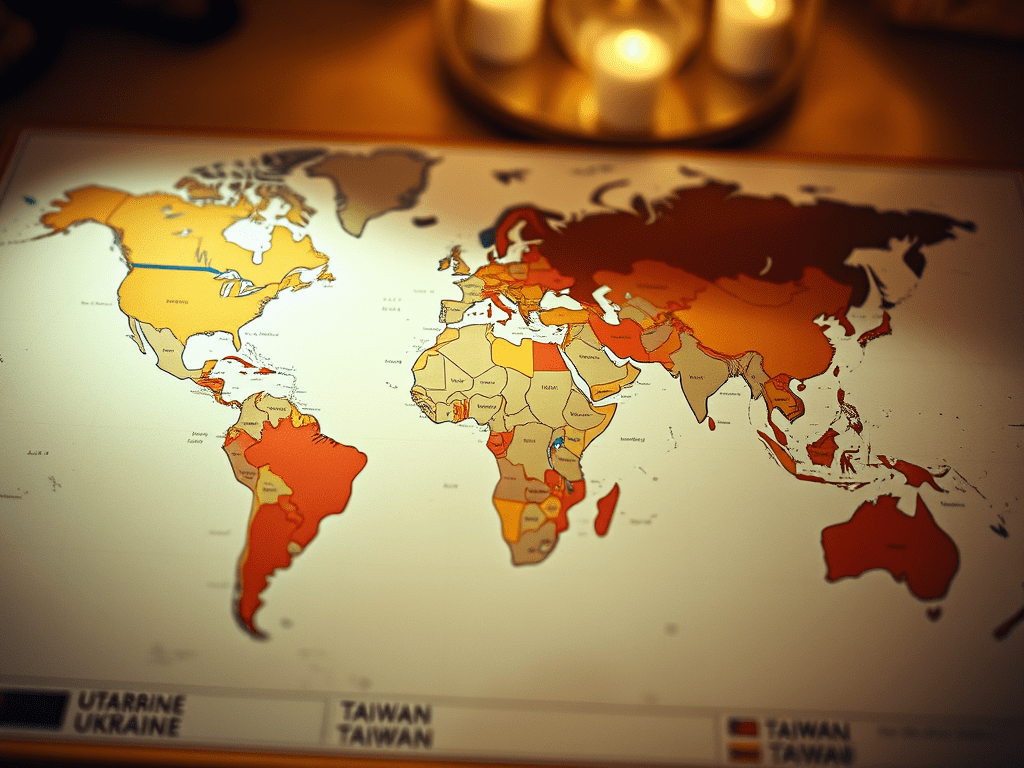
In 2024, the United States is poised to confront a pivotal challenge, one that could reshape the global landscape. The world order that emerged under U.S. leadership after World War II was built on the foundation of a shared idealistic vision—one where all nations, regardless of size or power, were given a seat at the international table. Institutions like the United Nations provided a platform where every country had an equal voice through a “one country, one vote” system. This structure, at least in principle, sought to protect the sovereignty of smaller nations and establish a framework where major powers, as permanent members of the UN Security Council, would act as stewards of global peace. It represented a significant departure from the 19th-century world, where great powers often unilaterally claimed dominion over smaller nations as part of their “sphere of influence” and justified military aggression in the name of power politics.
Yet, the stability of this order now appears increasingly fragile. The invasion of Ukraine by Russia, a permanent member of the Security Council, has shattered the notion that such powers would always uphold international norms. Meanwhile, China’s overt ambitions regarding Taiwan signal a potential for conflict that could reverberate globally. In the Middle East, American-led peace efforts have largely unraveled, revealing the limits of U.S. influence in a region long characterized by complex alliances and deep-seated conflicts.
The potential return of Donald Trump to the U.S. presidency in 2024 adds another layer of uncertainty. A shift toward a more isolationist or unilateralist American foreign policy could undermine the very fabric of the current international system. While it’s true that the U.S.-led world order has often fallen short of its ideals—failing to be entirely equitable or just—it remains a system that has prevented many of the large-scale conflicts that characterized earlier eras. History teaches us that dismantling an established order without a clear and viable alternative often leads to chaos and instability. Given this context, turning to authoritarian regimes like China or Russia as new arbiters of global order seems not only impractical but dangerous, as their governance models fundamentally clash with the principles of sovereignty, human rights, and democratic governance.
Therefore, as we approach this critical juncture, it is essential to recognize the complexities and imperfections of the current world order while also understanding the risks of its potential collapse. The need for reform and adaptation is clear, but the replacement of one flawed system with another, potentially more destructive one, is not the answer. The challenge ahead for the United States, and indeed for the world, is to navigate these turbulent waters with a commitment to building a more just and sustainable global framework, one that learns from the mistakes of the past while preparing for the uncertainties of the future.
 Summit Select
Leave a comment